

Cleaning With Hydrogen Peroxide & Salt: Is It Effective And Should You Try It At Home?
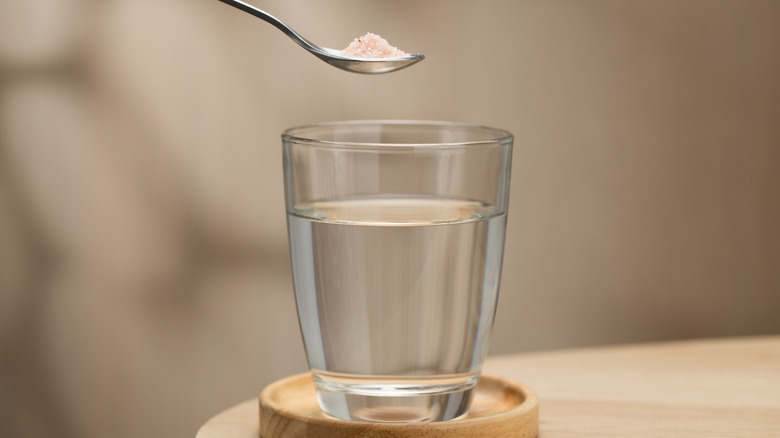
You might have heard great things about the combined cleaning power of hydrogen peroxide and salt, and how this combination can give the best all-purpose kitchen cleaners a run for their money. However, there are multiple reasons why you shouldn't try out this DIY recipe. Agreeing with this sentiment, Carly Castro, founder of Clean With Carly and owner of FreshLee Cleaning Co., reveals in her House Digest exclusive, "Mixing hydrogen peroxide and salt isn't dangerous in the sense that it doesn't create toxic fumes, but it is also not a particularly effective cleaning solution."
So, you'd be better off using hydrogen peroxide as a standalone cleaner. Expanding on its individual capabilities, the cleaning expert says, "Hydrogen peroxide works as an oxidizer, so it will break down stains and some bacteria." However, things take a turn for the worse if you mix it with sodium chloride. This is because "salt mainly acts as a mild abrasive and actually causes hydrogen peroxide to break down faster. That will reduce how long it remains effective." To elaborate, the chloride ions present in salt force peroxide to turn into oxygen and water, diminishing its cleaning prowess.
Castro continues, "Think of it as the same idea when mixing white vinegar and baking soda. Just because there's bubbling action does not mean it's cleaning better. While this combo is safe for limited use, it's not something I recommend as a go-to DIY cleaner." And if you still want to combine the two, don't whip up a huge batch since the resultant mixture can be a fire hazard if you mix salt and hydrogen peroxide in great quantities.
How to use hydrogen peroxide and salt for cleaning
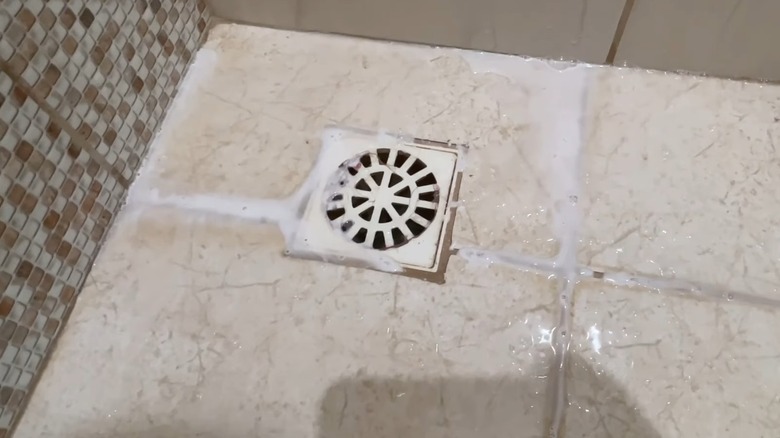
Cleaning expert Carly Castro doesn't recommend using a hydrogen peroxide and salt combo for cleaning purposes, but there are a few areas where you could use these ingredients if you really want to try them out. For instance, it could work for "spot treating fresh stains like blood or food spills on white or light-colored fabrics," mentions Castro in her House Digest exclusive interview. She says, "Hydrogen peroxide helps break down the stain, while the salt provides light scrubbing action." However, remember that the combo isn't really necessary. "For laundry stains, hydrogen peroxide can be effective just fine on its own. If additional agitation is needed, fine salt may be added directly to the stain, but please do not scrub because that can damage the fibers," she explains.
Similarly, you can use these ingredients to "light[ly] scrub surfaces like a porcelain sink or white grout," suggests Castro. But take a few precautions to avoid damaging anything accidentally. She adds, "For hard surfaces, make sure to pre-test hydrogen peroxide on a small corner to make sure it's compatible and will not cause damage. If all seems safe, you can apply hydrogen peroxide directly and leave it for no more than two minutes. Salt can be used separately as a mild scrub." The combo is ideal for these two scenarios only; our expert warns that it won't work on greasy spots. Moreover, avoid using this mix to clean things in your house every day. She also advises using them individually, step-by-step, instead of mixing the two ingredients together prior to use.
Exercise caution when using hydrogen peroxide and salt
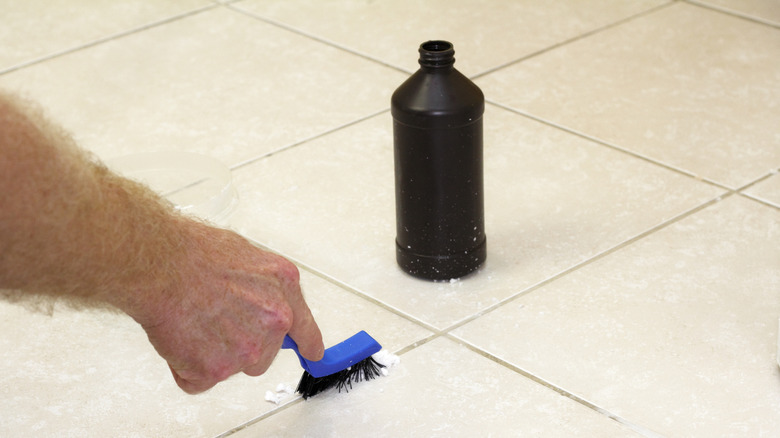
While hydrogen peroxide and salt aren't a potent combo, you should still exercise caution when using them, according to our cleaning expert. Sharing the rationale behind this in her exclusive chat with House Digest, Castro explains, "Hydrogen peroxide and salt do not chemically complement each other, and the risk for surface damage can be quite high." Sharing a few examples of how things can go wrong, she illustrates, "Hydrogen peroxide can cause fabric bleaching and even damage delicate surfaces that are not compatible. Salt can weaken fibers and even scratch surfaces. Salt can also leave behind a residue, which can leave behind a hazy look."
Additionally, if you use this combo for disinfecting surfaces, you'll be inviting bacteria to stay in your home with this cleaning mistake. She concurs, "In order to disinfect properly with hydrogen peroxide, you'll need to pre-clean the surface, use the correct concentration, and follow proper contact times. Not following these directions can create a false sense of cleanliness when the area actually requires proper disinfecting." As such, all your hard work will be for nothing. Considering the damage the combo can bring about and its ineffectiveness against bacteria, the pro cleaner urges homeowners to stay away from this cleaning combo. So, to remove all uncertainties and make your life easier, she suggests using hydrogen peroxide on its own. "Hydrogen peroxide is actually one of my favorite cleaners on its own because it's safe and effective," concludes Castro.