

8 Natural Deicer Alternatives That Are Safer For Your Pets
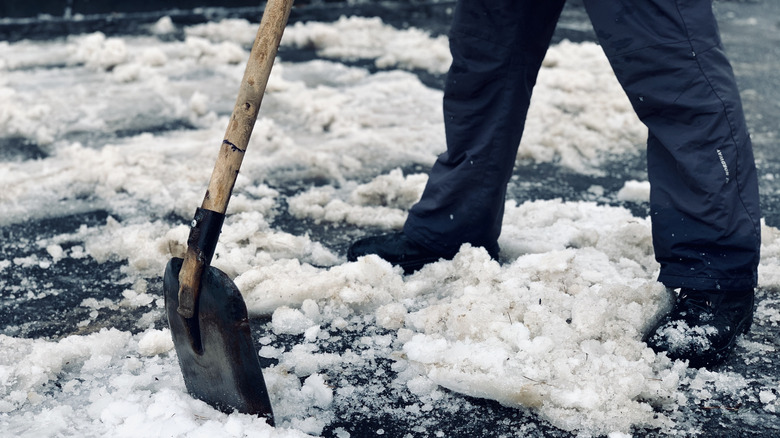
Winter's icy buildup poses a serious risk of falling when outside. Deicing agents are common for clearing driveways or sidewalks, but can be potentially harmful to your pets, causing irritation and illness if ingested. Fortunately, there are multiple natural deicer alternatives that are safer for your pets. Not only are they easy to use, but you may have them in your home already. From the pantry to the coffee maker, where you'll find these alternatives may surprise you.
Deicing agents work by lowering the water's freezing point to melt the ice. One of the most common methods for melting ice during winter, rock salt, consists of sharp crystals that may irritate sensitive paws. Pets that come into contact with rock salt may lick their paws while grooming to soothe the irritation, ingesting the salt in the process. Salt ingestion in cats and dogs can be severe, potentially raising their sodium to extreme levels. According to the ASPCA, commercial deciers can be just as potent, as they contain potassium chloride and magnesium chloride, which can irritate the digestive tract when ingested. Animals can also suffer electrolyte imbalances, leading to seizures and cardiac concerns from eating deicers.
Even so-called pet-friendly deciers still contain irritating chemicals such as urea and require caution if used around curious animals. Deicer effects also reach beyond your home, as it can sicken fish and pollute waterways. To help protect your pets as well as your community, consider swapping out your deicer for these natural alternatives. While these are all derived from natural sources, you should still avoid leaving your pet unattended in treated spots, especially as all pets behave differently.
Toss down some alfalfa meal
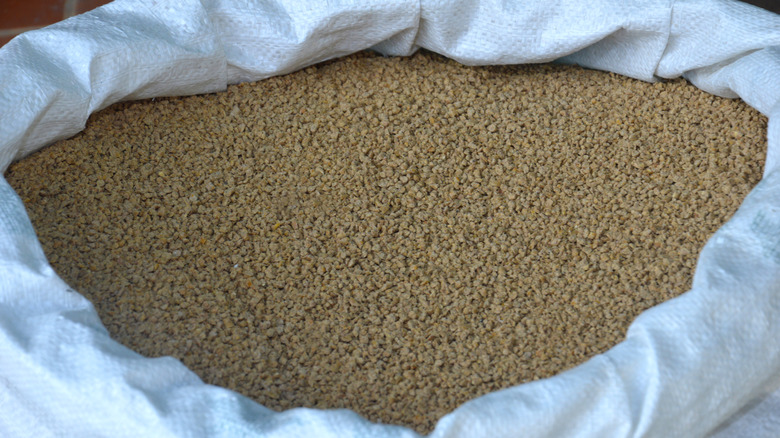
One alternative to traditional deicers is alfalfa meal, an organic fertilizer that does wonders for your garden. Coming from alfalfa (Medicago sativa), it's commonly used as a soil amendment but can also help take care of an icy driveway. Rich with nitrogen, it acts similarly as urea to melt ice, creating heat as it dissolves. The gritty texture also adds traction on the slippery surface to make it easier to walk. It's not an instant melter, but it may help you remove the icy spots around your home. Plus, it's safe for pets.
Grab a cup of coffee grounds
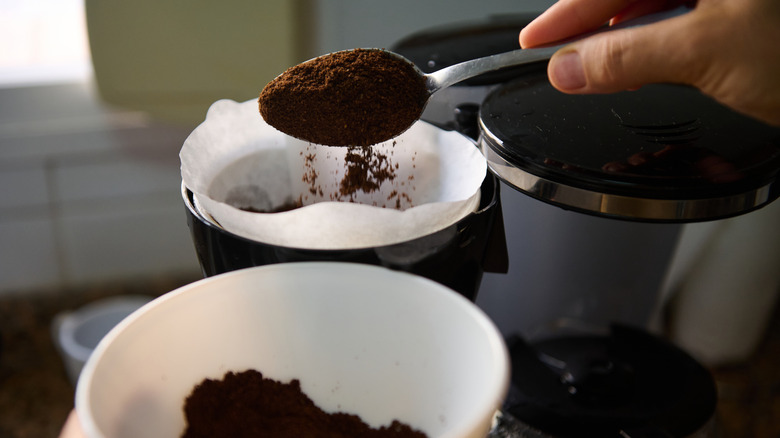
Before you head out into the brisk winter air to shovel snow, be sure you grab your trusty cup of joe for the strength to do so. Don't throw away the coffee grounds, though, because you can pour them over icy patches to help soften and melt the ice. Like alfalfa meal, coffee grounds are a nice deicing aid. The rich, dark color of the grounds helps with sun absorption, producing heat that softens ice. You'll also get a nice bit of traction from sprinkling them on the ice's surface.
Try a bit of sugar beet juice
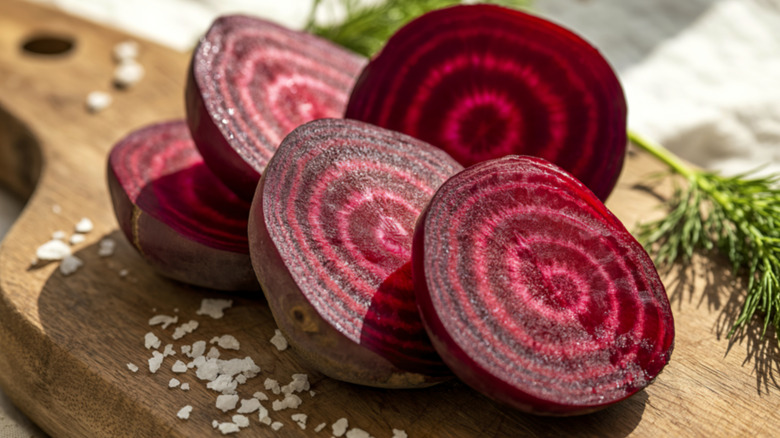
One popular alternative used by municipal road crews in Minnesota and beyond to help clear ice is sugar beet juice mixed with salt brine. You can use the same solution as a safer way to remove ice from your driveway. The recipe requires 80% salt brine and 20% sugar beet juice. The juice's sugar content makes it a less corrosive way to get rid of ice. If you have pets that are prone to licking the ground, maybe skip this method, since you're still using salt.
Mix a rubbing alcohol solution
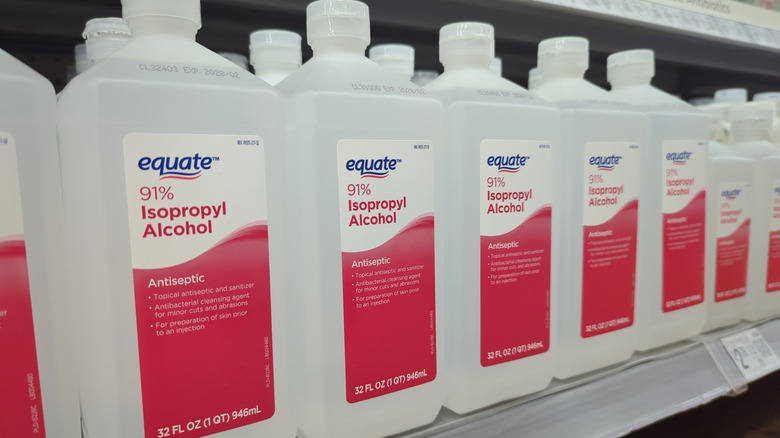
A bottle of rubbing alcohol is a good tool to have on hand to unfreeze your home's windows during winter, and it can help with all of those icy ground spots, too. You can make a batch of DIY ice melt by mixing a solution of ½ gallon of warm water, six drops of dish soap, and ¼ cup of rubbing alcohol, shares Reader's Digest. After mixing all of the ingredients thoroughly, apply to any ice patches on the pavement and watch it bubble away to melt the ice for quick removal.
Spray distilled white vinegar
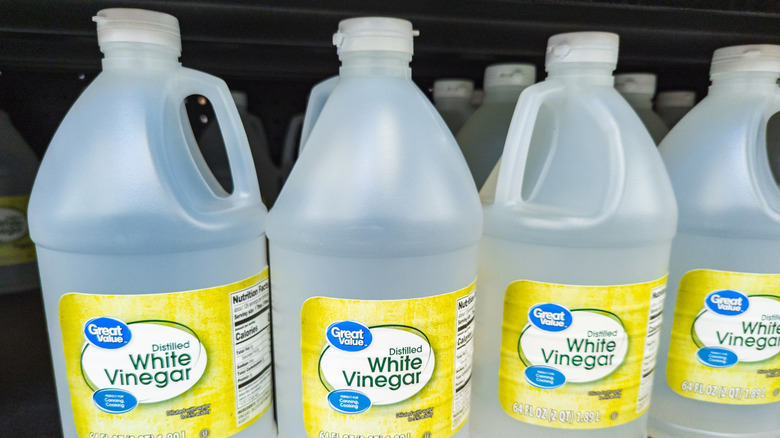
Add working as a natural deicer alternative to the list of things vinegar can do in your home. Mixed with warm water, distilled white vinegar can be an effective way to get rid of ice thanks to its acidic contents. The ice will break down from the acid, and the warm water will deliver a second blow by helping melt it. You can apply it with a spray bottle or bucket, but be aware that this hack only works for temperatures over 28 degrees. It's also best for thin sheets of ice, not patches that are several inches thick.
Spread baking soda
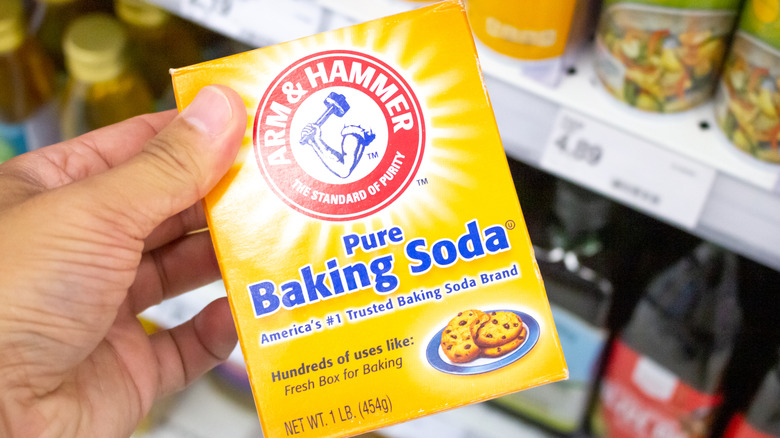
Another popular natural cleaning option, baking soda, is handy for ice. Baking soda, or sodium bicarbonate, is technically a salt. You don't even need to mix it with anything to use it, either; just apply it evenly on the ice spots. Break the ice if it's super thick, then spread your baking soda. According to Backyard Boss, this method should work in around 15 minutes to melt the ice and snow. The site also notes that baking soda can be used to keep snow from accumulating on your pavement, as long as it's dusted on the surface before it starts snowing.
Dip into your Epsom salt stash
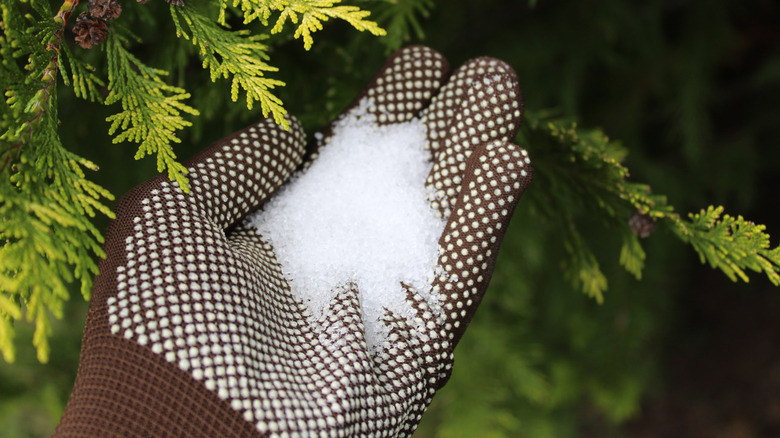
The same Epsom salt (magnesium sulfate) that can soothe your muscle aches and pains in the bathtub might help make ice removal a little less achy process as well. Epsom salt can take some time to melt the salt, much like other salts, but combining it with equal parts sugar makes the process faster. It also dissolves quicker, making it become less abrasive. Just keep in mind that it doesn't work when temperatures dip below 20 degrees Fahrenheit.
Try pickle brine

If ice has you in a pickle and you want it gone, try using pickle brine as an alternative deicer. Per National Geographic, brine is similar to saltwater, capable of melting ice at temperatures down to -6 degrees Fahrenheit. Pretreating areas with pickle brine also makes it harder for the snow and ice to stick, so you can remove it more easily. Making pickle brine is easy, with most recipes only requiring vinegar, sugar, water, and salt. One recipe to follow is 1 cup of vinegar, ⅔ cup of water, ⅓ of cup sugar, and 1 tablespoon of salt.