

The Zucchini Alternative To Grow That Has A Great Flavor And Is More Disease-Resistant

Each new season in a vegetable garden is an opportunity to try different varieties. Whether you're on a quest for new flavor sensations or just want to protect your garden from disease and insects, we don't blame you for shopping around to see what your options are. And if you've had enough of the downsides of growing zucchini and want to try an alternative, 'Tromboncino' is a tasty heirloom variety named for its wacky shape, and has excellent disease resistance.
This flavorful heirloom cultivar, also known as 'Zucchino Rampicante,' hails from the Liguria region of Italy. This long, narrow variety of Cucurbita moschata can reach up to 3 feet long, with the squashes curling up as they mature. They also have bulbous ends where the seeds are concentrated, similar to butternut types. Tromboncino can be grown as a summer squash alternative to zucchini in its immature form, but this disease-resistant option can also be allowed to mature and used as a winter squash variety.
Tromboncino is a delicious squash that holds up to disease
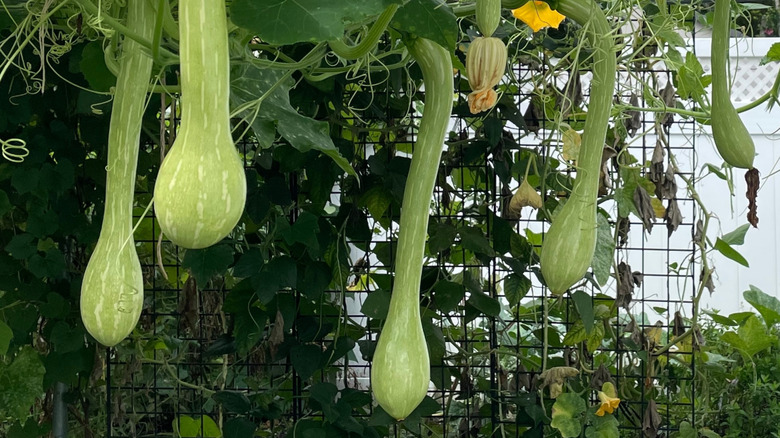
Vegetable cultivars don't become heirlooms unless they have special value to the agriculturalists who grow them, and Tromboncino is a variety worth cultivating for multiple reasons. This squash variety is resistant to powdery mildew, making it a reliable performer in the garden for those looking for options other than zucchini. It also holds up well to the bane of every gardener's squash patch — squash bugs and squash vine borers. Expect to start harvesting from the vigorous 20-foot-long vines 60 days after planting, picking squash when they are at least 8 inches long but before they reach 1½ feet long. Grow this cultivar on a trellis to encourage the squash to grow long and straight rather than curled, making preparation in the kitchen easier.
Speaking of the kitchen, what really makes Tromboncino worth growing are its taste and texture. Eaten primarily when pale green, it scores high in the flavor department with sweeter flesh than zucchini. And while zucchini can become watery when cooked, this alternative has denser flesh thanks to its higher starch content. Used as a winter squash, it's comparable to butternut varieties, but with a nutty undertone. And whether you prefer it as a summer variety or a winter one, since the seeds are only in the rounded bottom of the squash, it's extremely easy to prepare for sautes, grilled dishes, or raw culinary creations.