

Safely Remove Thrips From Your Houseplants With These Tips
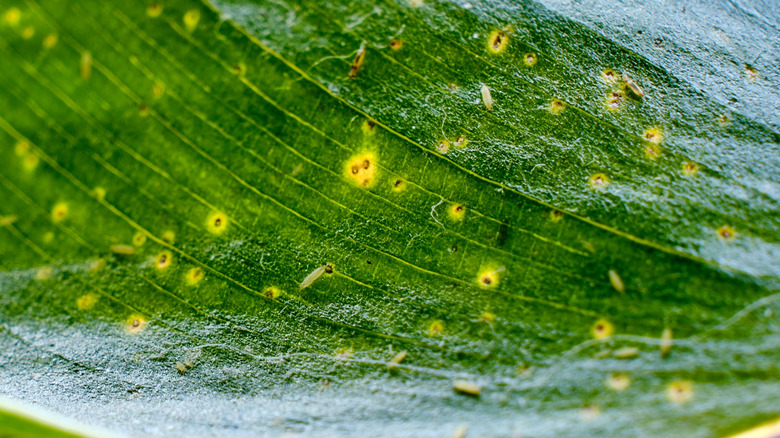
When it comes to plant pests, thrips are as bad as they come. They attack and infest hundreds of different varieties of plants. Plus, they come in many types: flower thrips, greenhouse thrips, onion thrips, pepper thrips, citrus thrips — the list just goes on. Severe thrip infestations can even cause plant death, especially if the plant is young or already vulnerable. On top of that, thrips can even transmit viruses to plants. Put simply, thrips are not something you want on your houseplants. Luckily, though, there are many ways you can get rid of thrips safely. Sometimes, it is as easy as wiping your plants with a paper towel or blasting the thrips off with a strong stream of water. However, if the infestation is severe, you might need to trim away the heavily infested parts.
The key to success, in any case, is to treat the infestation as early as possible. Thrips reproduce fast. The worst part? They can reproduce several times in a season with reproduction rates peaking in spring and summer. And then there is another problem: Thrips are tiny creatures. They measure only about one-sixteenth of an inch. Plus, they have a tendency to stay hidden. Many people only realize their houseplants have thrips when they see the damage caused by their feeding. In other words, you want to act quickly, or soon you might be looking for the easiest way to remove your dead potted plants.
Mechanical methods to remove thrips from houseplants
The first (and probably easiest) way to get rid of thrips from your houseplants is to simply wipe them off the leaves. If that sounds too gross, you do it with a piece of cotton, cloth, or paper towel. It might also be a good idea to dip these items in diluted rubbing alcohol before use — test this option first, though, since alcohol can cause plant injuries.
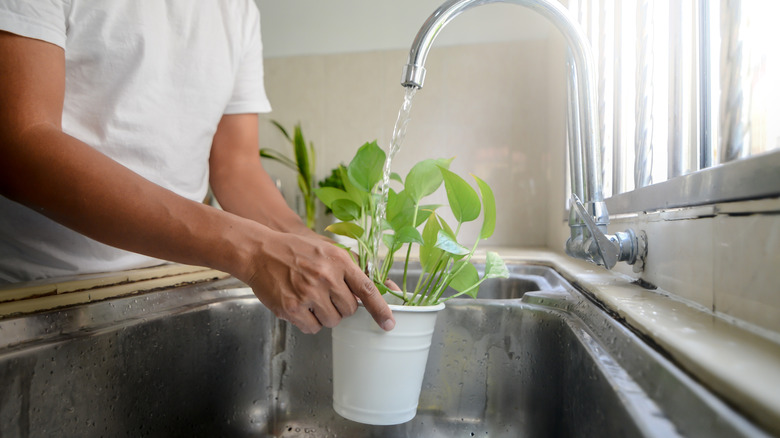
If, however, you don't want to use your hands, you can dislodge thrips from your houseplants with a strong stream of water. For instance, you can use a syringe to wash away the thrips. Just make sure to do it outside or in a place where thrips won't just crawl right back to the plants. However, using a syringe might not work for larger plants — it will just take too much time. So, if it is possible, you can also put the plants in the sink and turn on the tap. If the plants are too large for a sink, take them to a shower.
Just don't use a pressure or jet washer. Those can easily tear holes and break stems. If you have houseplants with delicate leaves, even washing them under a strong stream of water is not a good idea. For such plants, dipping them in a bucket of water is probably the safest approach. And don't worry about your plants — they can survive several hours submerged under water. Lastly, a vacuum cleaner is another safe option to get rid of bugs on indoor plants. Just make sure that you kill all the captured thrips once you are done cleaning the plants.
Chemical control methods to remove thrips safely
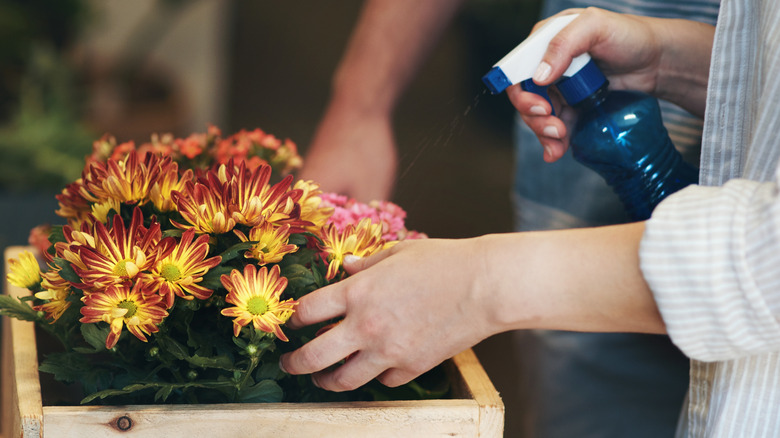
If physical removal methods don't seem effective, you can try horticultural oils and chemicals, like pesticides, as well. Just make sure to follow the label guidelines to keep yourself and your plants safe. When it comes to horticultural oils, like neem oil, all you have to do is spray your houseplants at the recommended rate. They work by suffocating the thrips, which ultimately leads to their death. Just make sure to spray the undersides of the leaves and the soil, as well. Plus, keep in mind that you might need to repeat the treatment several times.
In some cases, however, chemical control might be necessary. A good option to get rid of thrips is using contact insecticides containing pyrethrins. These are plant-derived chemicals, and they are generally safer when compared to some of the other synthetic chemical pesticides. A spinosad spray is another chemical treatment option. However, you can't use it when the plants are flowering, and this type of spray can be toxic to many beneficial insects. Besides these, systemic insecticides, like imidacloprid, can also be used. These treatments work by being absorbed into the plant, targeting thrips when they feed.
And lastly, isolate infested plants before using any removal method. For the rest of the plants that were nearby, use sticky traps in yellow and blue colors to catch the thrips. In some cases, you might need to trim off the heavily infested parts or even discard the whole plant. There are many telltale signs that can help you decide when it is time to say goodbye to your dying houseplant.