

Makita Tools That Are Worth Your Money, According To A Former Carpenter Of 20 Years
We may receive a commission on purchases made from links.
There's no shortage of advice when it comes to choosing power tools, with dozens of review sites and YouTube channels dedicated to the subject — and that's great. Anything that helps inform your buying decision can only be a good thing. As a general rule, these people usually rank DeWalt and Milwaukee as the best power tool brands for professionals and serious DIYers, with Ryobi and Craftsman recommended for budget-conscious buyers. I have no argument with that, but as someone who was a professional carpenter for 20 years and who has made everything from jewelry boxes to house frames, I would add Makita to the list.
Although it's a brand that is sometimes overlooked, Makita has won several awards for innovation and design, and its tool quality is excellent. These days, battery platforms are particularly important, and Makita's is especially strong. They are well-known for longer run times than many competitors and faster charging. Makita isn't really a brand for the occasional DIYer, but if you're prepared to invest in reliability and durability, you'll find its tools are usually a little cheaper than comparable DeWalt or Milwaukee models.
Okay, that's given you some background on the brand, but what about the tools themselves? The following are Makita's versions of some of the best tools to invest in to start woodworking at home. In my experience, each is also more than capable of handling the rigors of the pro shop or jobsite.
Makita 18V LXT Cordless ½-Inch Drill Driver
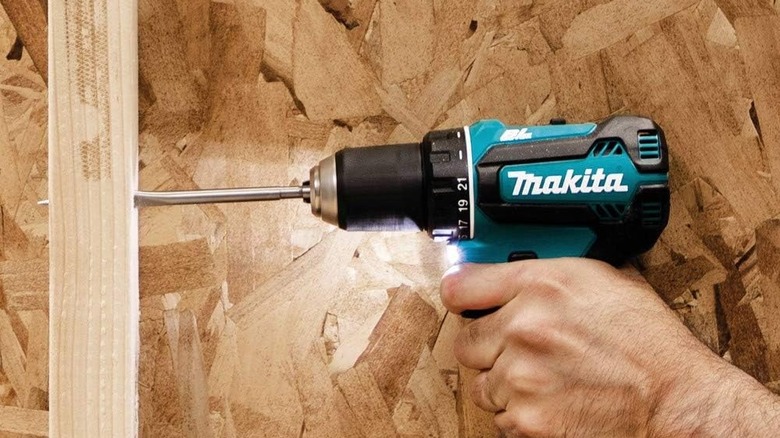
A cordless drill/driver is always at the top of the list of must-have power tools for first-time homeowners. Everybody needs to drill holes and drive screws. I'm recommending a kit rather than a bare tool. You'll need a Makita battery and charger at some point, and buying them with the drill is usually cheaper than getting them separately. Also, the Makita XFD131 model comes with a 3 Ah capacity battery. For me, that's a good mid-range option. The 1.5 Ah version saves you a few bucks, but this one will run noticeably longer. It also recharges in as little as half an hour.
The Makita 18V LXT cordless ½-inch drill driver kit is currently $169 on Amazon. The two-speed brushless motor runs at up to 1900 rpm and delivers up to 440 inch-pounds of torque. I like the performance and balance of this tool. It's comfortable to hold and weighs just 3.6 pounds with the battery fitted. A handy little feature is that the pair of LED work lights stays on for about ten seconds after you let go of the trigger. A smart carry bag is included.
I also recommend that you get a spare Makita battery, which costs around $90. This will give you a setup like mine, allowing continuous use with any of the Makita cordless tools on this list. Two batteries can also be combined to use in Makita's 36V range if you ever invest in heavier-duty equipment, like a cordless miter saw or a lawn mower.
Makita 18V LXT 6½-Inch Sub-Compact Circular Saw
A circular saw is often the second tool on those 'must-have' lists. Professional framers might choose the greater cutting capacity of a 7¼-inch model, but I prefer a 6½-inch tool. It's lighter, easier to handle, and will still cut through common 2x lumber and sheet materials, making it a better choice for general carpenters and DIYers. By the way, in case you don't know, those sizes define the blade diameter. You need to check specifications for actual cutting depths.
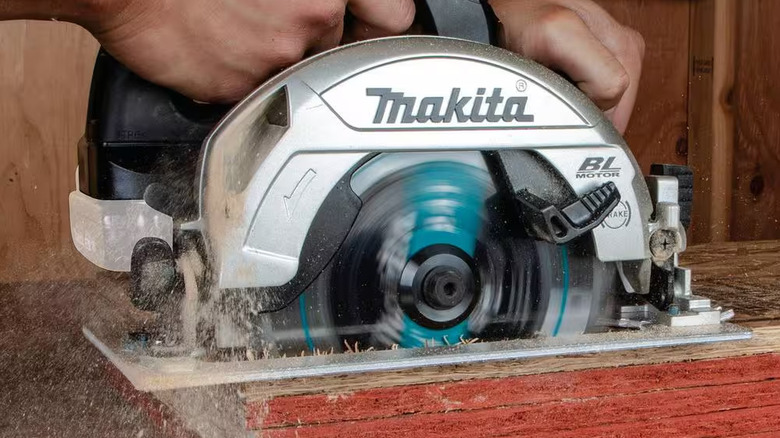
This time, I'm going for Makita's sub-compact model, the LXT XSH04ZB. Makita often produces several versions of a tool, so part numbers are important if you're shopping around. As you might guess from the name, this model is smaller and lighter than their standard tool, yet it offers the same cutting capacity. The Makita 18V LXT 6½-Inch Sub-Compact Circular Saw is available on Amazon for $152, making it about $80 cheaper than the standard tool.
The brushless motor reaches a maximum speed of 5,000 rpm, and clever technology adjusts power based on the density of the wood you're cutting. The blade doesn't jam in the cut as I've found with cheap circular saws. The sole (base plate) has an adjustment range of 0 to 50 degrees for angled cuts, with a maximum depth at 90 degrees of 2¼ inches. It weighs around 6½ pounds with a battery fitted, which I find makes it easier to maneuver and less tiring to use for long periods. It's a great all-rounder for the home, garage/workshop, and yard.
Makita 10-Inch Dual-Bevel Sliding Compound Miter Saw
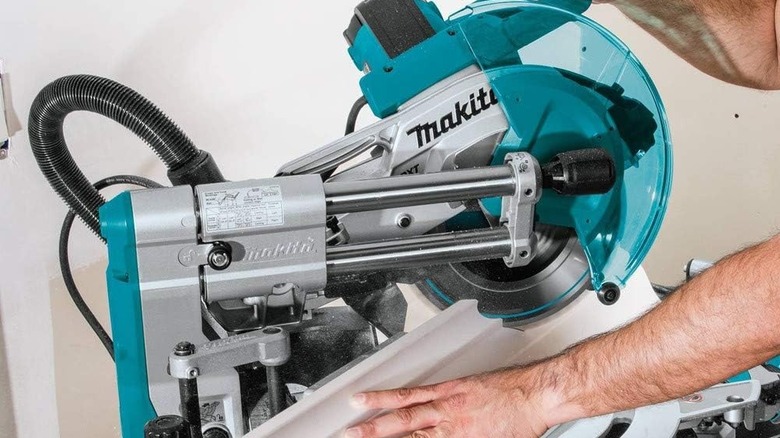
A circular saw is an invaluable tool, but it does have a couple of drawbacks. When you're freehanding cuts, inaccuracies can creep in. You can set up a guide bar with sheet material, but that's not practical with narrower lumber. The depth of the cut is limited too. So, I wouldn't be without a miter saw. It's often my go-to tool for cutting lumber, moldings, and baseboards, as well as for furniture projects. Makita offers blades in 8½, 10, and 12-inch sizes, and I think the mid-range model is the one that will suit most homeowners and amateur remodelers. Makita's cordless miter saw runs off two 18V batteries in tandem, but it costs over $950. So, I'm going with the corded Makita LS1019L 10-inch Miter Saw that you can pick up for $739 on Amazon.
This tool cuts to a maximum depth of 5¼ inches at 90 degrees. The blade tilts 45 degrees to the right or left and rotates for cutting compound angles. My favorite feature is the sliding head, allowing you to cut boards up to 12 inches wide. Also, the clever, space-saving design means the back of the saw can fit flush against a wall. There's a laser to align your cuts, although, to be honest, I'm a bit old school and prefer checking by lowering the blade to a pencil mark. I know there are much cheaper miter saws around, but in my view, they don't offer the stability, versatility, precision, and ease of use of the Makita.
Makita 18V LXT Cordless 2½ Inch Straight Finish Nailer
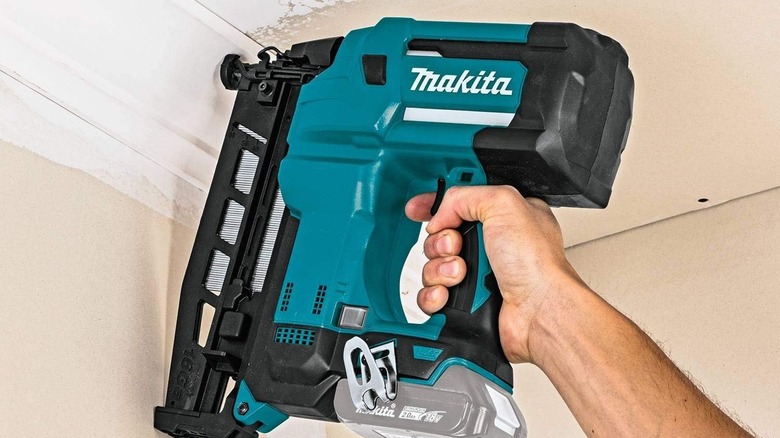
We use lots of different nail guns in woodworking, from small pin nailers for attaching upholstery to chairs to large siding and roofing nailers for construction. The most versatile, in my opinion, is the finish nailer. Their power allows them to nail hardwoods as well as softwoods. I've used them for fitting door and window casings, crown moldings, and baseboards, and also for furniture and cabinet assembly.
The Makita XNB05Z 18V LXT Brushless Cordless 2-1/2" Straight Finish Nailer costs $399 at Amazon. It is quite expensive. However, this tool has particularly high specifications. All these tools jam from time to time, so tool-free nail release is common. The Makita also has tool-free depth adjustment so you can compensate for different materials and nail flush, or just below the surface so that nail holes can be hidden by filler. It weighs just 6.6 pounds, including the battery, which is comparatively light. Believe me, after a couple of hours nailing above head height, a few ounces can make a big difference in how your arm feels!
The standout feature — one I've seen on larger nail guns but not on another finish nailer — is that it offers sequential or bump firing. Sequential firing is what happens when you squeeze the trigger. Bump firing means it works just by bumping the nose against the workpiece. It is way faster. It may not make much of a difference for DIYers, but pros like me love it.
Makita 18V LXT 5-Inch Random Orbital Sander
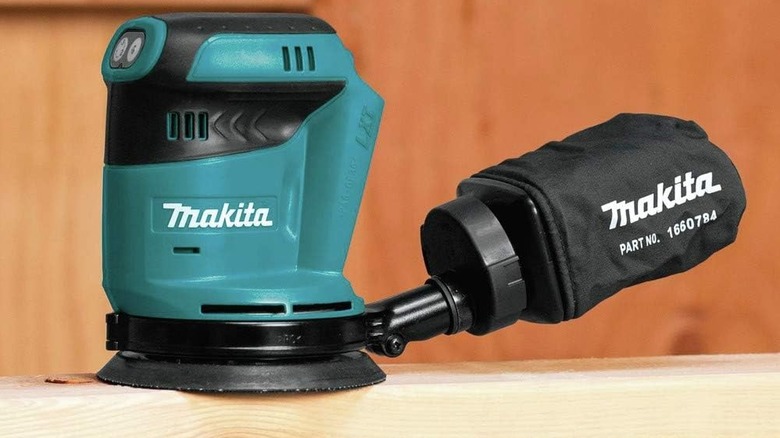
No list of carpentry or woodworking tools is complete without a sander, a tool that is absolutely invaluable for preparing wood before staining or painting. The cordless Makita XOB01Z 5-Inch Random Orbital Sander is currently a competitive $109 on Amazon. It offers three speed settings, accessed by a simple push button on the front. In combination with different sandpaper grits, I can quickly rip through old paintwork or get a pristine finish on a new tabletop. I really like the pad brake, which stops it fast (I find it frustrating how cheap models carry on for ages), and it will run for up to 40 minutes on a single charge. A dust bag is included, though I mostly connect mine to the hose of a shop vac.
As you might have guessed, I'm a big fan of Makita power tools. When you work as a carpenter for a living, you need equipment you can rely on, and that has been my experience with this brand. To be fair, Makitas are not the only woodworking power tools I have owned. Others include DeWalt and Bosch, and I have occasionally bought cheap imports if it's an unusual tool I only needed for one or two jobs. However, when it's something I expect to use often, I'll check out Makita models first. If you're the kind of person who believes it's better in the long term to invest in quality, then I think you'll find they're well worth your money, too.