

For An Indoor Bonsai Plant That Thrives, This Is The Only Place You Should Put It
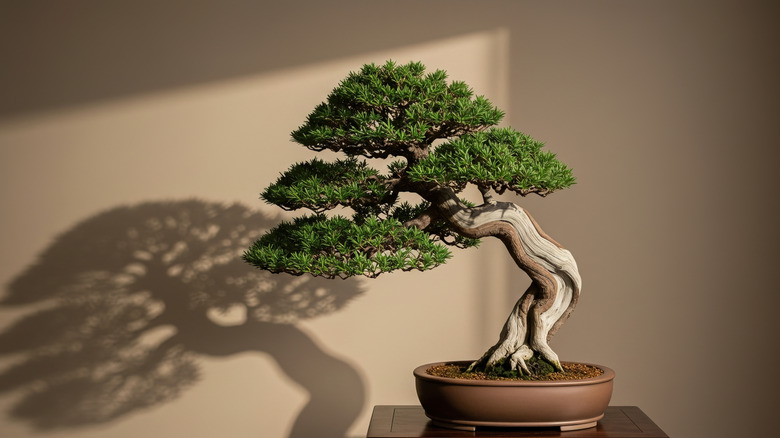
Growing and caring for a bonsai tree goes beyond flexing your green thumb and cultivating a peaceful, greenery-filled space. However, while tending for your own bonsai tree can be a rewarding experience, having the right care routine for it can be the difference between a healthy, thriving tree just waiting to be shaped and a failing houseplant. As a result, if you want the best results for your indoor bonsai tree, there's only one place you'll want to put it: near a window with ample sunlight.
Bonsai trees can come in a variety of species, which means exact care can depend on your exact tree. However, most common bonsai tree species need direct sunlight — and plenty of it. While a lack of proper exposure may not be enough to kill your bonsai, especially if it's receiving some level of light each day, the deficiency can lead to concerns like poor growth. This means that learning about the right spot to place your indoor bonsai tree is just as important as maintenance tasks like watering or fertilizing while shopping.
If you're looking to grow your indoor bonsai tree without the help of any supplemental lights, the best place for your bonsai is likely by a south-facing window. This ensures that your plant gets the most amount of light each day. However, there are some caveats to placing your tree here to keep in mind.
South-facing windows are the best choice for bonsai trees
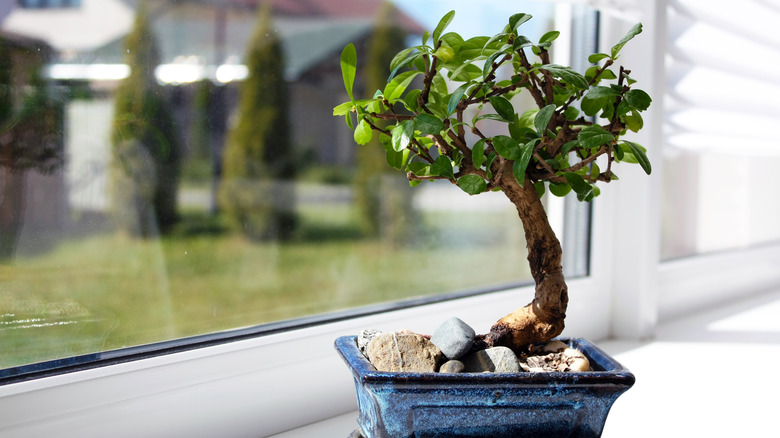
The direction that your window faces plays a large role in how much light exposure occurs. North-facing windows receive the least amount of direct sunlight. In fact, they don't receive any at all, instead filling your room with softer, indirect light throughout the day. East- and west-facing windows offer some direct light, but only for a portion of the day. South-facing windows, however, receive the most direct sunlight each day, making them the best place to keep your indoor bonsai plant.
But what about the caveats? First, while a south-facing window does provide the most sunlight each day, this only pertains to the window sill itself. If you place your bonsai on a shelf or stand further than three feet away from the window, you'll likely receive indirect light versus direct light. Different states also receive different levels of sun exposure, which means that a bonsai placed in a south-facing window in a low sun exposure state may still need a helping hand.
A south-facing window can also come with the downside of overheating during the warmer months. While the temperature itself may not be a problem, too much heat and light can lead to drier conditions. Many of the same bonsai plants that appreciate those balmy environments also need higher levels of humidity. As a result, if you've noticed that your bonsai is dry, you may need to find ways to increase the humidity for your plant, such as investing in a humidifier or misting your plant.