

What're The Differences Between American And European Closets? (And Which Is Right For You)
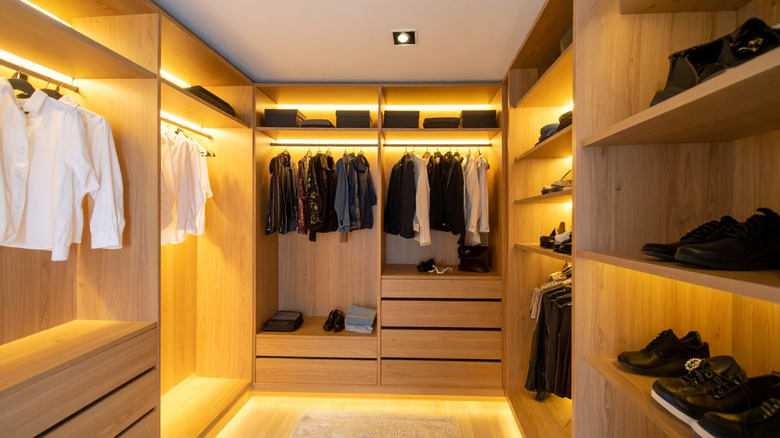
You've probably noticed lots of cultural differences between Americans and Europeans. From tipping etiquette and dining traditions to systems of measurement and transportation methods, there are plenty of idiosyncrasies that set us apart. One area where Americans and Europeans also diverge is our approach to closets and storage. Whereas American bedrooms are almost always equipped with closets built into the wall, Europeans are much more inclined to use freestanding wardrobes as closets in their bedrooms.
Why the discrepancy? For much of history, the built-in closets that many bedrooms in America are equipped with today simply didn't exist. Most homes in Europe and the United States, alike, were too small to accommodate built-in or walk-in closets and utilized storage furniture, like chests and wardrobes, instead. Plus, people simply didn't have as much stuff as we do today, so having an entire room off the bedroom devoted to clothes, shoes, and personal belongings wasn't considered a necessity. It was only in the 1950s (during the post-war boom when new buildings with more space began popping up) that built-in and walk-in closets became the norm and accessible to the average American.
Today, you'd be hard-pressed to find a new house built in the U.S. that doesn't have either a walk-in closet or built-in closet — possibly simply because U.S. homes are so much bigger than elsewhere in the world. In Europe, however, more homes are historic older buildings that still utilize wardrobe furniture instead of built-in closets. Some of this is likely a holdover from policies in countries, such as Germany, where built-in closets used to be taxed as extra rooms, so people would forgo built-ins to save some cash. However, even new buildings in Europe today don't always prioritize built-in closets, with many still opting for freestanding storage instead.
How to tell if an American-style closet is right for you
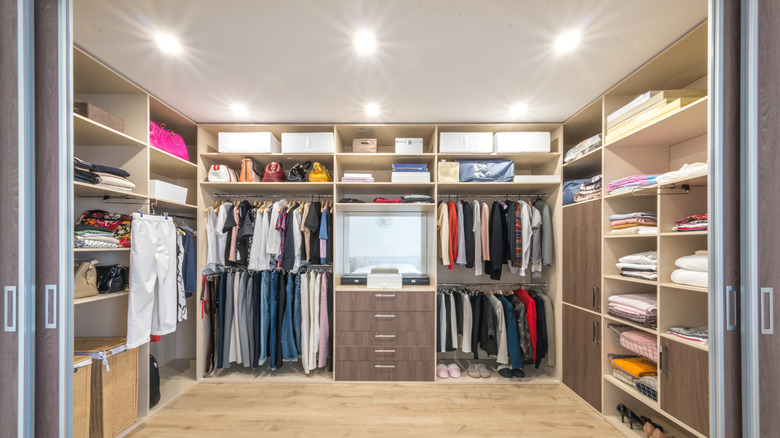
No matter which side of the pond you live on, the closet type that's right for you depends on how much storage you need and how flexible and adaptable you want that storage type to be. American and European closets each have benefits and disadvantages. American closets are usually either built-in, meaning they're designed to fit into the wall while still not taking up too much space, or walk-in, meaning they function like a separate little dressing and storage room within the bedroom.
A built-in closet can be a good compromise if you don't need all the real estate that a walk-in closet occupies but want a little more storage than a European-style wardrobe. But, regardless of which you choose, there are also plenty of custom closet features you can add to American-style closets, such as unique lighting, shelving, and organizers tailored to fit your needs.
American-style closets likely suit you best if you have lots of clothes, coats, shoes, accessories, and other stuff that you want to keep right in your bedroom and not stored away somewhere else, like the attic or basement. However, American-style closets aren't as flexible and portable as their European-style counterparts. That means that if the closet is already built in a spot you don't like, there's not a whole lot you can do about it.
How to tell if a European-style closet is right for you
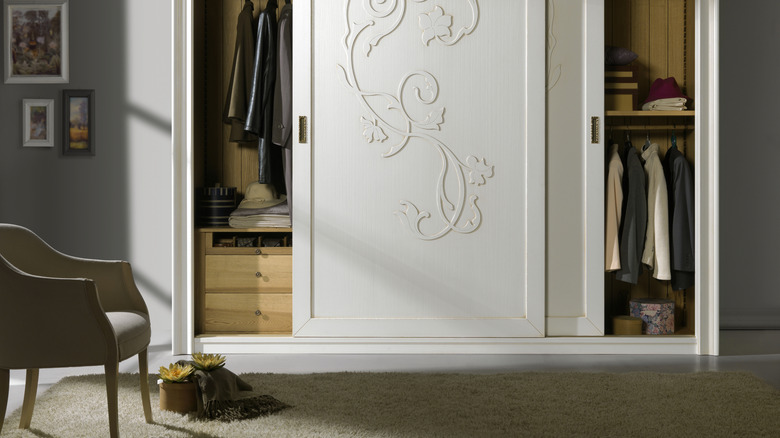
European closets, on the other hand, tend to be more unassuming and sleek — including freestanding wardrobes hugging the walls and offering discreet, practical storage. Since European closets often don't involve cavities built into the construction of the home, the design is a lot less rigid and allows you to move your closet and storage spaces to different areas if you need to. Shelving and storage is modular and adaptable instead of fixed and permanent.
Space is often tighter, and you won't fit as many things inside. So this isn't the best option if you have lots of belongings to accommodate. However, the space limitation also encourages you to take a chic minimalist wardrobe approach. Since you don't have endless space to stuff things in, this storage solution encourages more mindfulness with what you keep and how you organize it — so it's perfect if you're looking to purge your home of too many possessions.
Plus, if you opt for a European-style dresser or wardrobe closet solution, you also have lots of opportunity to get creative with the beauty of the exterior. Beautiful, rich woods and sturdy materials made to last are classic components of these storage solutions. If you opt for dresser-style storage, you can also get creative using the space on top for more storage in the form of baskets and bins — or add something simple, lovely, and decorative, such as photographs, vases, or books.