

The Popular Vining Plant You Should Avoid Buying As A Seedling
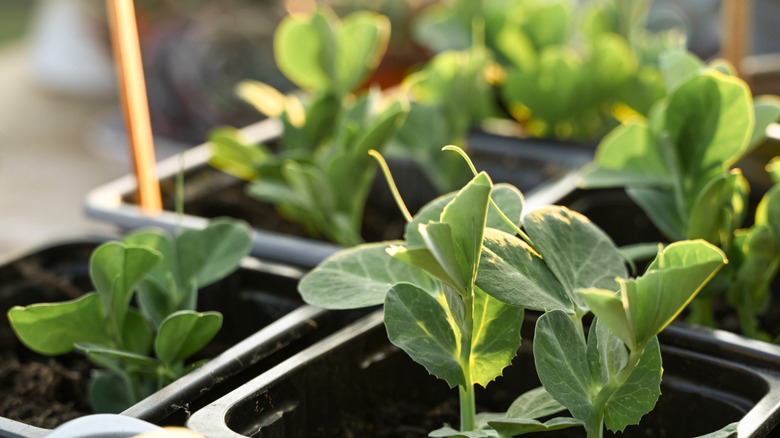
Ever heard of a snow pea? No, it's not made of snow! The snow pea (Pisum sativum var. saccharatum) sprouts edible, crunchy pods with delicious, immature peas inside. It receives its name from the fact that it often sprouts before other crops while snow is still on the ground. But to get a bumper harvest of those delectable pods, the best way to grow snow peas isn't by buying seedlings at the store, but by sowing seeds directly in the ground. Peas, like other vine plants that aren't worth buying as seedlings, prefer direct sowing. Transplanting them can cause the roots to suffer and wither, leading to reduced vigor and poor health later on.
Transplanting harms the pea roots for two main reasons. Firstly, the roots tend to grow near the surface of the soil. Of course, they'll be exposed when you remove the seedlings from the pots, and touching those sensitive white roots can injure them. The seedlings may recover, though they'll need time to grow new roots. On the other hand, direct-sown pea seeds won't have to recover from any damage, and they'll have a head start on the growing season.
Secondly, peas need access to specific bacteria that partner with their roots. Plant their seeds in pots, and the roots won't be able to access the bacteria, thus restricting this symbiotic relationship, as it naturally occurs underground without disruption. To explain, bacteria form nodules on the roots that convert atmospheric nitrogen into a form that plants can use. The more peas you direct sow, the more nitrogen will abound in your garden's soil.
The best way to start your snow peas for the best harvest
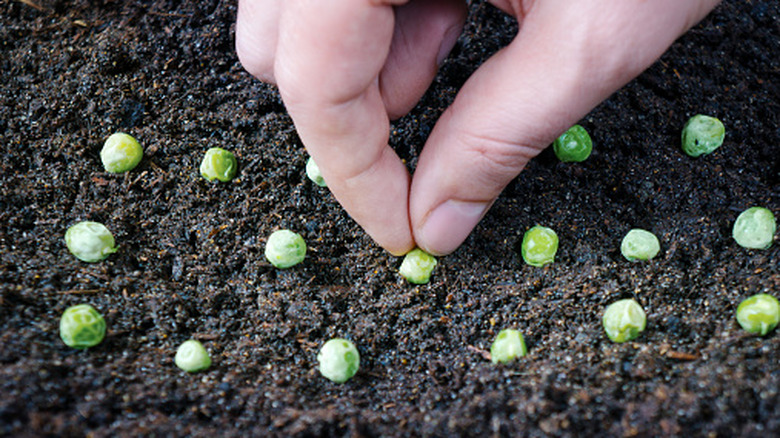
Instead of subjecting your snow peas to unnecessary trouble, plant the seeds directly so they can grow without issues. These peas perform best in the spring or fall in cold regions, and through the winter in frost-free areas. For most growers, January is the perfect time to plant peas in your garden. They need ample moisture, organic matter, and well-drained soil to thrive. If your soil is too sandy or full of clay, amend it with compost before planting your seeds. A layer 2 to 3 inches thick should be perfect for the tender seedlings. Mix the compost in well, then water it to help it incorporate into the soil.
Sow your seeds 1 to 2 inches deep, with a spacing of around 2 inches, and then cover them with soil and water them well. Snow peas tend to flop if they don't have support. Give them the structure they need with something like this easy DIY pea trellis you can make on a budget. The pea shoots will use their vining tendrils to latch onto the structure and grow upwards.
With dozens of snow pea varieties available, there's sure to be an option for you. Try 'Oregon Sugar Pod II' if you want a lot of pea pods, as this variety is incredibly productive. Wacky plant lovers should go for 'Golden Sweet Snow,' a variety with yellow pods. No matter which cultivar you choose, the best way to plant snow peas is by direct sowing their seeds. Skip the seedlings at the nursery and head for the seed aisle instead — your peas will reward you with loads of edible pods!