

How To Keep An Organized Emergency Pack For When It Matters Most
We may receive a commission on purchases made from links.
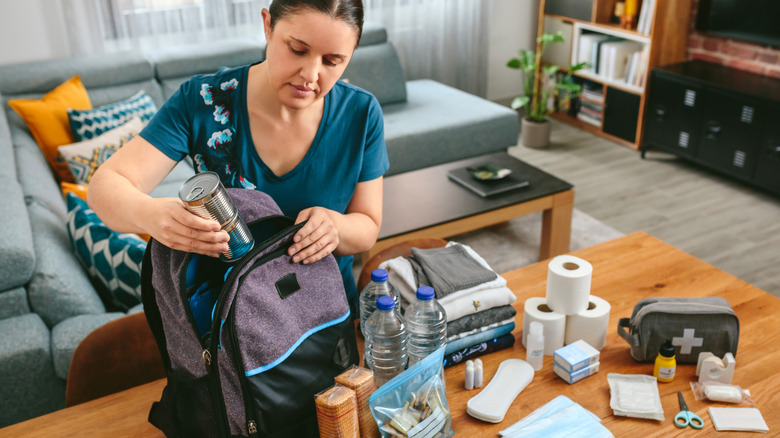
Emergencies, like tornadoes and hurricanes, can happen at any time. When they do, it's important you have what you need to survive comfortably for the next few days. According to the American Red Cross and FEMA, you should gather at least 72 hours' worth of necessities for each family member, including pets. Preparing in advance reduces stress and fear, making it much easier to reach a safe place quickly.
The contents of an organized emergency pack, or "go bag," are different for everyone, depending on individual needs. For example, some people may require medical equipment, while others may need to consider special dietary requirements. To start, there are a few essentials and emergency supplies every household should have that benefit everyone. The following article provides 17 tips on choosing the right container or bag and how to keep an organized pack ready in case disaster strikes.
Choosing the right pack for storage
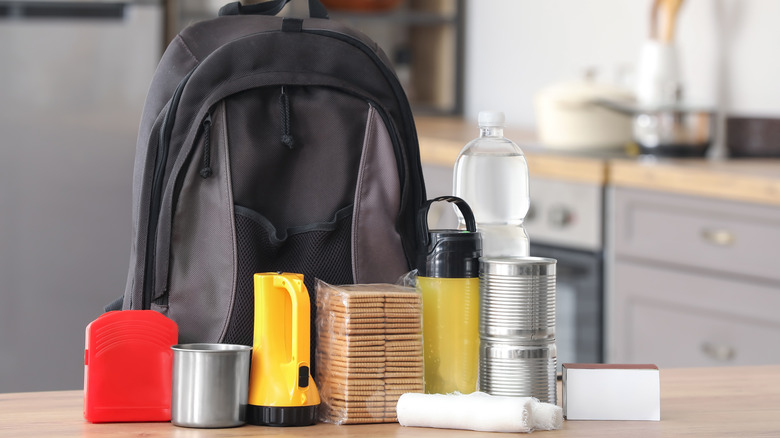
Choosing the right storage container for emergency supplies is one of the most important decisions you can make. It must be durable enough to keep items fresh, secure, and untouched for months at a time, yet small and manageable enough to transport. For home use, store items in sealable plastic containers and keep them in a cool, dry place. If possible, choose containers with wheels, as they are easier to move from one location to another.
When selecting a backpack, make sure it is large enough to hold all of your necessary items without being too bulky. A pack between 35 and 50 liters is usually sufficient to hold three days' worth of essentials. Look for one with padded straps and a hip belt for comfort, as well as multiple compartments to help you stay organized. Reflective strips help ensure visibility if you plan to go out after dark. All packs should be waterproof or at least water-resistant.
Prioritize essentials, starting with the most important
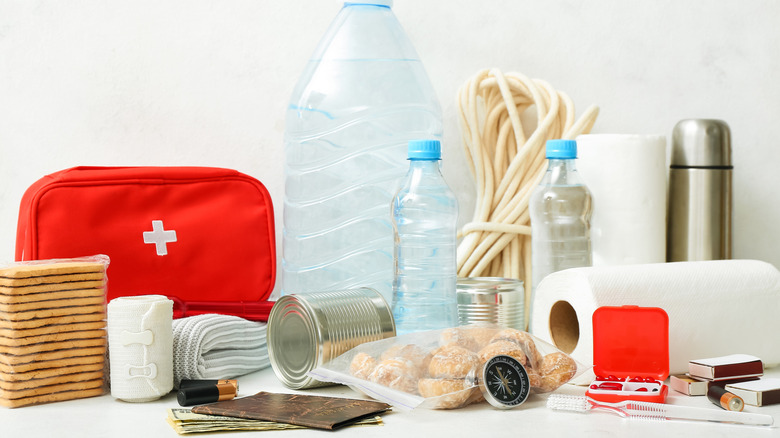
Your emergency pack should contain the basic items needed for survival. It's likely that you already have many of these things on hand, but they should be stored in a central location and kept fully stocked at all times. Keep in mind, the more items you include, the heavier your backpack will be and the harder it will be to carry it on the go. Start with the most critical items. These are things you absolutely can't get by without, like fresh water, food, medications, cash, bandages, and antiseptics. Prioritize these supplies by placing them in easily accessible pockets and containers.
It helps to make a list of essentials to keep packed and check each item off as you add it. As stated previously, you need at least three days of high-energy, non-perishable food items. Water purification tablets or a filter will help save space. Focus on the basics before you start adding anything else.
Choose clear packaging for easy visibility
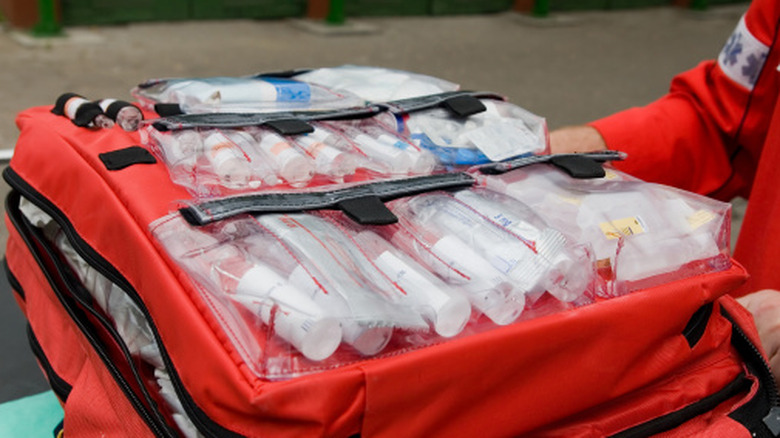
When you start packing items, you'll need a way to keep everything organized. Clear bags make it easier to locate what you need at a glance without needing to rummage through your entire pack. Ziploc or resealable bags help keep everything clean and dry, and they can be reused in other ways once they're empty. For example, a plastic bag can be used to hold perishable trash until you find a trash can, or it can double as an ice pack if you have an injury.
Choose a separate bag for each category of item. Pack all snacks in one bag, especially those with similar expiration dates, as this will make it much easier to locate and refresh your supplies as needed. For added protection, consider purchasing sealable waterproof bags that can be easily opened and closed, such as these EEOUT Waterproof Zipper Bags. Not only will they help keep your items sorted, but they will keep them safe and secure.
Label everything for quick access
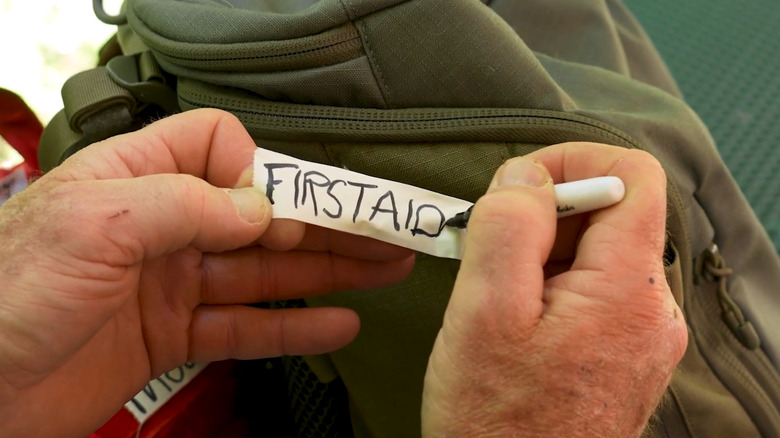
In addition to choosing clear bags, you should label everything. Each label should list the contents of each bag for easy identification within seconds. This is especially important in the event of an emergency, and it is essential for smaller items. You can take things one step further by using color-coded labels. Choosing a different color for each item category helps ensure everything gets put back into the correct bag after it has been used.
For best results, select easy-to-read, waterproof labels and write on them with a permanent marker to ensure the print stays legible over time. Reflective and glow-in-the-dark labels are also an excellent idea, as they offer better visibility when the power goes out or if you intend to be outside after dark. Affix each label in a highly visible location so it's easy to spot, using larger labels on plastic bins and smaller ones for individually wrapped items. If you don't have a label-maker, there are several unique ways to make labels at home.
Pack a first aid kit in case of emergencies
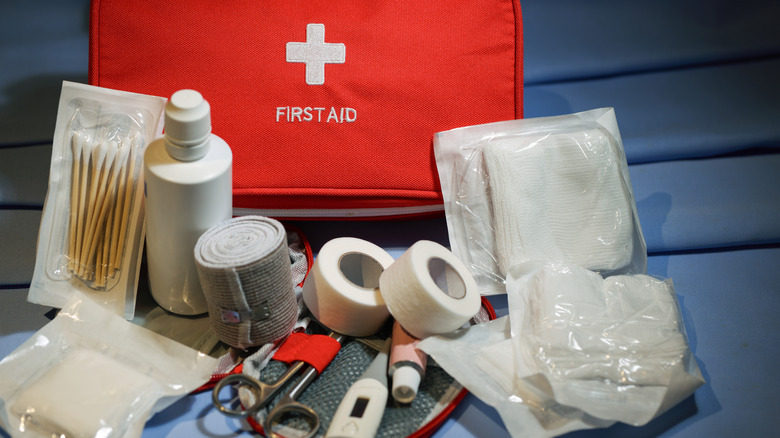
A first aid kit is one of the most essential items in a home safety kit. It should contain the basics, such as bandages, gauze, sterile tape, tweezers, antiseptic, and scissors. As with food and water, you should keep at least three days' worth of any prescription medications in your kit. If possible, try to have a 30-day supply on hand. Most prescriptions stay fresh for approximately 12 months after their expiration date, so replenish them as needed.
You can purchase a standard first aid kit in a sturdy waterproof case, like this All-Purpose Portable Compact First Aid Kit, or consider building your own. Remember to restock anything that you use, and replace expired items. Premade kits can save both time and money, but they won't include items specific to the user. You can always buy a premade kit and add personal items you know you'll need, such as diabetic supplies or insulin needles. If you haven't already, it's worth taking a first aid course to learn how to use your medical supplies and provide assistance in an emergency situation.
Include multipurpose tools
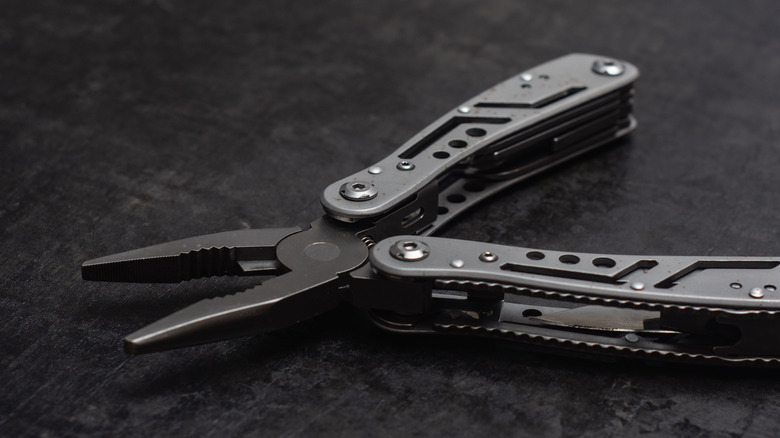
A multipurpose tool, like a Swiss Army Knife or a Leatherman, is essential for an emergency pack because it takes up less space than packing a whole toolbox. There are also several apps that can turn your phone into a pocket-sized toolbox. These tools are useful in various situations and tend to be lightweight and easy to carry. If you're going to be stuck outside, you may need one to cut small sticks for firewood. Indoors, they can be useful for stripping wires and picking up small items. When choosing a multitool, consider what you'll be using it for. It should be able to handle multiple tasks yet still be small enough to fit in your pack without weighing it down. At the very least, it should have both flathead and Phillips head screwdrivers, a file, scissors, and wire strippers, and it should be made from stainless steel or titanium.
Before packing the tool, familiarize yourself with each function so you don't spend valuable time in a crisis trying to figure it out. Keep it in an outside pocket or in a location that's easily accessible.
Safely store important documents
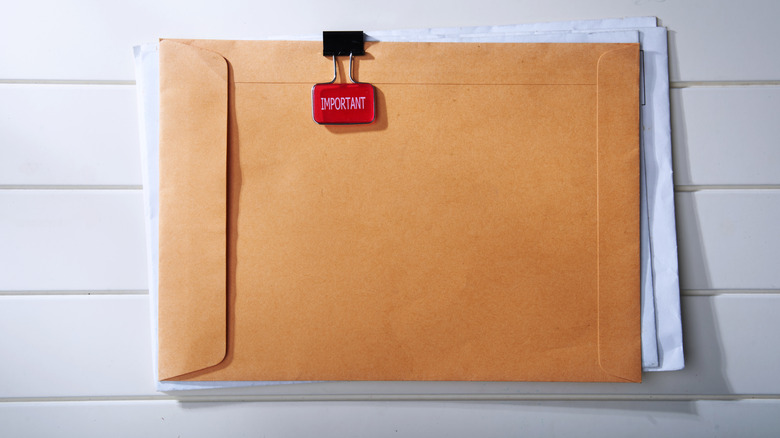
In the event of an emergency, having access to important documents can be crucial. You never know when you may be asked to show your ID, prove your citizenship, or verify your relationship with someone. Important documents include your birth certificate, passport, Social Security number, proof of insurance, and a list of any medical conditions. Other important documents and information include bank account numbers, home and vehicle titles, copies of your mortgage loan, pet information, and military records. Keep these items secure in a waterproof pouch in a dedicated compartment inside your pack. You might even consider keeping digital backups on a USB drive, or taking photos or scans of each document, and storing them in another location for added protection. Always keep the original copies in a safe-deposit box.
It's also important to keep this information up to date. If you change your name or move house, be sure your documents reflect these changes.
Maintain a fresh supply of water and food
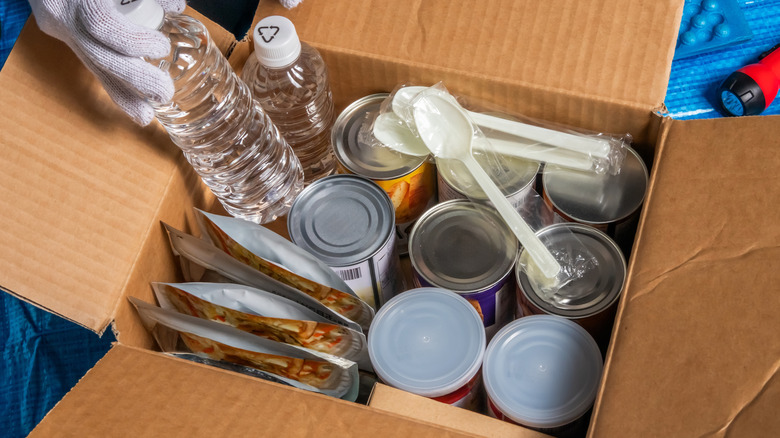
Food and water are an important part of an emergency pack. FEMA recommends having at least three days' worth of each for every person. Ideally, you should have enough food and water to stay fed and hydrated for up to two weeks without needing to leave your home. Choose non-perishable, high-calorie foods, like granola, dried fruit, crackers, peanut butter, or MREs. You also need to store at least one gallon of water per day per person and pet. For cooking, consider purchasing fuel tablets and a lightweight camping stove, like the Chef Master Butane Countertop Stove, if space allows. A manual can opener can also be useful if there isn't one on your multitool.
Store all food items in airtight food containers or resealable bags. It helps to vacuum-seal items like rice and spices so they take up less space in your pack. Check expiration dates regularly and replace items with fresh stock as needed.
Include extra clothes for the season

Your emergency pack should contain at least one change of seasonally appropriate clothes and shoes for each person. In the winter, include thermal underwear, socks, hats, gloves, and an emergency poncho to keep you dry. You may also need a heavy coat or jacket, depending on where you live. Quick-drying, wicking materials keep moisture off your body for increased comfort. In addition to clothes, each person should have a blanket or sleeping bag, which can be stored with their clothing items. Emergency blankets are lightweight, reusable, and take up very little space when folded.
Like other supplies, your clothes and sleeping gear should be stored in airtight, waterproof bags to prevent them from getting damaged. To save space, roll these items tightly and store them in vacuum-sealed bags. Change out these items each season, so you have lightweight clothes prepared in the summer and heavier items in the winter.
Add portable chargers for all electronics
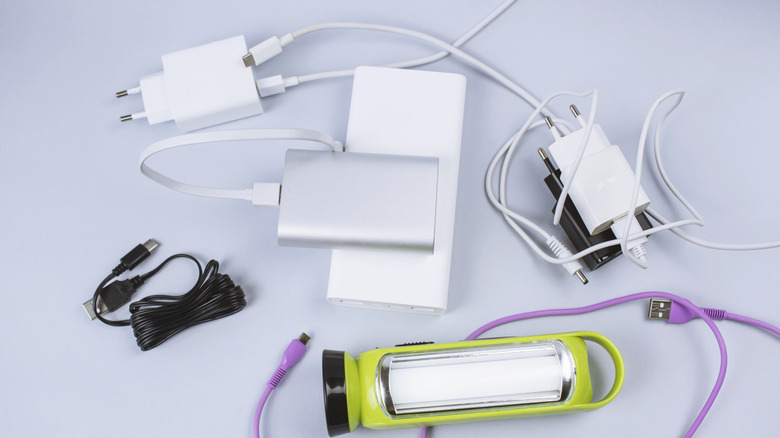
Approximately 98% of people living in the United States own a cell phone. Nowadays, they're our primary method of communication, making them extremely important devices to have in an emergency. Your phone can provide weather alerts, emergency broadcasts, and GPS navigation. During a power outage, your cell phone's battery can drain quickly if you're using it more than usual, or if you have multiple apps open. Having a phone charger with a reliable power source is crucial if you want to stay connected.
Purchase one charger for each family member and for each type of device. Store chargers in an easily accessible pocket of your pack, and make sure to include all compatible cables. When you change or upgrade your device, add the appropriate charger to your pack. You should also regularly check that each charger is in working condition, and that all power banks are fully charged and ready to use.
Pack a compass and a map for easy navigation
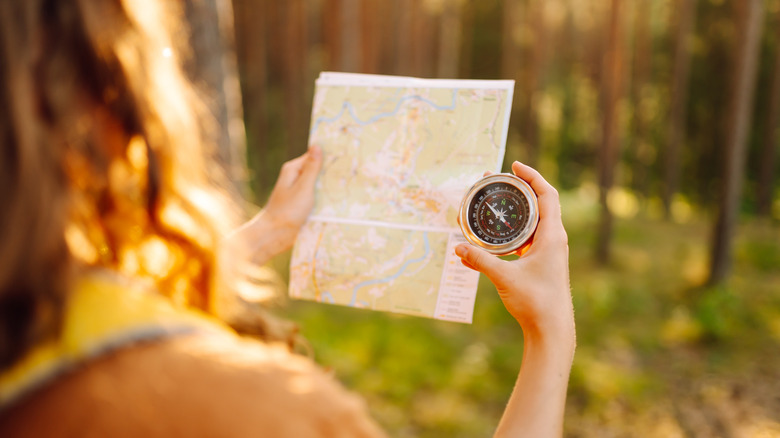
For most people, a mobile device is the first thing they'll turn to for directions or navigational information, but what happens if technology fails, or you're in a location without cell service? A compass and a map can let tell you where you are and how to get where you're going if you lose access to GPS. Learn how to read a map and use a compass in advance. You may want to label key areas on your map ahead of time for faster navigation. Knowing how to identify landmarks and reach a safe zone without technology is a fundamental survival skill.
For free maps, check with your state or local tourism center. There are also multiple websites online that allow you to download and print free maps. Get enough to cover every location you think you might travel to. If possible, choose laminated or waterproof maps, or store them in waterproof sleeves.
Avoid the dark with a flashlight and extra batteries
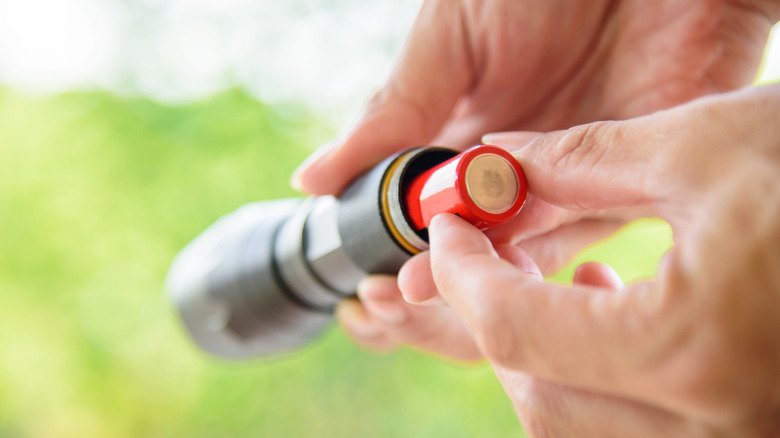
One of the last things you want during an emergency is to be caught in the dark, unable to see. Whether you're inside your house during a power outage or on the road with a flat tire in the middle of the night, lights can prevent accidents and keep you safe. Choose multiple light sources, like a flashlight for signaling long distances, and a high-quality, hands-free LED headlamp. Chemical glow sticks are safe to use in sleeping areas and near gas leaks. If your lights aren't rechargeable, you'll also need to pack extra batteries, or consider a rechargeable hand-crank flashlight.
Regularly test all devices to make sure they are working correctly, and replenish used or expired batteries as needed. Lithium batteries tend to have a longer shelf life, and they perform better in cold weather. Store light sources in an outside pocket of your pack, and keep batteries in their original packaging.
Enjoy downtime with entertainment materials
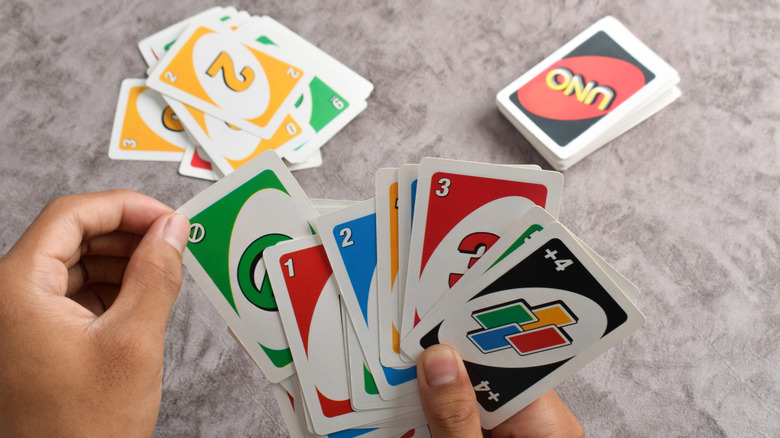
When basic survival is your number one priority, your mental health can suffer, especially if you're sitting around waiting for the power to come back on, or for emergency crews to reach you. This is especially true for families with young children. To address this problem, pack a few lightweight games and entertainment materials to help everyone stay motivated and keep their spirits high.
These comfort items may vary from one family to another. If you enjoy reading, pack an e-reader or a copy of a beloved paperback novel. Educational workbooks can be helpful if schools aren't in session. Games might include a deck of cards, travel board games, or a small craft project. Journaling is another great way to deal with stress, so consider packing a notebook and a pen. If you've had a power outage and used these items recently, consider rotating them out to prevent boredom. Keep entertainment materials in their own compartment in your pack.
Don't neglect personal hygiene
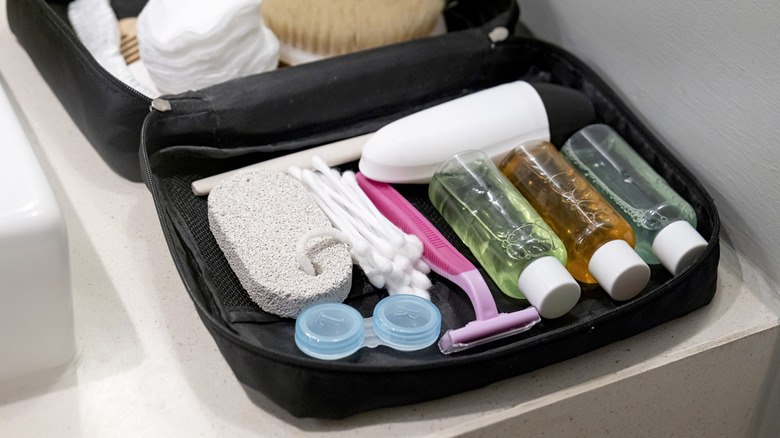
When you're in the middle of a crisis, it's easy to forget about personal hygiene. However, washing regularly and staying clean can help prevent infections and various illnesses. Basic hygiene items, such as toothbrushes, toothpaste, hand sanitizer, and travel soap, are essential for both comfort and health. You should also have a supply of toilet paper and feminine hygiene products. Wet wipes are good for shower-free bathing, while microfiber washcloths are excellent additions to an emergency pack because they're mold-resistant and can hold up to seven times their weight in water.
Organize these items in a waterproof pouch and replenish supplies as needed. If you intend to be outdoors, consider choosing biodegradable options labeled for sustainability, as these are better for the environment. For sanitary waste disposal, pack several heavy-duty garbage bags, and a small trowel for digging holes in case you are forced to use the bathroom outside.
Inventory your pack regularly
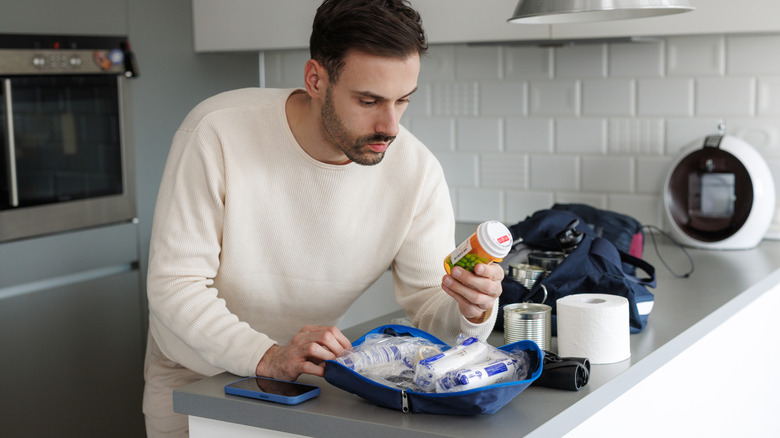
An emergency pack isn't something you should just fill and forget about. Many of the items inside have expiration dates that need to be checked regularly. At the very least, examine the contents of your bag and update items twice a year. Schedule this task in your calendar so you don't forget.
Before you inventory your pack, create a checklist that includes every item inside. Empty your bag and lay everything out on a table or in the middle of the floor. Check the expiration dates on all food, water, and medication. Replace any items you've used that are missing, and swap out expired items for fresh ones. Turn your light sources on and off to ensure they are still working, and update your clothes for the upcoming season. Finally, inspect the bag itself for damage, such as frayed straps or broken zippers. When inspecting a sealed container, ensure the contents haven't been compromised, and check the seal is still tight.
Consider vacuum sealing items for added protection
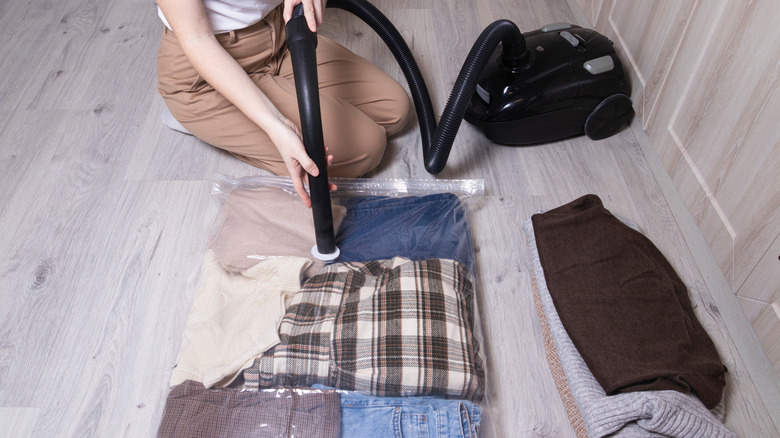
One of the greatest challenges when packing a comprehensive emergency pack is conserving space. Bulky items like sleeping bags, blankets, clothes, and coats quickly take up a lot of space in a pack, leaving little room for other necessities. Vacuum-sealed bags can help condense larger items, practically doubling your storage space, and they can keep food items fresh for up to five times longer than conventional containers. Vacuum sealing can also keep moisture, dust, and pests away from your belongings, no matter how long they stay packed in your bag.
It's important to choose high-quality vacuum supplies, like this Cozy Essentials Vacuum Storage Bags with Rechargeable Pump. Place your folded clothes, blankets, and extra socks into the vacuum bags and use the pump to remove all of the air. Store the packs vertically inside your backpack for maximum space efficiency. When you're ready to use an item, simply cut the pack open, taking care not to damage the items inside. That said, many bags can be resealed for multiple uses.
Encourage household involvement
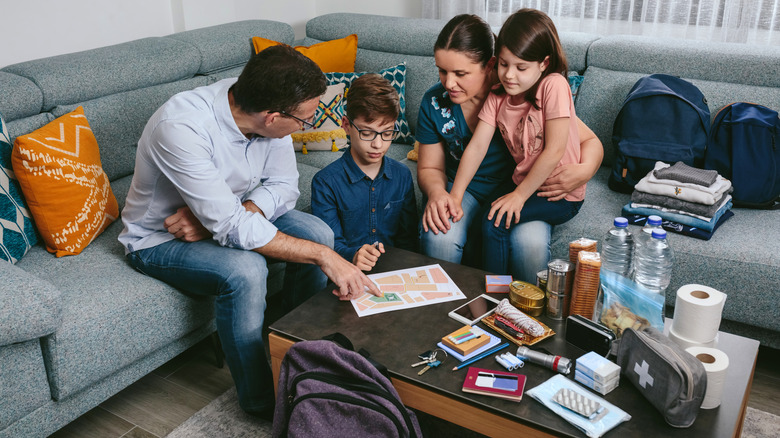
Emergency preparation shouldn't be the responsibility of just one person. Everyone should know what to do in the event of an emergency in case the head of the household is injured or separated from the group. Start by holding a group meeting to explain emergency procedures. Go through each emergency pack in detail, so that everybody knows what each item is for and how to use it. For example, show children how to crack a glow stick or operate a water filter.
Conduct regular group drills, where each member practices locating the bags, meeting at an assigned location, and performing specific tasks. For very young children, consider assigning them a small backpack that contains a few manageable essentials, such as identification documents, emergency contact details, a flashlight, and their favorite snacks. This will help eliminate panic and keep everyone together in the event of an emergency.