

Say Goodbye To Termites: Here's The Most Effective Treatment Option To Consider
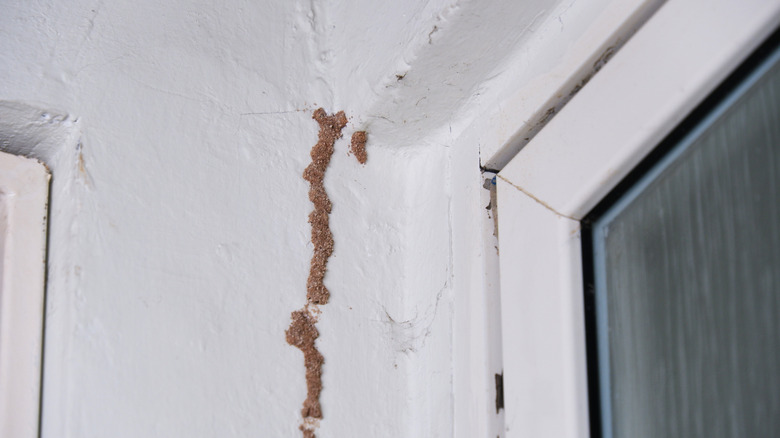
Mud tubes, pellet droppings, hollow wood, and insect swarms are some surefire signs you have a termite infestation. Once you discover them, it's hard not to feel consumed with the gnawing urge to eliminate these wood destroyers — permanently — before they wreak lasting damage. But what's the most effective way to get rid of termites? Michael Judas, president and owner of Franz Termite Control, says it's the transfer termiticide treatment in his exclusive interview with House Digest.
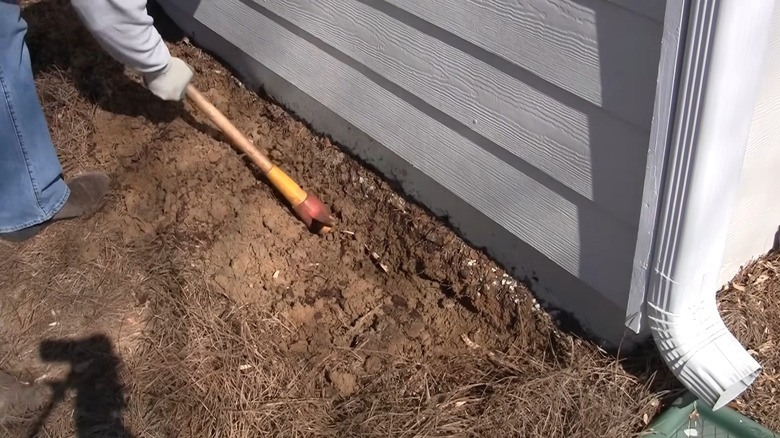
Termiticides are one of the oldest methods to eradicate termites. They're injected into the soil to form an effective barrier around the home's perimeter. Most traditional offerings relied on creating a repellent effect, wherein termites would move elsewhere after encountering these malodorous injectants. A transfer termiticide treatment, however, works differently. "A transfer termiticide treatment is a termite control method that uses a slow-acting, non-repellent (undetectable to termites) insecticide," elaborates Judas. "Instead of instantly eradicating the termites on contact, it allows exposed termites to unknowingly carry the termiticide treatment back to the colony, spreading it to other termites through normal social behaviors," he explains further. That way, this phenomenon, christened the Transfer Effect, ensures better results, as it can exterminate the entire colony.
Transfer termiticide treatment shows results after a month, and can remain effective for many years
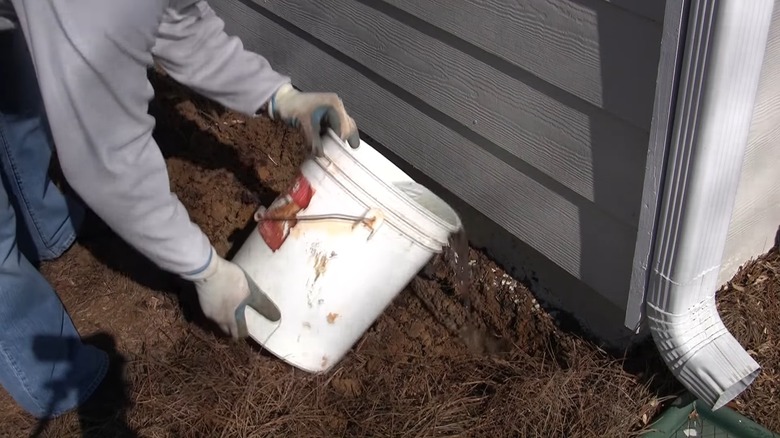
The Transfer Effect seeks to initiate a chain of events wherein the first termite, which encounters the insecticide, can survive long enough to pass it on to its companions. For this reason, even though the termiticide kicks in immediately, Judas ventures, "...it normally takes 4-5 weeks to eradicate a termite colony," in his exclusive chat with House Digest.
The treatment's longevity, however, varies according to the termite's species. Since subterranean termites inhabit the soil — the very medium into which the insecticide is injected — the chances of them returning are drastically cut short. But the treatment isn't as long-lived for drywood mites, as it's challenging to detect and hence, treat their presence since they remain deeply hidden in the wood. Touching upon this during his interview, Judas remarks, "If the treatment is for subterranean termites, the treatment could stay active for 4 years or longer — well after the colony's eradication. If the treatment is used for drywood termites, it will be effective for a couple of months up to 1 year."
Transfer termiticide treatment is highly effective, but may require supplementary measures or repairs
According to Judas, the reason transfer termiticide treatment one-ups other chemical treatments is its formulation. "We get a very low percentage of callbacks due to its non-repellent formulation. It is low in toxicity, which is important to our customers," he assures in his House Digest exclusive. The transfer effect is another feather in its crown since it targets the entire nest, and not just individual termites that come in direct contact.
But the best part, especially if your area is inundated with subterranean termites, is that you don't have to wait for them to show up. "It can be used as a preventative measure for subterranean termites and a whole-house treatment," our expert clarifies. Still, bear in mind that this treatment requires alterations to your home. "For subterranean termites, holes need to be drilled around the perimeter of the home, which may include slabs or decks. These areas would then need aesthetic and/or repair issues to patch the small holes created," he adds.
Another downside is that these results don't translate equally for drywood termites. For a start, transfer termiticide treatment doesn't work as a preventive measure in their case. In addition, it's only useful for treating localized areas of infestation. The reason? "In the case of an extensive infestation of drywood termites, there will be many inaccessible areas of the home, and the termiticide may not eradicate the entire colony," Judas concludes. So, to stop termites from turning your home into their retreat, you must also fumigate it.