

How To Prevent Tumbleweed From Invading Your Yard And Garden
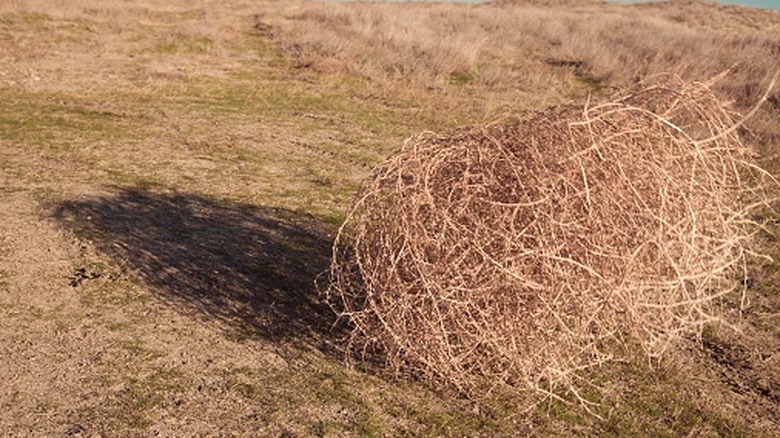
You'll find no lack of reasons to prevent tumbleweed in your yard and garden. It's a fire hazard, a competitor against native plants, a pollen-producing allergen, and even a danger for drivers who encounter it on the highway. This weed menace can be daunting to deal with, but it's totally possible to prevent tumbleweed from invading your yard and garden by stopping seeds from being produced, preventing them from germinating and reducing the "seed bank" — the number of seeds available to grow new weeds.
Tumbleweed is many things — an invasive nuisance and a stubborn bully that is challenging to remove — but one thing it isn't is a particular species of plant. A tumbleweed is a weed that, at maturity in fall and early winter, has dried out, has broken off from its stem, and is blowing across the landscape, dropping seeds with every tumble. Two species commonly associated with tumbleweed are Russian thistle (Salsola tragus) and kochia weed (Kochia scoparia), but many other weeds can be tumbleweeds. Both Russian thistle and kochia are invasive fast growers that can be toxic to animals if ingested.
If you already have tumbleweed, it's key to prevent more of this invader and get rid of invasive tumbleweeds in the yard through a combination of mechanical, cultural, and chemical control methods. Removing the hundreds of thousands of seeds in your existing tumbleweed is an important step toward preventing future invasions. Fortunately, these seeds have a relatively short viability period, with few remaining survivors after the second year. Up to three years may be required to eradicate tumbleweeds from your yard and garden, so preventing them in the first place is ideal.
Prevent tumbleweed by quashing seed production
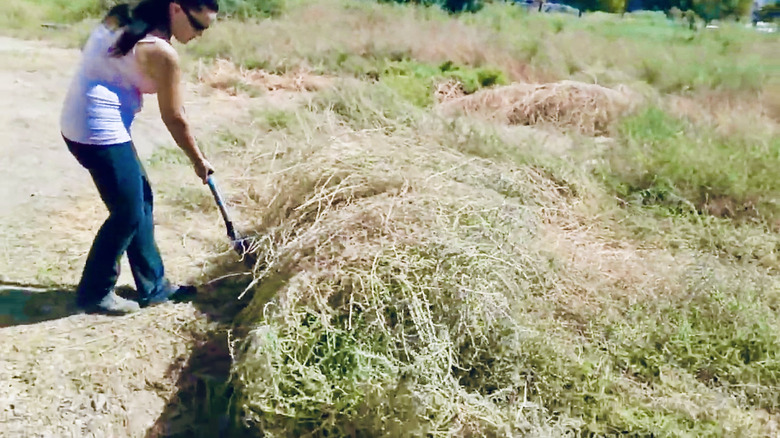
It's all about the seeds, and timing is critical in preventing tumbleweed. Ideally, you have a plan in place for spring, before the weeds' period of seed production between July and October. Mulching is an effective way to keep these weed seeds from germinating, and bark mulch is the best kind of mulch to prevent weeds. Apply a 3- to 4-inch layer of mulch.
You can also prevent weeds from taking over with the help of a common household throwaway – newspaper. Because tumbleweeds seek out disturbed soil areas, avoid soil disruptions by limiting human, animal, and equipment traffic or growing other plants in these areas. Consider grasses that can outcompete tumbleweed varieties.
To prevent seed production, you can pull the seedlings destined to become tumbleweeds before they go to seed. Mowing is also possible, but the weeds missed by the mower blade can still produce seeds. Chemical control with pre-emergent herbicides is an option; be sure to follow all label instructions and review the types of weed killer before spraying them in your yard. Getting rid of the seedlings depletes the available seed bank, preventing the production of new weeds.