

Why Your Attic Is So Hot & How To Keep It Cool
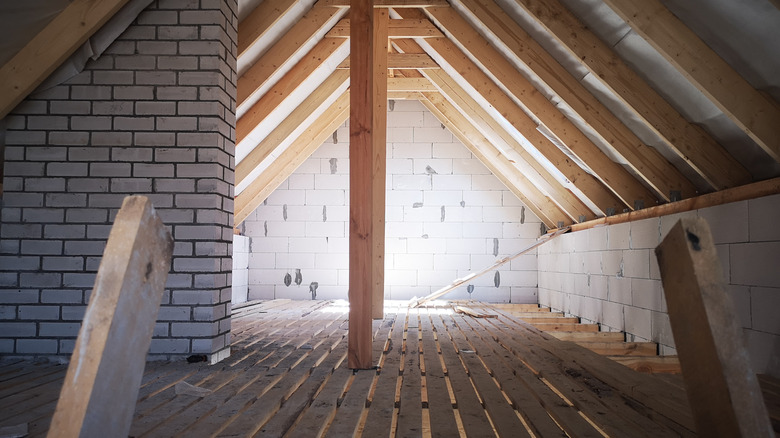
Your home's attic does more than store old boxes. Since it's the highest part of your home, and heat rises, it's usually not a surprise that your attic feels stifling. If you've climbed into your attic on a summer day and felt like you stepped into the oven, it's likely because the temperature is up to 20 degrees Fahrenheit hotter than outside. You're not alone: According to EcoFoil, about 80% of homes in the United States that have attics may experience issues with the attic becoming too hot. Understanding why this happens and what you can do to keep the attic cool will make trips upstairs more comfortable and your home more energy-efficient.
Your attic becomes hot due to poor ventilation, inadequate insulation, air leaks, and the heat absorbed through the roof. You can keep it cool by installing attic fans, upgrading insulation, sealing leaks, and improving ventilation.
Your roof is the first line of defense against the sun's heat. If you have dark shingles or materials on the roof, they will absorb solar radiation, heating your roof's surface. That heat is transferred into the attic space. Hotter air that's inside your home also rises and reaches your attic space. Without proper airflow due to vents, the air will remain trapped. Your attic needs both intake and exhaust ventilation to allow hot air to escape and cooler air to enter, which also helps reduce utility costs. Poor insulation can also create a hot attic. The job of insulation is to prevent excessive heat transfer and regulate temperatures. Finally, any damage or holes in your roof can cause air leaks, allowing outside air in and making your attic sweltering.
Cool down your hot attic with these steps
First, ensure that you have a balanced system of intake and exhaust vents. You may need to add more vents to improve the airflow throughout and vent the hot air. It can be helpful to have a professional evaluate your attic and provide ventilation recommendations or service your attic's needs after an inspection, unless you feel you can do a DIY project to improve your home's ventilation. There are a few vent options, such as soffit, ridge, and gable vents, to regulate attic temperatures.
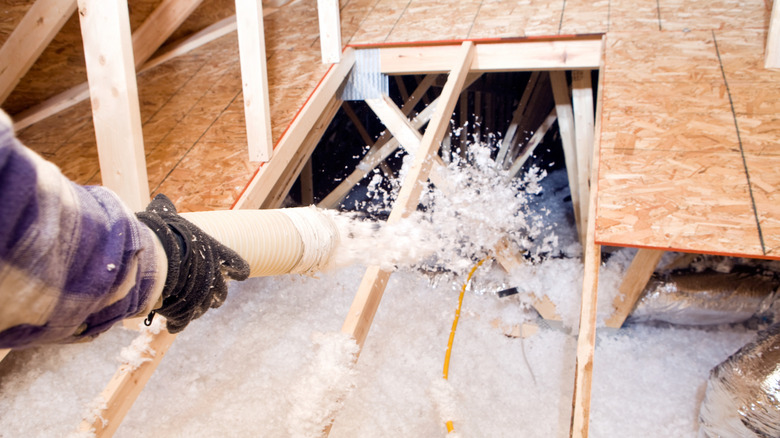
Insulation becomes less effective over time, so you may need to add more insulation or reinstall it to keep your attic at the proper temperature. There are two primary types of loose-fill insulation: cellulose and fiberglass. There's also reflective foil insulation, which keeps radiant heat from entering your attic space. An attic fan is also helpful, as it pulls air out. You may consider installing a solar attic fan as a solution.
If the roof needs replacing, consider going with a light color or material to help reflect the sun's heat rather than absorbing it. But if you're not doing a full replacement, make repairs to any loose, broken, or misshapen shingles. For smaller leaks or cracks in the attic, you may be able to just take some caulk and fill them in. If the job seems larger than a simple fill, you can install drywall sheets or sheet metal to plug and seal the leak.