

How Well Do You Know Your Fridge Temperature Zones? Use Them To Stay Organized
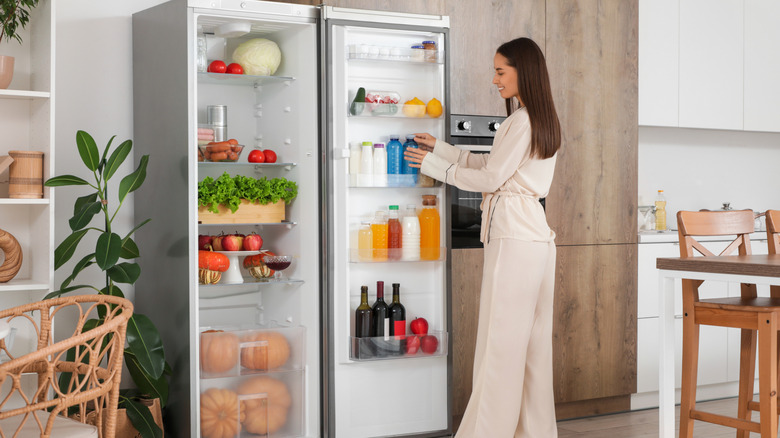
That thermometer reading inside your refrigerator technically doesn't apply to every spot in the appliance. The degrees fluctuate based on air flow and humidity. That's why the top rack, bottom shelves, crisper drawers, and door shelves have slightly different temperatures. Knowing the differences and organizing food by temperature zones ensures everything is easily accessible and chilled properly. It'll also help to limit food spoilage, which means you won't need to look for ways to get rid of funky odors in your fridge.
Depending on your appliance, the temperature difference from the door shelf to the lower rack can range up to 10 degrees. Crowding the shelves where cold air can't circulate can exacerbate the difference. However, regardless of where in the fridge you store something, it should be 40 degrees Fahrenheit or colder to ensure items are safely preserved. Sorting your goods by temperature zone is a simple way to prevent food waste with a fridge organization tip and make seasonal cleanings easier.
Bottom shelves are the coldest and door shelves are the warmest
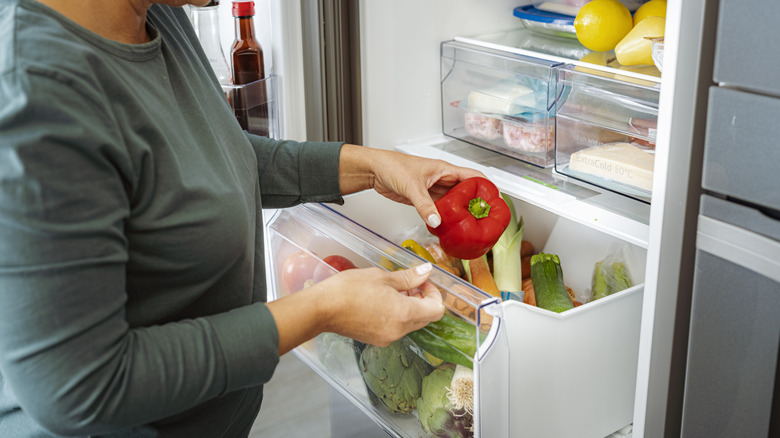
The bottom shelves are typically the coldest area in the fridge since they are closest to the cooling mechanism and cold air sinks. At the lower level, temperatures can dip as low as 32 degrees Fahrenheit. Foods that spoil quickly, like raw meat and dairy products, should be stored in these areas. The shelves get slightly less cold as you make your way up. The top shelf can be up to 6 degrees warmer than the bottom. Here is where dinner leftovers and ready-to-eat foods should go. Keep in mind, the back of the shelves are also colder than the front because they have less exposure to the warm air that enters every time the fridge doors are open.
The trays on your refrigerator doors are the warmest zone in the appliance, nearing the 40-degree mark. Every time the doors are open, these shelves are subject to room-temperature air. This is where non-perishables are best stored, like condiments and beverages. Lastly, there are the crisper drawers, which vary in temperature, anywhere from 32 to 40 degrees. They're designed to control humidity, so fruits and vegetables stay fresh. Low-humidity settings (best for fast-rotting fruit) allow for greater air flow, while high-humidity (best for leafy greens) traps moisture.
These zones can slightly differ depending on if your appliance is a French door, side-by-side, or top-freezer design. However, sticking to these general guidelines will ensure all the food items have the ideal place to go, helping you organize your fridge like a professional chef.