

This Is The Best Time Of Day To See Hummingbirds Flocking To Your Feeder
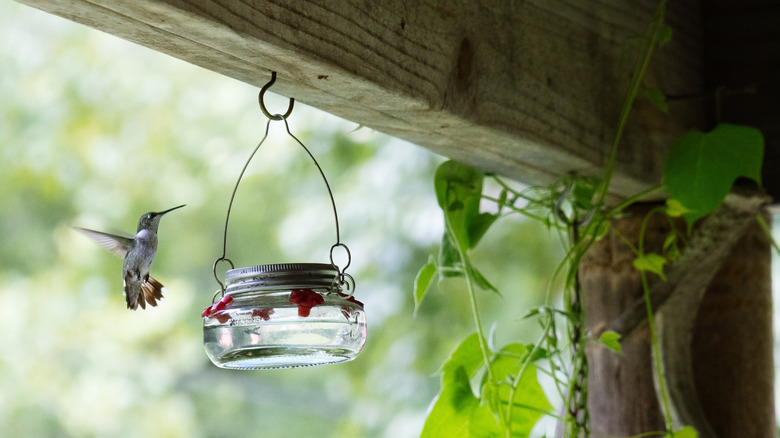
What's not to love about hummingbirds? Not only are these swift, pretty little creatures lovely to look at, they are also excellent pollinators of flowers and plants, and can help keep your garden from being overrun by insects. If you're trying to entice more beautiful hummingbirds to your backyard, you might consider leaving out a hummingbird feeder containing a simple sugar water solution, which can supplement their regular diet of flower nectar. This sweet treat is sure to draw plenty of hummingbirds to your garden, but if you're keeping an eye on your feeder in the hopes of spying some quick-winged little visitors, you may want to familiarize yourself with the most opportune times to keep your eyes peeled.
The best times of day to see hummingbirds flocking to your feeder are the early-morning hours, right as the sun is coming up, followed by the evening, right before the sun goes down again. You can still see some action at your hummingbird feeder throughout the day in between these two peaks; but if you' don't have the luxury of sitting around in your yard waiting for hummingbird sightings, you're most likely to get the most bang for your buck at the beginning and end of the day.
Why you're more likely to see hummingbirds at dawn and dusk
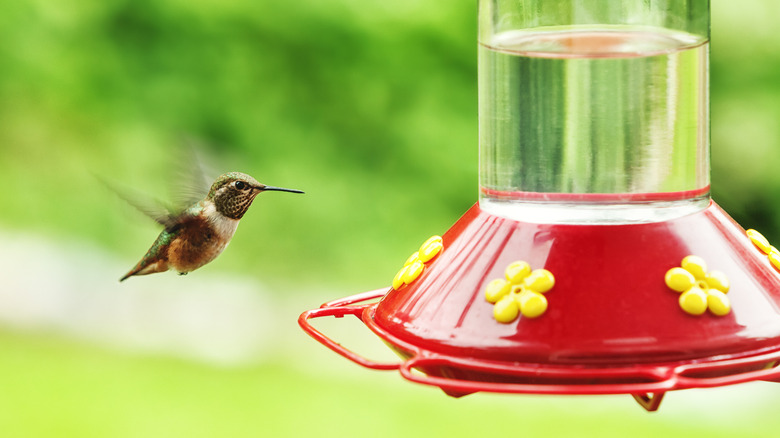
There's certainly something peaceful and almost magical about witnessing hummingbirds during these twilight hours. Before the hustle and bustle of daily life begins, and again before the day concludes, hummingbirds are at their busiest during these quiet moments. But as enchanting as it can be for us as homeowners, there are actually some very practical reasons why hummingbirds like to feed most during these times of day.
During the wee-morning hours, as the sun comes up, hummingbirds awaken from a hibernation-like state known as torpor, in which their heart rates and metabolisms slow and body temperatures drop overnight to conserve energy. In order to fully awaken and refuel, they need to quickly consume as much as possible, and hurriedly dart to flowers and feeders in search of food. Likewise, in the late afternoon and early evening, hummingbirds again ramp up their food consumption in an effort to store up as much energy as possible before the sun goes down and they enter torpor for the night.
With these cycles in mind, if you want to keep seeing hummingbirds returning to your feeder every morning and evening, make sure you're refilling your hummingbird feeder at the right time. While the birds are in bed, take your hummingbird feeder indoors and clean it out, swapping the old feed for a fresh serving of sugar water. Or, if you're an early riser, set your alarm for before sunrise and put out a fresh batch of hummingbird feed early in the morning; that way, it isn't sitting out all night for nocturnal critters to mess with.