

15 Items You'll Never Find In A Pro Chef's Kitchen

One of the best ways to improve your kitchen at home is to learn from the pros. Professional chefs must work quickly for long hours, which requires reliable, efficient tools. But a lot of common kitchen tools on the market don't end up in professional kitchens. Many single-use tools, like garlic presses and potato dicers, aren't necessary. When a cook has enough skill, especially when handling a knife, they don't need many of the time-saving gadgets on the market.
The tools on this list are familiar to most people. Some are prevalent in home kitchens because they fulfill a need, but any kitchen can operate at a high level without them. That's why some chefs consider these kitchen gadgets to be a waste of money. You may use some of these tools every day, and if they work for you, keep using them. The kitchen should be as relaxing as possible, and you should enjoy the process of cooking. But you can learn lessons from the pros and hopefully make your time in the kitchen easier or at least declutter your countertop.
An onion holder
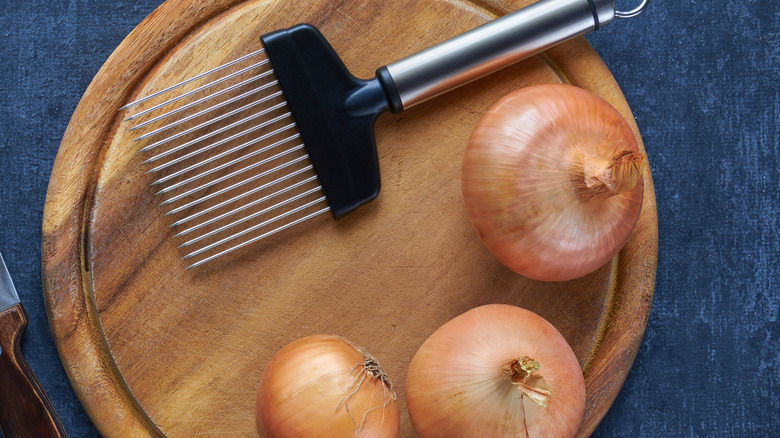
Onions often roll around on the counter, which can make them hard to control when you need to dice them. Onion holders resemble pick combs, with a handle and several metal prongs that stab into the onion, keeping it in place while a chef cuts it. Professional chefs don't typically use them because they don't need them. They simply cut the onion in half to keep it from rolling while slicing.
A garlic press
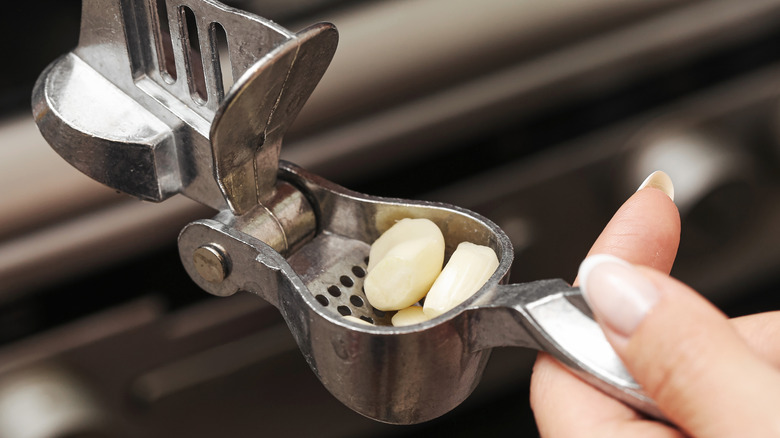
Some home cooks squeeze garlic into a paste using a press. This doesn't require you to remove the skin and, in theory, it's a lot faster than dicing garlic. But garlic presses aren't useful for professional chefs, because they are hard to clean. If you need to mince dozens of garlic cloves each hour, it's better to learn efficient knife work. In knife work, a chef's dexterity becomes essential to their trade.
Herb scissors
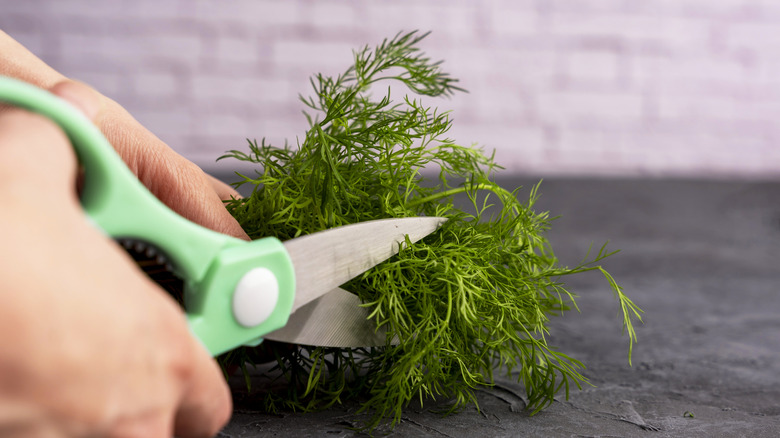
Fresh herbs add rich flavor to dishes, which is why many chefs grow their own. While you can purchase herb scissors to remove the leaves from the stems, chefs usually don't use them. Scissors often mash the herbs rather than cutting them, so you're better off picking the leaves or using a knife.
A mandolin
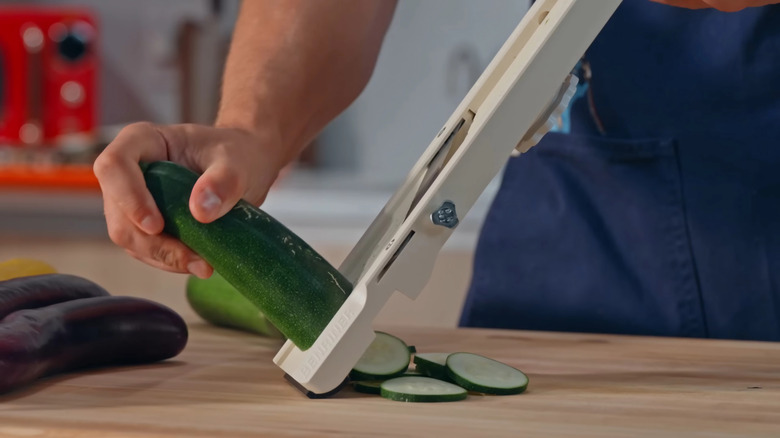
It's not the musical instrument. These bulky devices are helpful if you need to quickly slice vegetables. Professional chefs definitely need to cut vegetables as fast as possible, but they almost always opt for knives instead of mandolins. That's because they prefer to use their knives, which a good chef can wield safely, dicing vegetables in quick succession. Mandolins are also harder to clean than knives.
Onion goggles
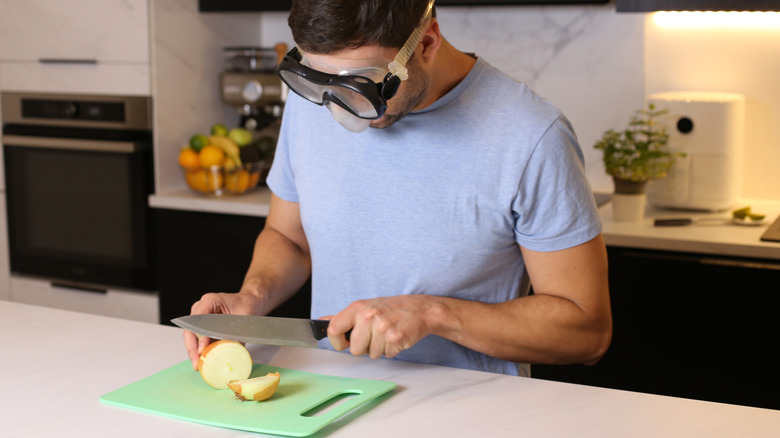
A lot of people have trouble cutting onions because their eyes water. Sliced onions produce a sulfur compound, which mixes with the moisture in the air to form tear-inducing sulfuric acid. This can make the work unsafe and uncomfortable. Some home cooks purchase goggles to protect their eyes. But goggles don't really block the sulfuric acid in the air. Professional chefs recommend using airflow, so you should instead turn on a fan or open a window.
Stone and metal cutting boards
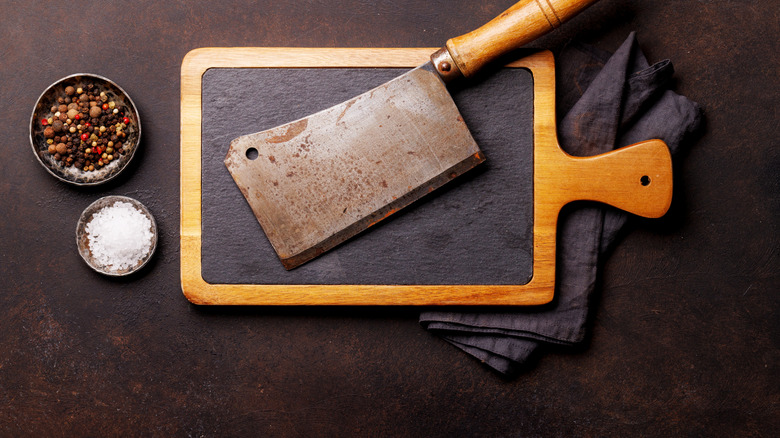
These options may look appealing, but they aren't great for your knives. Every time your knife slices across a hard surface, it dulls. Stone and metal may be easy to clean, but they are otherwise unyielding. Instead, professional chefs use wood cutting boards because they are softer, which protects the blade. Wood cutting boards do stain, but that doesn't affect their functionality. Just make sure to allow your wooden cutting board to dry so mold doesn't grow.
A vegetable dicer
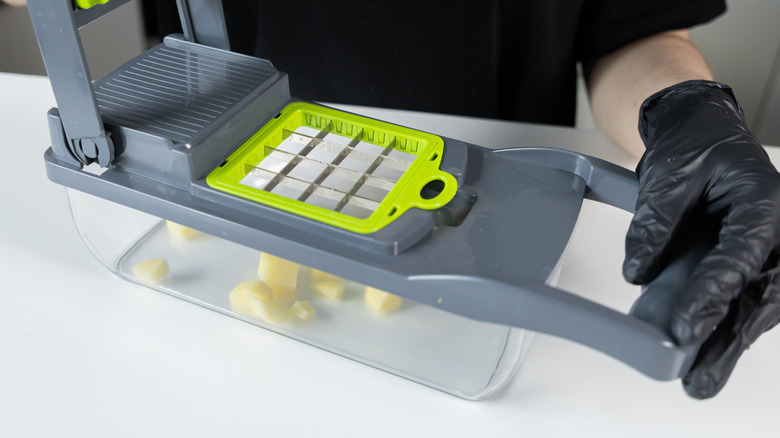
Vegetable dicers are a saving grace for people who aren't confident in their knife skills. You just place the vegetable over the blades and press down. In seconds, you'll have vegetable cubes. Like many of the gadgets on this list, these dicers take up extra space and are challenging to clean. It's also easy to accidentally slice yourself if you reach inside to dislodge a chunk.
An apple corer
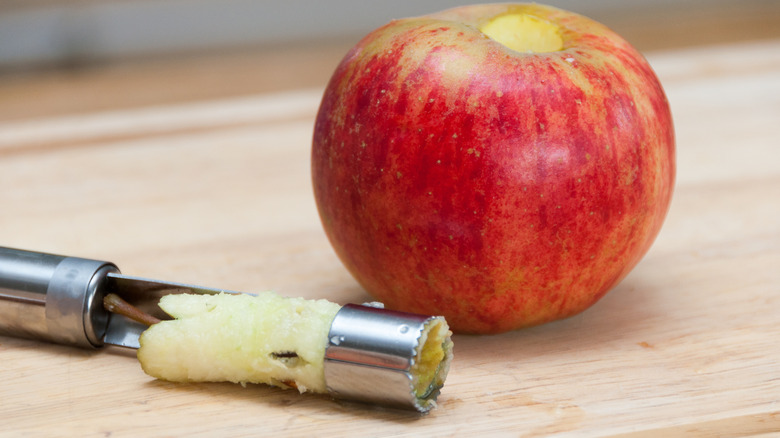
When you prepare a dish with apples, you have to remove the stem and seeds. That's where an apple corer can come in handy. But most chefs would rather reach for their knife and cut up the apple than search through drawers for an apple corer that will need to be cleaned up later.
A pull-through knife sharpener
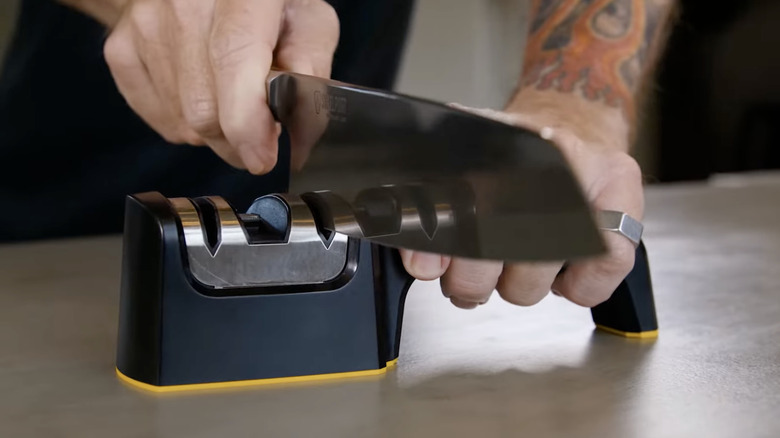
A chef's knife is their most important tool. That's why good chefs make sure to take proper care of their knives. With pull-through knife sharpeners, every time you place the knife in the slot and pull it through, the blade sharpens. These sharpeners can make the blade jagged until it chips. Instead, the pros say it's best to sharpen your knives with a whetstone and honing rod. The honing rod straightens the blade, and the stone hones it to a sharp edge. A kitchen knife should be able to slice a piece of paper.
Nonstick pans
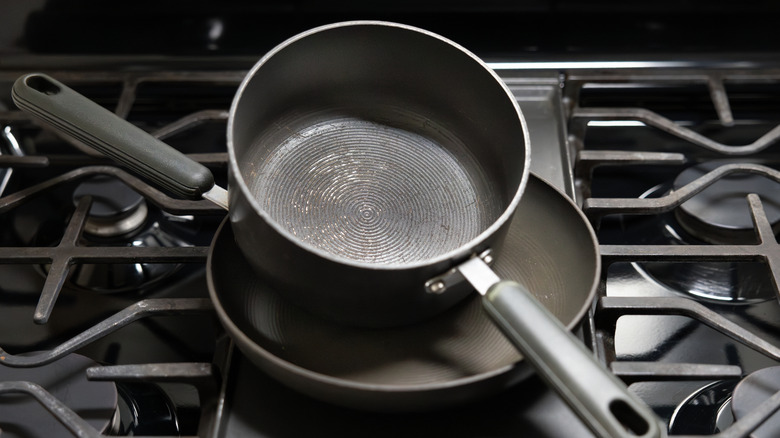
Chefs need tough pans that will hold up with constant use. That's why you rarely find nonstick pans in professional kitchens. You should avoid using this popular cookware as well because it usually contains forever chemicals that harm the environment. The coating will wear off, often within a year, and chefs end up having to throw them away. It's also very easy to scratch off the coating with metal utensils. That's why professional chefs opt for steel pans or sometimes even cast-iron skillets. These pans are better at withstanding abuse and heat.
Oven mitts
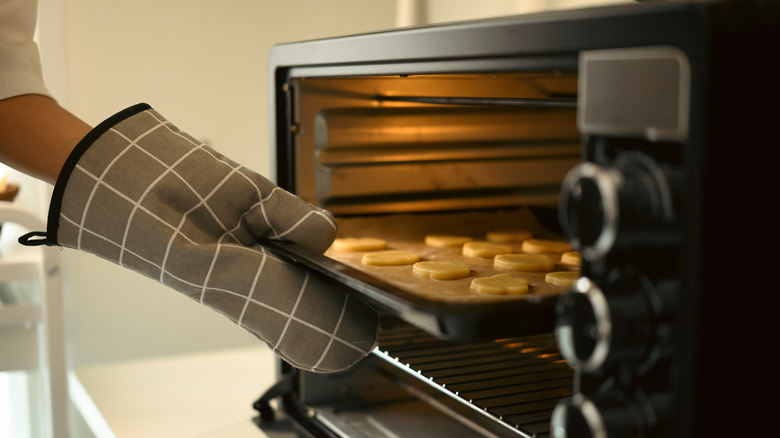
A hot stove can cause an injury that will take a professional chef out of commission for the day. That's why hand protection always needs to be within reach of the stove. Home cooks often guard their hands and forearms with oven mitts. The pros often choose dish towels instead, because oven mitts make it harder to grip heavy containers, which can cause spills. Unlike oven mitts, a chef can repurpose a dish towel to clean the counter or wipe their brow.
Pasta spoons
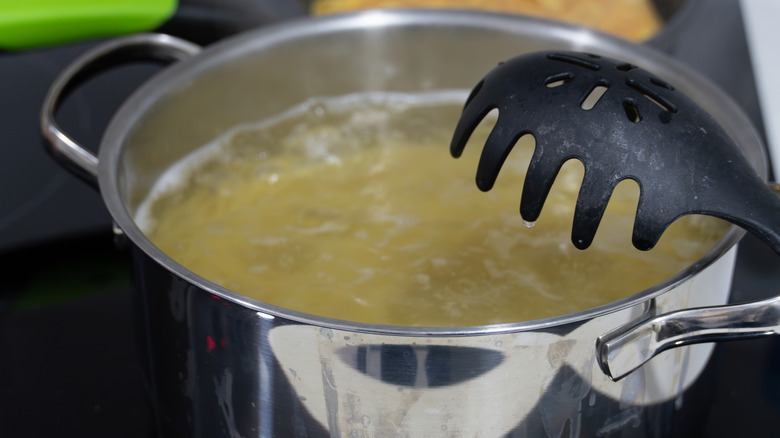
Cooks sometimes lift strands of pasta out of pots of boiling water with pronged spoons. But it's not easy to control slippery noodles with a pronged spoon. If you're trying to get customers' orders out quickly, you don't need half your noodles slipping onto the floor. That's why professional chefs use strainers instead.
Black plastic spoons and spatulas
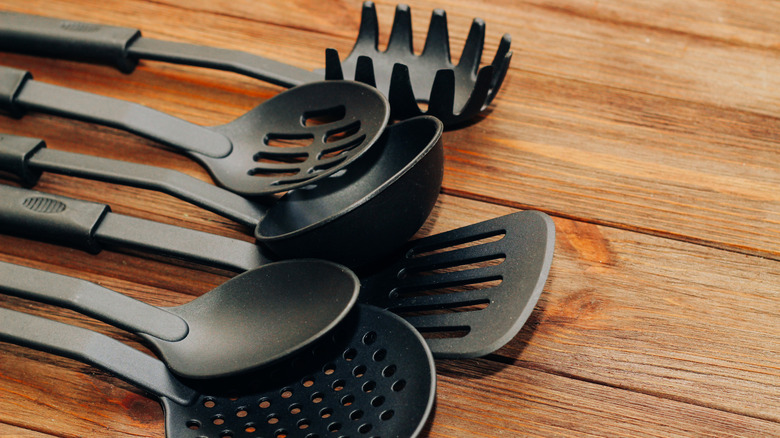
Black plastic doesn't hold up to high heat or years of use. If you look closely at an old black spoon, you might see melt marks and even plastic slivers barely hanging on. As this equipment breaks down, toxic chemicals can leach into food. Good chefs opt for metal or silicone utensils instead, which last longer and are safer for cooking. This tip is as applicable to home kitchens as it is to professional kitchens. You'll have to spend a little more money on silicone utensils, but you will benefit in the long term.
A large set of knives
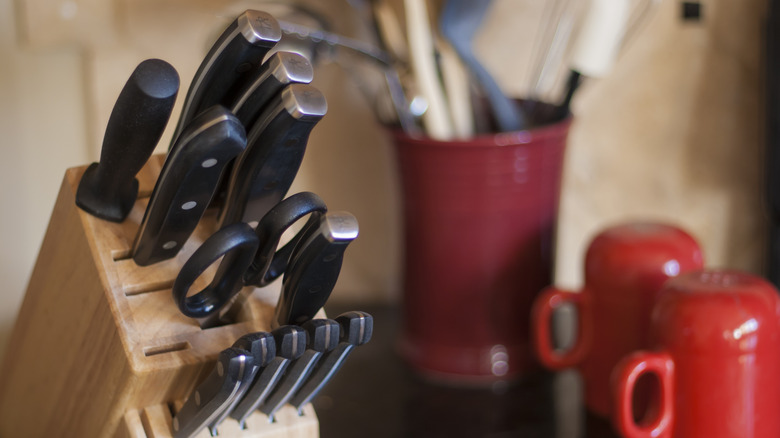
Knives are essential to every kitchen, and they come in all sizes. But most professional chefs don't use many knives. In his memoir, "Kitchen Confidential," Anthony Bourdain wrote that cooks only need one quality knife, which they should grow accustomed to. For intricate cutting, you can use the tip of the blade, and for deep slices, you can use the length of the blade. This saves you time because it means you don't have to switch knives for different tasks or clean additional tools. The counter also won't be cluttered with that clunky knife block.
Individual fruit and vegetable storage containers
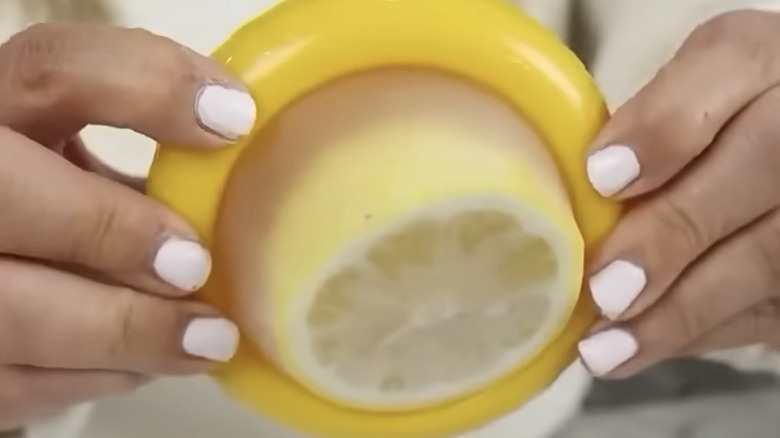
A good way to keep fruits and vegetables fresh is to store them in airtight containers. Some of these containers are for single-item storage, and they're even shaped like fruits or veggies themselves. These are cute for the home, but they aren't the most practical, especially for professional kitchens. Produce moves in and out, and if it isn't used within a week, it often gets thrown away. When vegetables are stored in the fridge, they are kept in large containers.