

How To Incorporate Mediterranean-Style Design In Your Kitchen
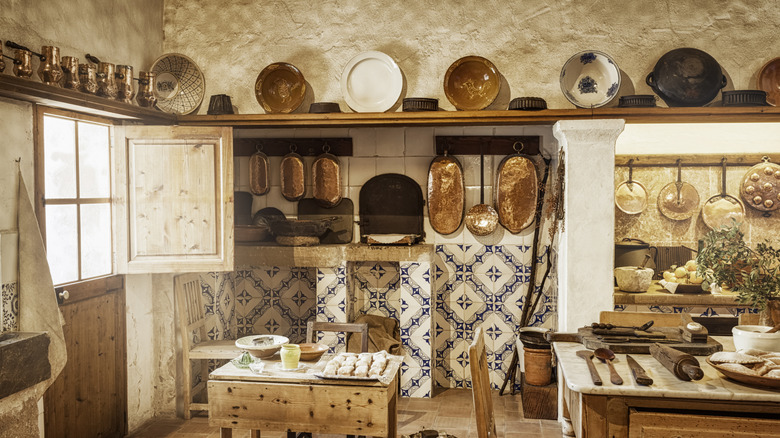
While your kitchen needs to be functional, it should also be an inviting space that draws people in. The most enchanting interiors tend to evoke nostalgia through color, texture, and a personal touch. Over the past couple of decades, kitchen design has embraced minimalism, which eschews ornamentation and character in exchange for clean lines, neutral colors, and hard surfaces. Chic interiors may be trendy, but they don't conjure cozy images of happy people enjoying lavish feasts. Perhaps no region better signifies the joys of family and the hearth than the Mediterranean.
The Mediterranean is a vast sea joining southern Europe, North Africa, and western Asia. For thousands of years, this resource-rich environment has served as a highway for international trade and blends the cultures of 22 countries, including Greece, Italy, and Morocco. Its design qualities evoke an eclectic vision that suits most environments. If you live in a rural area, you may want to embrace an earthy color palette, or if you live near the ocean, a blue-tile backsplash can enhance your space. There are plenty of other ways to capture this warm look without going overboard.
Grow Mediterranean plants
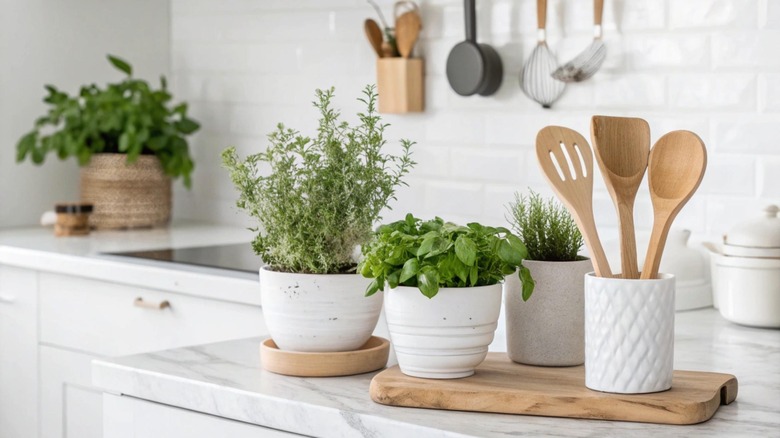
The Mediterranean is known for its rich flora, which grows low to the ground and retains moisture. You can bring some of that greenery into your kitchen. Native Mediterranean herbs include lavender, rosemary, and cumin. You should put these plants next to a window where they can absorb sunlight.
Vases, pots, and bowls
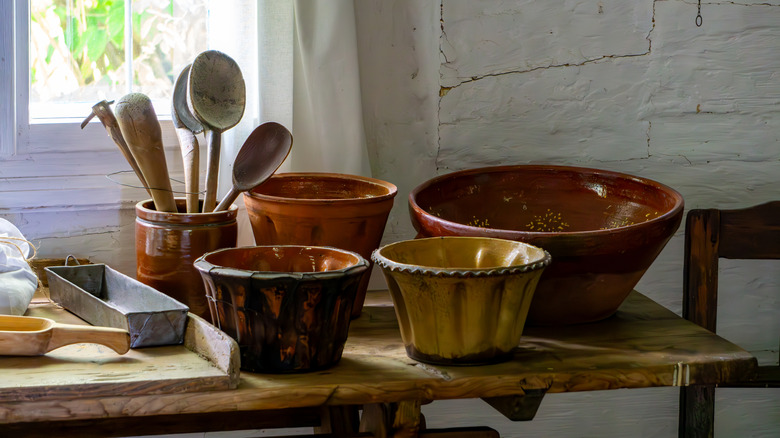
Pottery is a fundamental aspect of the Mediterranean aesthetic. Since the sea connects European, Asian, and African cultures, it has always served as a highway of trade, and perhaps the key symbol of that ancient economy is the ceramic vessel. For thousands of years, merchants used ceramic to transport wine, olive oil, and grain across thousands of miles. In your kitchen, chipped clay pots, vases, and bowls with washed-out colors will conjure images of Greek sailors rowing into Palestinian ports on ships loaded down with amphorae (two-handled jars) of olive oil and wine.
Carefully select your colors
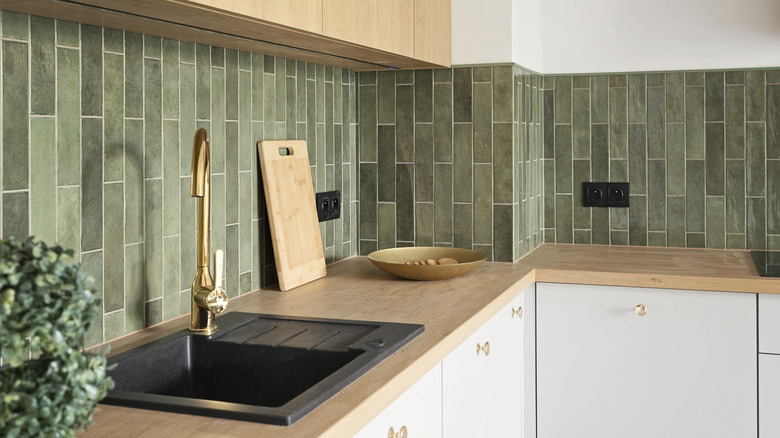
The Mediterranean color palette emphasizes the warmth of the region. Your walls can serve as a blank white canvas, especially if they are made of a material like stucco, and you can complement the space with yellow curtains or earthen-tone cabinets. If you're feeling a little more ambitious, paint the walls a rusty shade of red. The colors work best when they mirror the natural pigments of your region. For instance, a coastal aesthetic might incorporate beige or seafoam green.
Stone surfaces
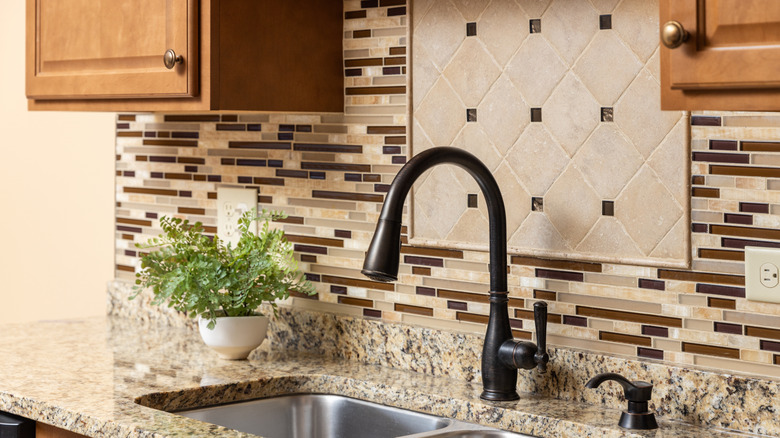
A Mediterranean-style kitchen should incorporate earthy colors, and there is no better way to do that than with marble and granite countertops. You can also opt for a white stone countertop, which evokes a clean, seaside atmosphere. Another option is to use stone archways to achieve a Tuscan aesthetic.
Repurposed wood
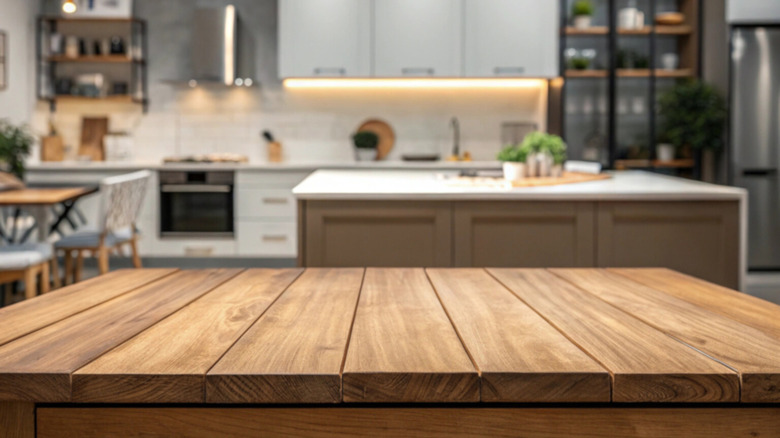
Craftsmen can take a slab of wood that may once have served as a barn door or the hull of a ship and turn it into a piece of furniture that evokes waves of nostalgia and longing. There's nothing quite like a repurposed dining room table that holds the scars of the past. Maybe there's a burn mark where someone once stubbed out a cigarette or a gash made by the swing of an axe. This rustic appeal is perfect for a Mediterranean design, as the region is known for its deep historical roots.
Archways
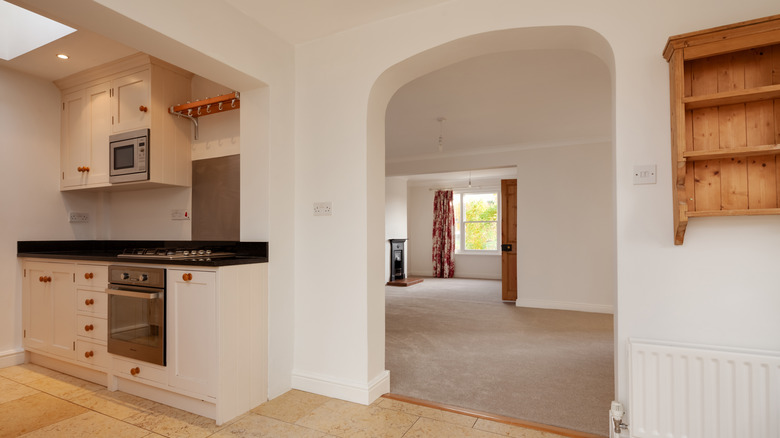
Arches are often preferred to flat lines in Mediterranean design. This makes spaces feel a little more natural. Archways also give your kitchen an old-world appeal, evoking the architectural styles of ancient civilizations such as Greece and Rome. These societies found that arches were a structurally sound way to assemble masonry. You can use arches to create nooks for meals or a coffee station.
Colorful rugs
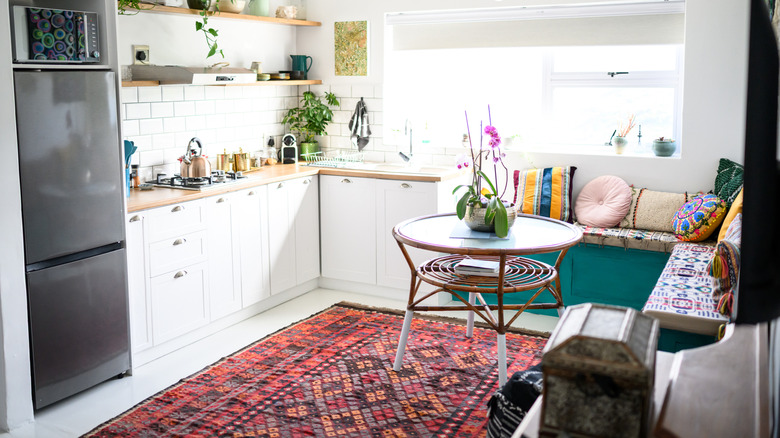
Moroccan style is central to Mediterranean design. The Berber people, who inhabit North Africa, are known for their ornately woven rugs, which you can purchase to complement your own Mediterranean aesthetic. Your rug can either match the room's muted colors or serve as an opportunity to brighten the space.
Keep the layout open
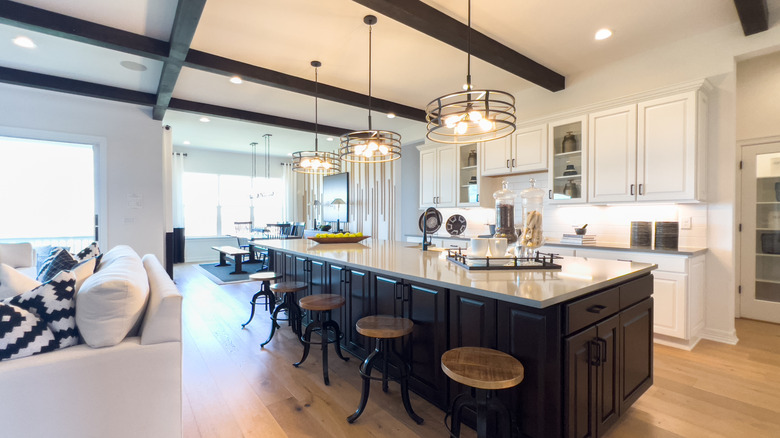
Mediterranean culture is based around family and food, and both tend to be large. Your kitchen should invite people from the common spaces, which is why you should try for an open layout. The person or people doing the cooking can join in conversation and even share some snacks from the stove. Scrap those non-load-bearing walls in exchange for some warm lighting that will fill surrounding space. You can set up a kitchen island so people can gather and talk over wine and hors d'oeuvres. A kitchen island will also provide more storage space.
Add more blue
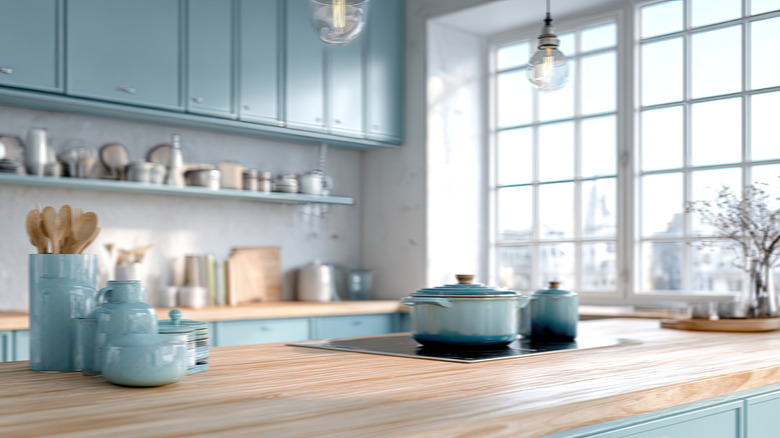
Not everything has to be earthy. Try painting your cabinets a cool shade of blue while keeping the walls and windowsills white. You can also use a similar shade of blue on the curtains. A blue-and-white tile backsplash will complement those other accents. If you need to fill some wall space to break up that sea of white, hang paintings that incorporate the color blue. This color scheme works particularly well if you can view a body of water from your kitchen.
Incorporate open shelving
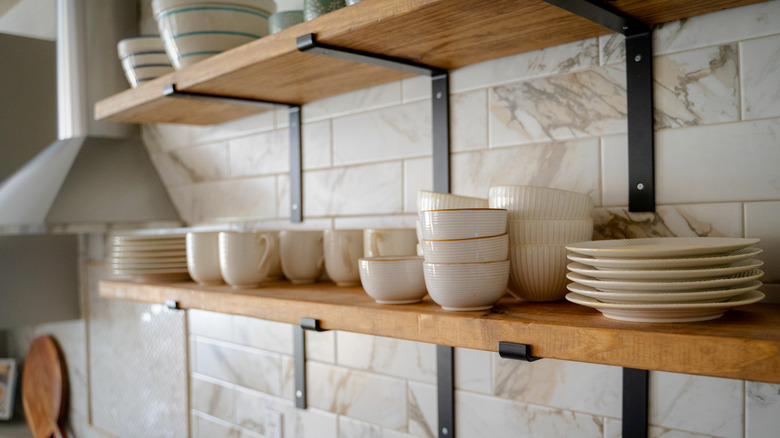
A Mediterranean kitchen needs to breathe. You should always feel a cool, salty breeze and hear the voices of family and friends. One way to make space more welcoming is to replace bulky, secretive cabinets with open shelving. Aside from looking better, it's much more convenient because you don't have to keep opening and closing cabinet doors. Wood or wrought iron are great materials for this style of shelving.
Hang your pots and pans
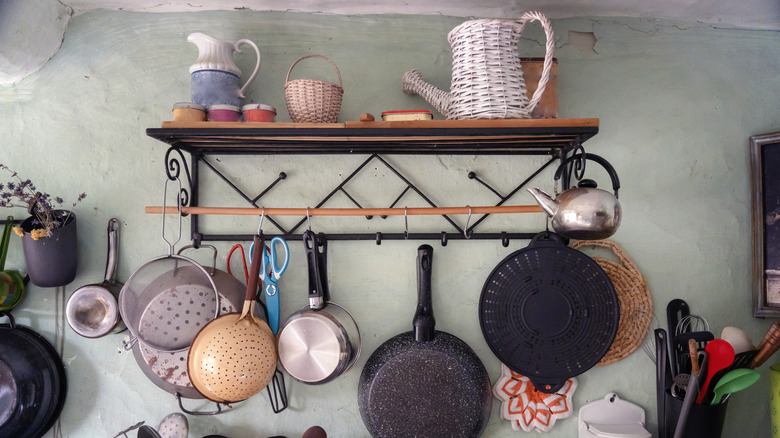
Hanging pots and pans gives your kitchen a relaxed atmosphere. The last thing you need, though, is a big cast-iron skillet to bonk someone on the head, or to fall into a boiling-hot pot of chorba frik and splash everyone. That's why you should avoid Command strips. Instead, buy a sturdy rack that you can mount to the wall. Just make sure to hang at least one paella pan. You can even look for a vintage pot rack, which will look good if you style it appropriately.
Don't hide the architecture
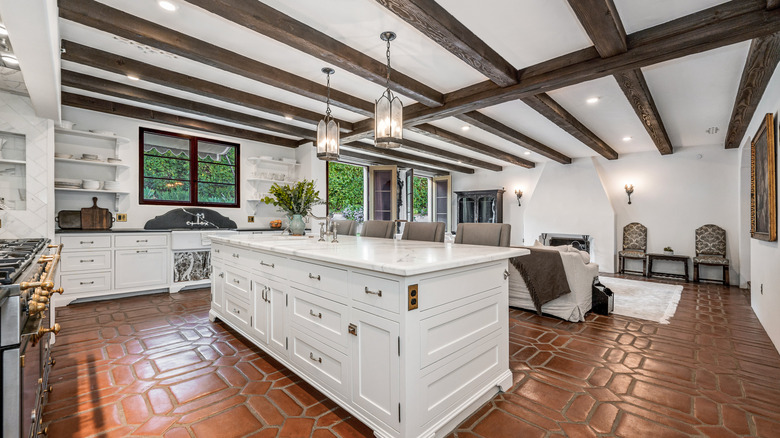
Embrace the features that give your kitchen a little character. If there are exposed wooden beams holding your ceiling together, paint the surrounding area white to let the oak pop. Pair that with some old wooden furniture, and you've allowed the space to express its own character. If you're very lucky, your kitchen will be made of stone and brickwork that you can show off as well.
Pillows and cushioned surfaces
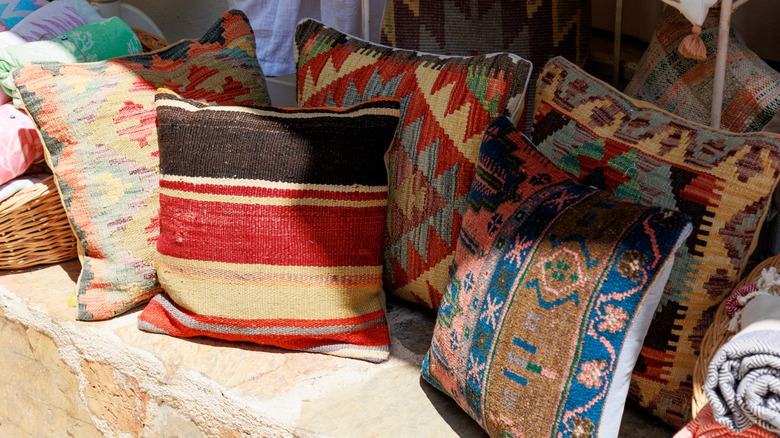
Mediterranean style should offer layered textures. One simple way to employ this style in your kitchen is to push cushioned day benches into a corner alongside your dining table. You can complement it with embroidered pillows. Place a rug under the table, and suddenly you have three fabric layers in one corner of your kitchen. With a mix of blues, yellows, and tans, you have a Mediterranean color scheme.
Get rid of your drapes and blinds

When asked to imagine the Mediterranean region, we often picture sun-baked cobblestone streets and white-sand beaches. These images are flooded with natural light, which nourishes the olive trees and infuses the skin with vitamins. Your kitchen's warm color palette will truly work when you let in natural light. That's why you should open the curtains on those bay windows and even ditch those blinds altogether. This will make the space feel cleaner and closer to the outdoors.
A tile backsplash
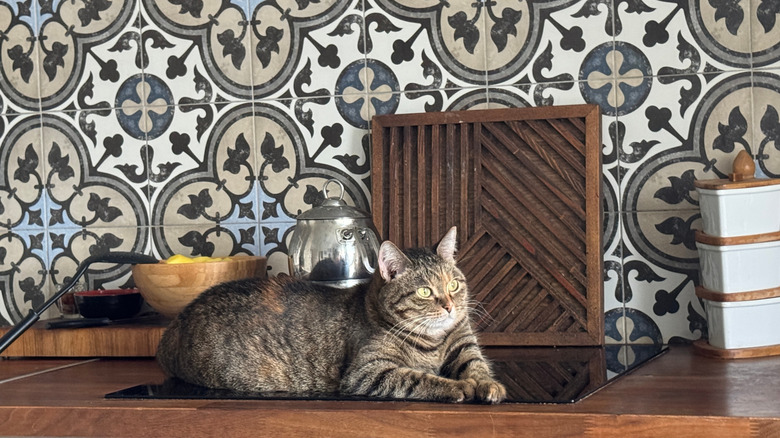
The Mediterranean region is filled with ancient ruins that contain tile artwork. Mosaics discovered in places like Pompeii, Rome, Sicily, Spain, and Jordan reveal common motifs of wild game hanging up for butchering, squid stretching out their tentacles, and fish traveling in schools. You can capture this aesthetic with tile backsplashes that draw attention to the stove in the central location of the kitchen. North African designs, particularly those associated with Morocco, feature ornate geometric patterns that are sure to add whimsy to your cooking space.