

The Storage Method To Avoid That Can Make Your Garden Seeds Go Moldy
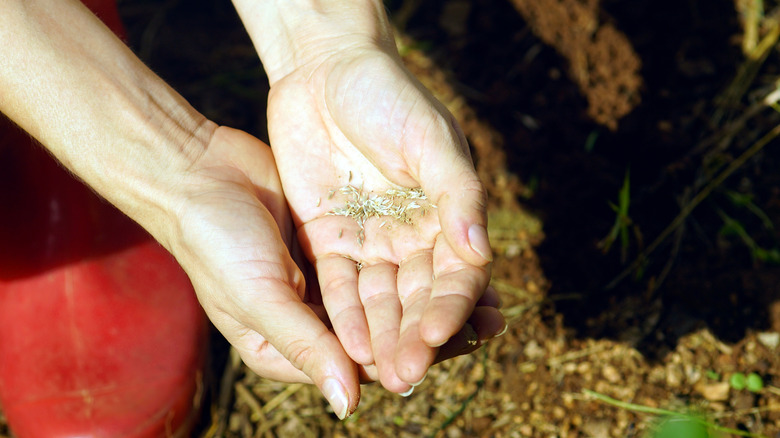
Concerned about the method you're currently using to store seeds? Once you understand that the most important factors in seed storage are temperature and humidity (specifically, the lack of it), you'll better understand why certain containment strategies are better than others. You'll also know which materials to avoid. Spoiler alert: Those plastic zip-top baggies common to most kitchens should be avoided for seed storage at all costs.
Ideally, seeds should be stored at a low temperature with low humidity. Even if you thoroughly dry seeds before storing them, most are hygroscopic. This means they take in and emit small amounts of moisture in an effort to maintain relative humidity. Thus, a breathable environment in which this natural process isn't interrupted is best for storage. Plastic bags do not meet this criterion well, if at all, so they should be avoided. Use them, and you risk trapped moisture and moldy seeds. Mold can start to form on a damp surface in as little as 24 hours; once present, it can grow rapidly.
Another issue with plastic bags is their translucency. They let light in, which can raise the temperature inside the plastic. What's more, light signals to a seed that it's time to germinate and may encourage microbes to grow, neither of which you want to happen in storage. Instead, you need to use a material that enables you to store garden seeds to keep them fresh for as long as possible.
Store your seeds in a breathable material instead of plastic bags
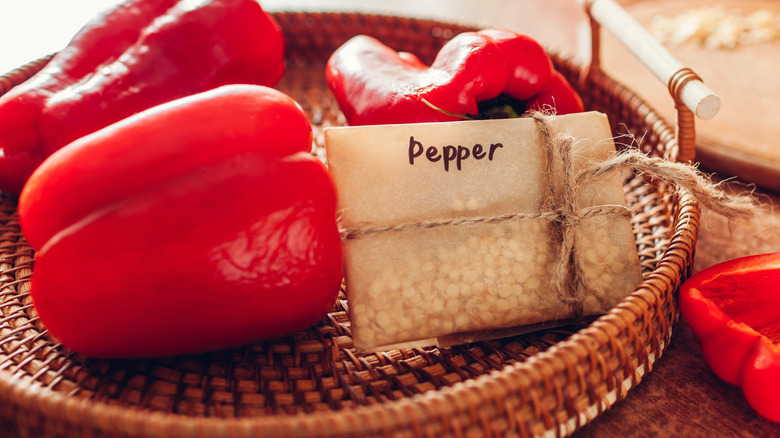
Breathable paper packets, bags, or envelopes are a better choice than plastic bags for seed storage; they provide better air circulation and humidity control. Paper is, of course, also more environmentally friendly than plastic. This choice is not, however, foolproof for mold prevention. Just as mold-causing humidity can escape a paper container, it can also enter it. Plus, paper absorbs water easily.
That's why ensuring your seeds are completely dry before you store them could not be more important. Failing to thoroughly dry seeds is one of the seed-storage mistakes everyone makes and doesn't realize it. Every 1% reduction in seed moisture content doubles storage life when moisture is between 5% and 14%. Moisture above 8% causes deterioration, and levels above 12% allow mold growth. You can also place silica-gel in the envelopes to absorb any moisture.
Some gardeners put their paper-stored seeds into sealed glass jars for greater temperature and humidity control. They often place the silica-gel packet in the jars rather than the envelopes. This extra step is also useful for keeping pests away from your seeds. Once packaged correctly, some of the best places to store seeds are a dark closet or basement.