

Plant These Herbs With Coneflowers To Fill Your Garden With Pollinators
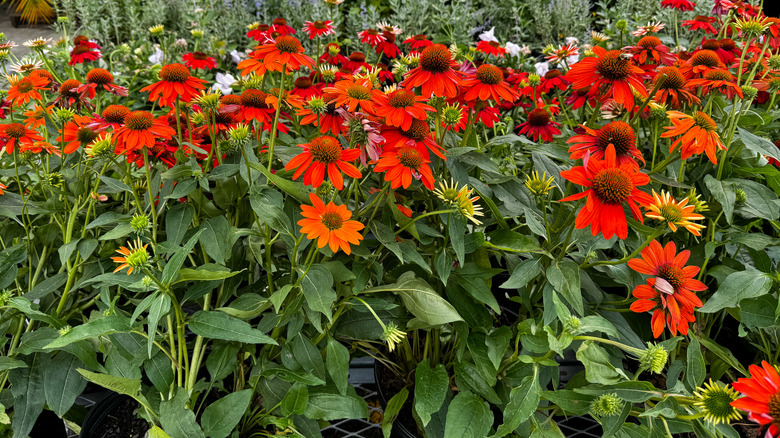
Pollinators like hummingbirds, bees, and butterflies are some of the most beneficial visitors you can have in your garden. Not only do they contribute to a healthy backyard ecosystem, but they also bring new life and beauty to your yard. Coneflowers (Echinacea spp.) are widely recognized as a butterfly magnet, but they alone can't sustain every critter that comes looking for a sweet treat. To help support your garden and attract a variety of pollinators, you may want to consider what companion planting is and how it can benefit the garden. Coneflowers are a great candidate for companion planting, with herbs like hummingbird mint and Russian sage enriching the soil, improving plant health, and sustaining large pollinator populations.
Both hummingbird mint and Russian sage are known to attract different kinds of pollinators across the many pollen- and nectar-loving bird, butterfly, and insect species. What's more, each plant benefits your coneflowers in unique ways that make them equally ideal companions. That being said, you'll want to be mindful of spacing and growing conditions to make sure each plant has what it needs to produce the pollen, nectar, seeds, and foliage that local wildlife flock to your garden to consume or lay their eggs on. Luckily, both hummingbird mint and Russian sage are low-maintenance and easy to care for herbs, making them great choices for beginner gardeners.
The benefits of planting hummingbird mint next to your coneflowers
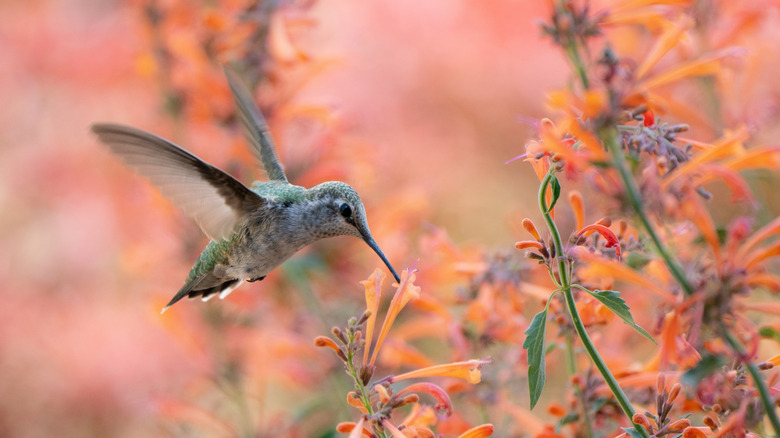
Hummingbird mint (Agastache spp.) is an herbaceous perennial that grows in Zones 5 to 10. It is known to appeal to almost all pollinators, from the various bee and butterfly species to hummingbirds. It's common, therefore, to plant hummingbird mint with companions to attract more feathered friends, thereby giving local wildlife more food options. While coneflowers will do well in either full sun or partial shade, hummingbird mint needs a full sun site. Grow them together in an unshaded flower bed, or plant the sunny portion of a partially shaded spot. The real challenge is maintaining soil conditions that are ideal for both plants. Hummingbird mint can handle acidic soils, while coneflowers can't. Aim for a soil with a neutral pH when companion planting.
Beyond these practical and pollinator considerations, these plants pair beautifully together where our senses are concerned. Coneflower blooms are usually bright pink, but they also come in shades of red, orange, yellow, and white. The soft blue, lavender, red, and white of hummingbird mint flowers make for a stunning pairing. The benefits go beyond aesthetics. Both plants are drought-tolerant, so they do not compete for water, creating a supportive growing environment. The pleasant fragrance of both plants' blooms will refresh your backyard, but deer and rabbits hate hummingbird mint. Use this herb to protect your coneflower patch from unwanted grazing.
How Russian sage works with coneflowers to attract pollinators
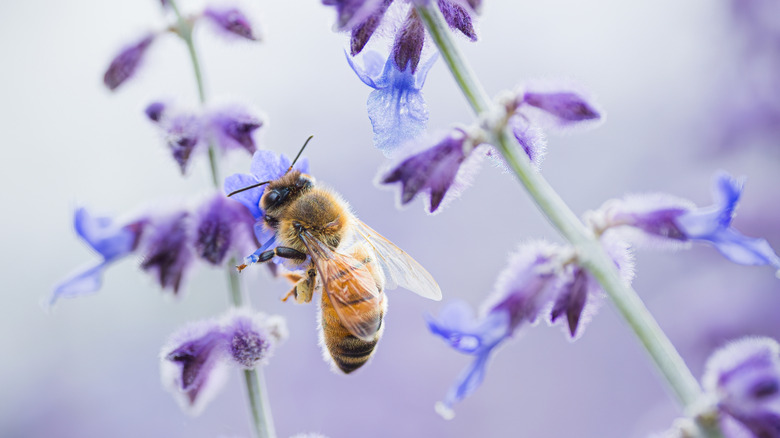
Coneflowers usually bloom in the summer, but Russian sage (Salvia yangii) offers pollinators late-season sustenance in Zones 5 to 9. You can also grow this fragrant herb in a pot to draw birds to your yard in summer and fall, no matter what climate you live in. Just make sure to prepare to overwinter potted plants in cooler climates when temperatures reach 15 degrees Fahrenheit or below. The soft silvery hue of Russian sage's foliage complements that of the coneflower nicely, while the height difference creates drama.
While coneflowers bring in the butterflies, Russian sage brings hummingbirds to your yard, further diversifying your beneficial garden visitors. Plus, the long blooming seasons for these companions overlap, feeding nectar-loving pollinators through the seasons, even when other food sources decline. It's best to plant coneflower and Russian sage in a full sun spot with low-nutrient soil and good drainage. If you are planting these species directly in the ground, make sure you don't put Russian sage too close to your coneflowers. Spacing is important for Russian sage — aim for 11 to 15 inches between plants and rows.