

10 Appliance Features You Probably Don't Need
We may receive a commission on purchases made from links.
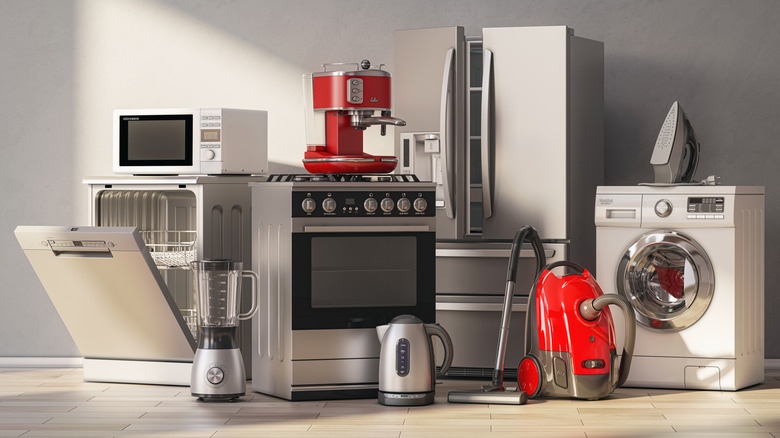
Home appliances are only becoming more advanced — and with new home technology comes updated appliance features. While many home appliance features will save you time and money in the long run, it's not always easy to determine which features are just a gimmick. From overpriced smart fridges to expensive laundry machines with unhelpful cycles, there are many cases where a higher price doesn't mean better quality. To help you decide which appliances will stand the test of time in your household, we rounded up a few appliance features that you'll probably never end up using.
While some of these features are pointless no matter what type of home you have, it's important to note that some gimmicky features also happen to make certain appliances more accessible. If you do end up needing a few of these expensive features on your home appliances, we're not judging; some customers find them useful. But for the average household, steering clear of these appliances will help you save money.
A remote start oven is a major fire hazard
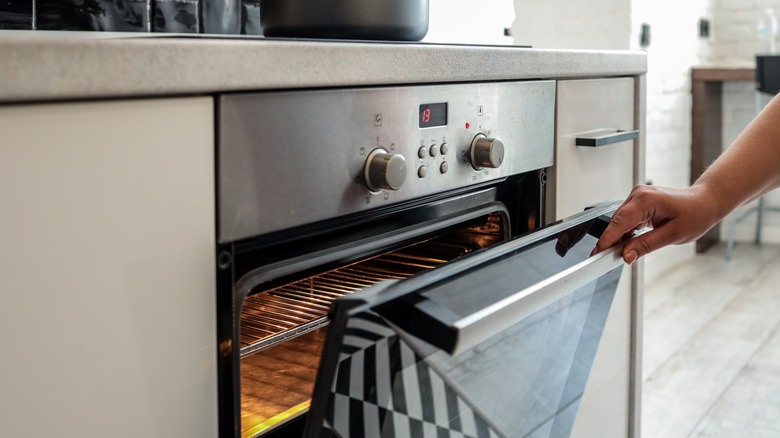
There's no denying that many remote-start appliances are useful, but an oven just isn't one of them. While starting the dishwasher or laundry machine is convenient when you're away from home, you can't exactly cook an entire meal without being there to watch over it. Plus, leaving your uncooked food in the oven all day so you can heat it up on the way home from work is a breeding ground for bacteria. In the end, it won't save you much time, either — for the average oven, preheating to 350 degrees Fahrenheit takes less than 15 minutes. That's something you can easily do while you unload groceries or prep your ingredients.
The biggest problem with a remote-start oven is that, when you use the remote feature to cook food from afar, it becomes a major fire hazard. You should never leave the oven on when you're out of the house. If it overheats, malfunctions, or starts smoking, you'll need to be home to prevent a fire from spreading.
If you need a meal that cooks while you're away, your best investment is going to be a slow cooker. Want an oven that preheats faster? Spend your money on a more powerful oven instead; a countertop oven is also a convenient single-serve option that heats up faster than a traditional oven.
You don't need those extra dishwasher cycles
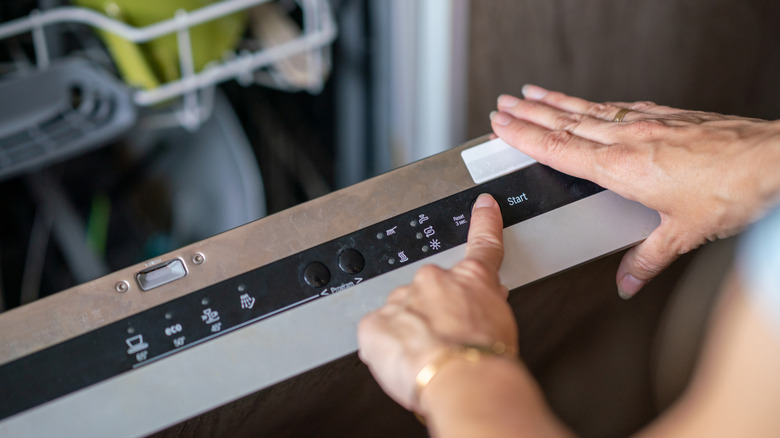
When was the last time you selected a dishwasher cycle that wasn't just "auto" or "normal?" For many people, the answer might be "never." Most of those other settings, as fancy as they may seem, just aren't necessary.
Look out for pricey dishwashers that contain extra cycles for glassware, fine china, and delicate dishes; you're better off saving your money and placing delicate items in the top rack. As long as you're not running a restaurant out of your kitchen, chances are, your dishwasher will be filled with all different kinds of dishes and utensils that will do just fine on a regular cycle. Should the day ever come where you need to clean your heirloom dishware, don't risk the dishwasher — cleaning by hand is faster and safer for your most precious dishes.
Cycles like prewash and rinse are also unnecessary add-ons. Modern dishwashers are more than capable of removing all the food and grease from your dishes without a prewash cycle — it's an extra feature that will actually cost you money in the long run, since using it only means wasting hot water. The same goes for rinse cycles, as most modern dishwashers you'll find don't require dishes to be rinsed whatsoever before being washed. Just be sure you know how to change your dishwasher filter to clear up all the food it cleans.
Don't waste space on dishwasher bottle washers
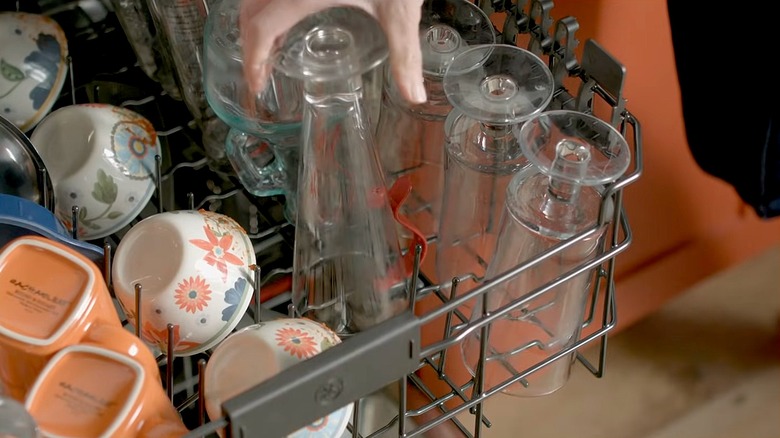
Even if you regularly use water bottles that are dishwasher-safe, a bottle washer isn't usually necessary. In fact, most bottle washers aren't necessarily more effective than hand-washing — or even just putting your water bottle in the top rack and running a regular dishwashing cycle. If you have a dishwasher with bottle washers, the biggest issue you'll notice over time is their tendency to clog with food and grease. When this happens, they may require maintenance to fix — and if you don't catch the issue right away, you'll be left wondering why your bottle washers are so ineffective.
Kitchen "unitaskers" — a clever name for a tool or appliance that only serves one specific purpose — are a major waste of space. Bottle washers can take up almost an entire row on the top rack of your dishwasher, and when you don't have bottles to wash, they won't be very effective for anything else. You're better off saving your money and investing in a good bottle-cleaning brush instead.
You probably won't use those fancy laundry cycles
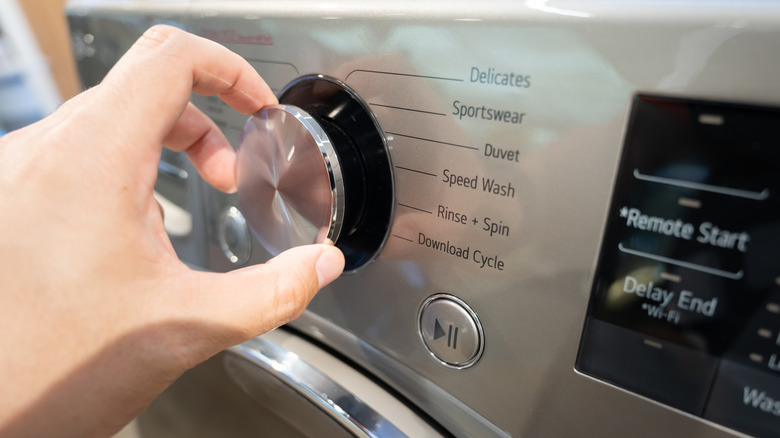
Many laundry machine experts agree that the only two cycles you really need to be using on the regular are 'normal' and 'delicate.' Most people will never use even half of the cycles their laundry machine comes with. Cycles for specific types of clothing — such as jeans, towels, or bright whites — are often not more effective than a regular wash cycle. While a delicate cycle is helpful for garments that can't handle high heat or strong agitation, cycles like "hand-wash" will never be as gentle as actually washing your clothes by hand; this makes for one extra cycle that you won't be able to use. On the off chance you do need to launder a special garment with a cycle you don't have, you can simply adjust the temperature, spin cycle, and wash time manually.
Basic washers will typically feature around six cycles on average. As you move toward high-end washers, they'll naturally come with more cycles, including ones that you'll probably never use — often around 12 or more. There are plenty of good reasons to buy a more complex washer, such as opting for a model that saves energy, is quieter, or can handle extra-large loads. But the massive number of additional features isn't one of them.
Ovens with cameras may look cool, but they're not worth the price
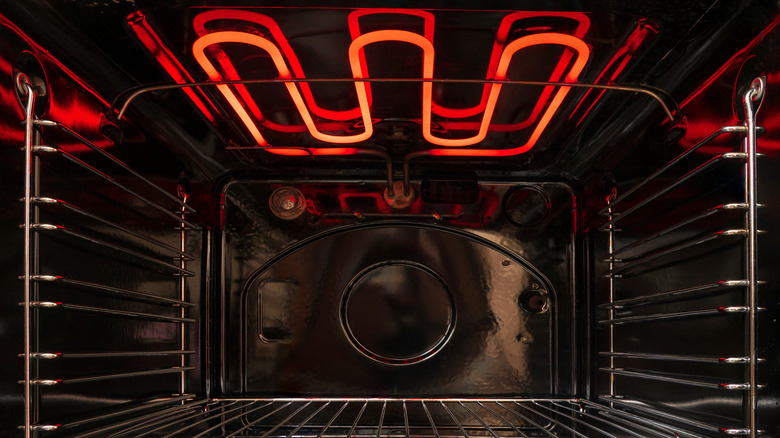
Ovens with built-in cameras have become trendy, but are they actually useful? Right now, the answer is no. Some brands claim that advanced AI technology can even analyze the food you put in the oven, cooking it to perfection automatically. But no oven AI is perfect; food recognition technology can still be inaccurate, and many reviewers say that the current AI cooking technology just isn't worth the price tag.
Besides the potential for future AI developments, the main selling point of an oven with a built-in camera is that you can watch your food while it cooks. But why shell out for this feature when every oven comes with a glass door and interior light? An oven with a built-in camera can cost around $3,000 – a high-quality oven without this feature might retail for closer to $1,000. Unless you're a food blogger, you're better off staying away from ovens with cameras — at least until more advanced technology has been developed.
Glass refrigerators may not be a good idea

A glass refrigerator sounds like a clever idea at first. These see-through fridges are designed to allow you to view all your groceries without ever opening your fridge door so that you can decide what you're going to grab or need to restock without wasting cold air. However, the real usefulness of a glass fridge is negligible. No matter what type of fridge you have, you'll still need to open the door in order to access your food; taking a few extra seconds to look around while the fridge door is open makes virtually no difference in fridge temperature or energy used.
Additionally, glass is a poor insulator, especially compared to metal. Your fridge door needs to be heavily insulated in order to keep as much cold air inside as possible. Glass doors — even double-walled ones — may not be as effective at locking in cold air as a typical fridge door. In the long run, your glass fridge may need to use more energy than a regular fridge in order to make up for its lack of insulation.
Keep in mind that a glass fridge also limits your storage space. Since glass doors need to be completely see-through so that you can view the entire fridge at once, the inside of the door cannot have any shelving on it. If you want a fridge door that can store your drinks, condiments, and snacks, then a glass fridge definitely isn't for you. Lastly, you may not want the inside of your fridge constantly on display for everyone to see. While some glass fridges come with touch-activated tinted glass for privacy, that's just another premium you'll have to pay extra for.
Appliances with WiFi might risk your home security
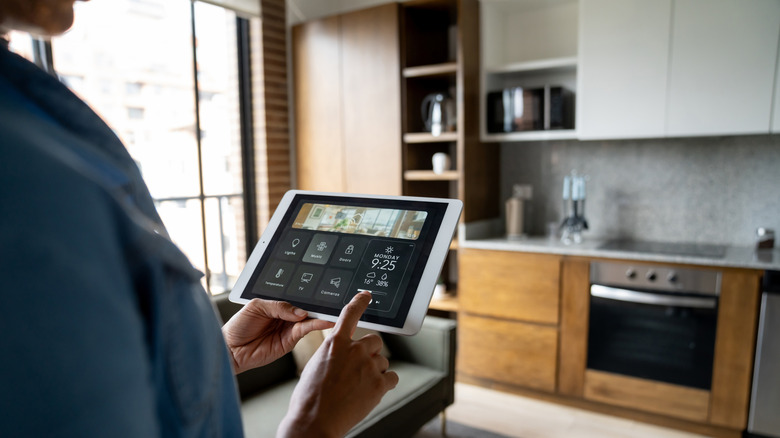
Truthfully, appliances with WiFi, such as smart fridges, are more of an expensive gimmick than a useful tool. Most of the functions that an appliance with WiFi can offer can all be done from your phone, for free. A dryer with WiFi might text you when its cycle is over, but it's just as easy to set a timer for that. If there's a problem with your microwave, the screen itself will also display that error. Even a fridge whiteboard has the same capabilities as most smart fridges.
If you're still thinking you'd rather have your laundry machine text you updates, you should know that WiFi-connected appliances are more than just a waste of money — they're also a security risk. Smart appliances that connect to WiFi give hackers an easy, unprotected access point to all of your devices that are connected to the same network. This means that your personal data, as well as any WiFi-connected camera and audio devices, are up for grabs. Most smart appliances just don't have enough device security or encryption, making them much easier to hack into than your phone or computer.
Smart appliances also suffer from a phenomenon known as "planned obsolescence," which is when a technology is purposefully designed to fail within a set number of years, so that consumers will be forced to upgrade their devices. Smart appliance technology quickly becomes out-of-date, which could mean a costly upgrade in just a few years from when you first purchased your appliance. Any change that happens to the company that made your smart appliance — such as if they go out of business, switch software, or discontinue their support — will likely mean your appliance becomes useless.
Digital displays could cause your appliances to stop working earlier
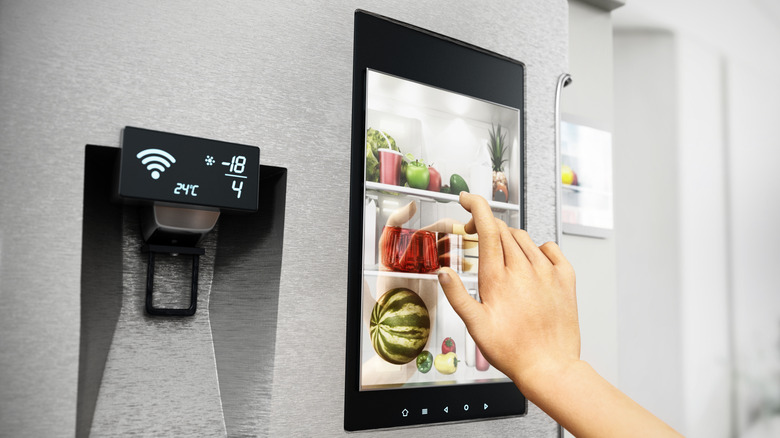
Digital displays certainly look cool, and they're becoming a touted feature on many home appliances. Maybe you've seen fridges with tablets on them or ovens with touchscreens instead of dials. These new types of interfaces are more expensive than appliances with manual controls, and these features will only cost you even more time and money in the long run.
Since most high-quality appliances are built to last you a long time, you want to choose features that are unlikely to break down early on. Tablets and touchscreens provide a point of failure for your appliances that can break long before the machine needs to be replaced. These features can also fall victim to software issues, and could become outdated and unusable within just a few years.
While a digital display is sleek and luxurious, it may not be the most accessible option for your appliances. A simple dial or button is often easier to use and more foolproof than a touchscreen — especially while you're cooking. Additionally, for appliances such as fridges that offer built-in tablets with full capabilities, you might want to ask yourself: Is there anything I can do with a fridge tablet that I couldn't do better, faster, or more easily with a regular tablet? The answer might be an iPad instead of a fridge with a five-digit price tag.
Dryers with moisture sensors may not be the best investment
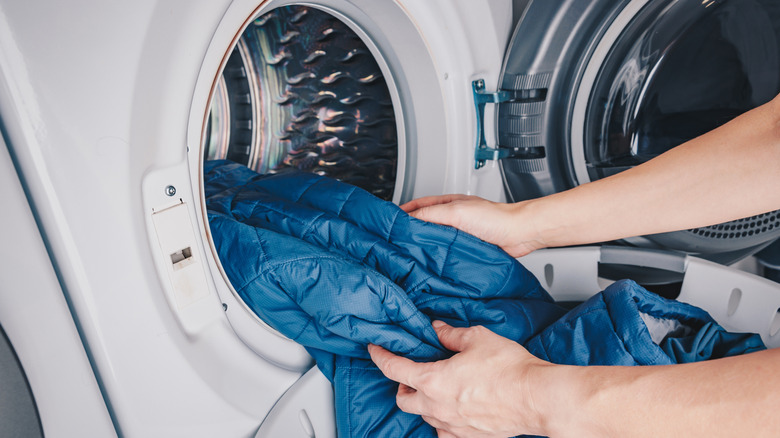
Dryers with moisture sensors can be truly hit or miss. Theoretically, a moisture sensor should be able to detect when your garments have fully dried; rather than choosing a particular dry cycle or setting a timer, a moisture sensor stops the machine as soon as your clothes are ready. This prevents them from being over- or underdried, without wasting any energy.
Unfortunately, many customers find that moisture sensors are often unable to live up to their expectations. Many moisture sensors will leave your clothes at least a little bit damp, which can cause a mildewy smell. The types of moisture sensors dryers use can vary by brand; the most accurate sensors will also be the most expensive, and they're not necessarily worth the money, especially because no dryer sensor is guaranteed to dry your clothes perfectly every cycle.
Even if your moisture sensor works properly when you first purchase your drying machine, it may stop functioning correctly over time. Buildup from your detergent or softener can cause it to have trouble accurately detecting the level of moisture inside the dryer. Small loads of laundry may also cause moisture sensors to be less accurate. Overall, it might be simpler to just set a timed dry cycle on your own or rely on the basic cycles that all dryers come with.
Door-in-door refrigerators aren't worth the money
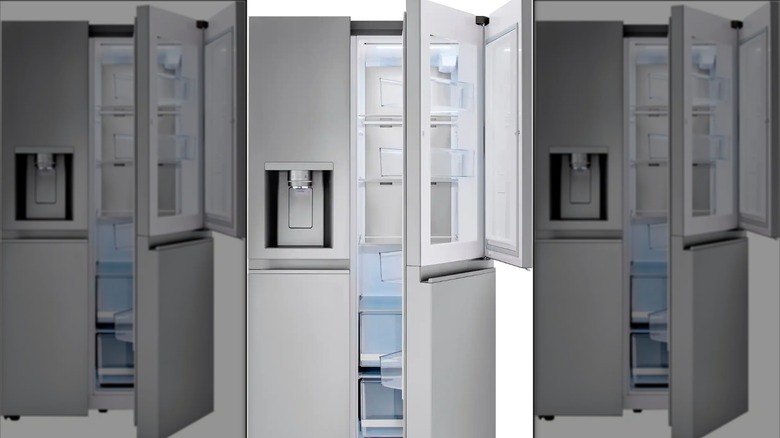
Door-in-door refrigerators boast quite an interesting design. Open the fridge normally, and you'll get access to the innermost shelves. But press a button on the fridge door's handle, and you'll open up a layer of compartments that exist between your fridge door and the main part of your fridge.
While this is a fun feature, it's not worth the price tag for most. It only adds a small amount of storage space, most of which is inaccessible from the main part of the fridge. With some models, there are also concerns of fridge temperatures rising close to the door, due to the extra layer of shelves. The interior of the fridge remains unaffected, but any drinks you stash in the door shelves might not be as cold as you want them to be. Some customers who have used these types of fridges say that they're nice, but not remarkable enough to be worth the price. A door-in-door fridge may not be the worst appliance feature on this list, but you'd be better off spending your money on more useful upgrades — like a filtered water dispenser or humidity-controlled crispers.