

The Glossy Heart-Shaped Houseplant That Even Complete Beginners Can Grow
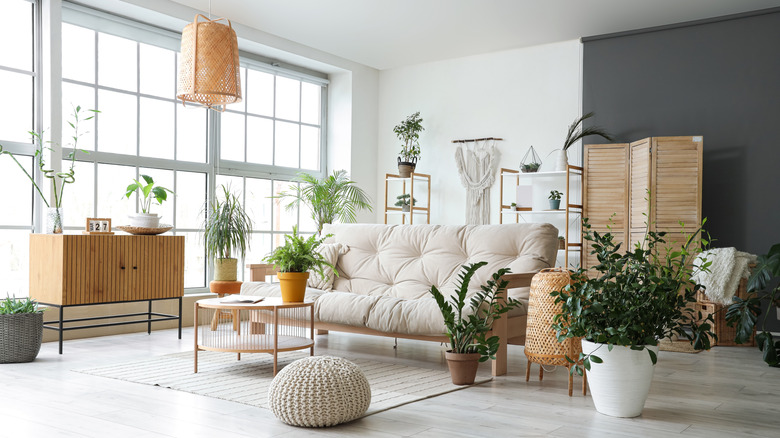
If you've never tended to a houseplant before, the idea of starting your own indoor plant collection can be daunting. While there are some finicky species out there that even experienced houseplant enthusiasts struggle with, others have lower maintenance care that's perfect for a beginner seeking their very first indoor plant. And the eye-catching devil's ivy (Epipremnum aureum) is the perfect example of that.
When it comes to houseplants that even beginners can grow, few are as popular as the devil's ivy. These stunning plants sport glossy leaves with a heartlike appearance, and some varieties may even display unique variegation. However, for all its visual appeal, devil's ivy remains a beginner-friendly houseplant thanks to its ability to adapt to a variety of environments. This overall hardiness makes it forgiving of errors as you continue to learn how to care for houseplants.
However, as beginner-friendly as devil's ivy is, it's still important to start your collection on the right foot. This means familiarizing yourself with everything you'll need to know about this houseplant, whether that's care or troubleshooting. After all, prevention is the best cure, and learning how to keep your devil's ivy healthy and thriving before problems occur can make a significant difference. Keep in mind that this plant does have some medium toxicity symptoms when ingested. As a result, you'll want to keep this plant away from any curious children or pets.
How to grow devil's ivy indoors
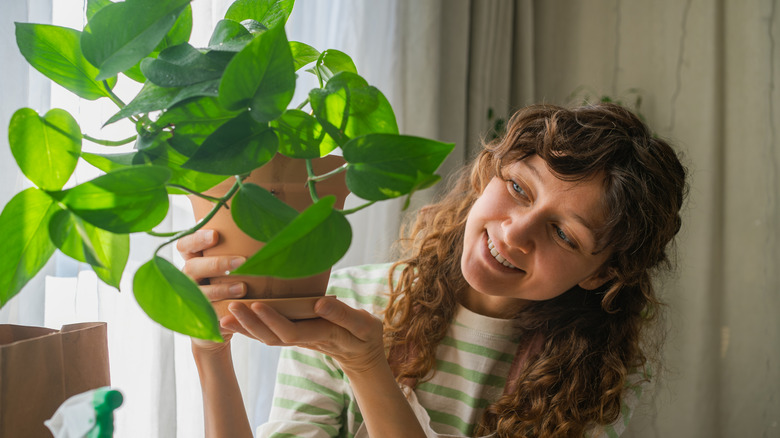
The first step to growing devil's ivy is to learn about this plant's day-to-day needs. This includes factors such as placement, light exposure, and watering. Devil's ivy can grow in deep shade to partial shade, which makes it perfect for an indoor location that may not have as much sunlight available. The key is to provide indirect light, as anything too intense could damage the leaves. When needed, you can also grow your devil's ivy under artificial lighting to help supplement its requirements.
Watering can be tricky for beginner gardeners. You want to ensure that your plant is fully hydrated without leaving it in standing water to develop diseases or pest problems. As a general rule of thumb, check the soil to decide if your plant needs water. The best time to water your devil's ivy is when the first two inches of the soil are dry. Depending on the environment of your home, this may be around once a week. Just pay attention to your plant's appearance and keep an eye out for the signs you're overwatering your plant.
As for long-term care, devil's ivy doesn't require pruning to grow. However, you may choose to do so to manage size or train and maintain a particular appearance. You can use the three D rule to prune your plants, removing dead, diseased, or damaged vines. During the growing months of spring and summer, your devil's ivy can benefit from an extra boost. As a result, you may wish to consider applying a fertilizer designed with houseplants in mind.