

The Little-Known Gardening Substrate That Can Boost Plant Health
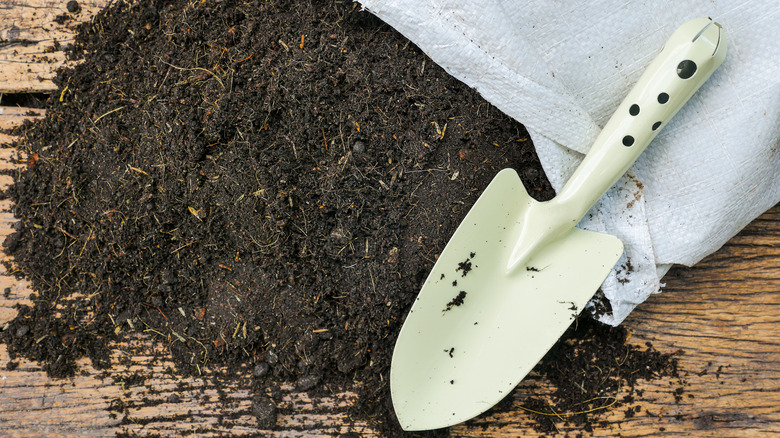
Gardeners often welcome natural products that offer multiple benefits for plants, and a little-known substrate has slowly been garnering attention. You may have heard buzz about the effectiveness of volcanic materials in plant health — for example, the volcanic product perlite is widely used in gardening for its drainage and aeration properties. If you've ever heard of another volcanic product called pozzolana, chances are it has been in the context of making concrete, where it is much more widely known than it is in the gardening world. Pozzolana, named for Pozzuoli near Italy's volcanic Mt. Vesuvius, is a natural material found around volcanoes. Evidence is emerging that this substrate boosts plant health, in part because pozzolana contains trace elements and essential minerals necessary for plant growth, including iron, magnesium, calcium, and zinc.
A substrate is defined as the medium in which plant roots grow and develop, and pozzolana qualifies as such. However, outside of mulching and hydroponic gardening, it is often mixed with other materials and offers benefits beyond serving just as a substrate. Although pozzolana can be used as inorganic mulch, the best description is that it's a soil conditioner. If you're wondering about the difference between soil conditioner versus fertilizer, soil conditioners improve soil quality by upgrading its structure to allow for better airflow, increased water storage, and healthier root system development.
Pozzolana is available in several forms, including rock dust, lava rock pebbles, lava gravel, or larger pellets. In addition to its use in hydroponics, pozzolana is commonly used in terrarium and bonsai gardening.
How pozzolana can promote plant health
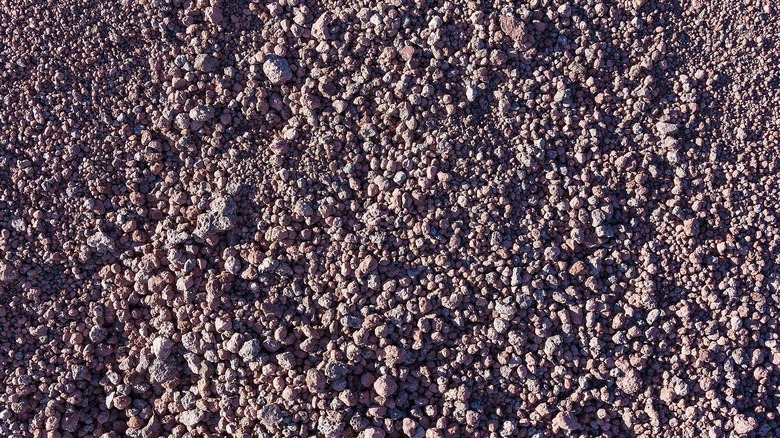
The list of pozzolana benefits is long enough to explain why this material is getting attention. Used as an inorganic mulch on garden beds, pathways, and in containers, pozzolana serves as a lightweight, attractive thermal insulator for plants that can keep their roots from freezing thanks to its honeycomb-like internal structure. Perhaps best of all, pozzolanacreates a physical barrier that prevents weed growth. When considering the best type of mulch for your garden, pozzolana lasts a long time and won't rot or burn, so it's a safe and durable material to use in your garden. Plus, it's reusable after you disinfect it, too.
As a soil conditioner (in dust form) added to potting mixes, this porous volcanic material offers aeration properties. Pozzolana also reduces evaporation and quashes harmful parasitic nematodes while encouraging beneficial bacteria and fungi, creating a disease-suppressing environment for plants. Some gardeners cite volcanic dust's ability to maintain pH balance and serve as a compost accelerator. Luckily, it's easy to use pozzolana in your efforts to prep your soil for successful planting.
Add pozzolana to your soil for healthier plant growth
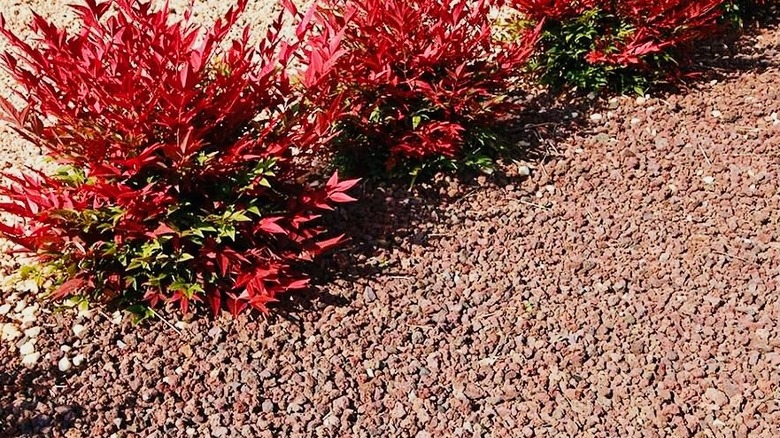
To use pozzolana in the garden, first consult the label instructions. To use it as mulch, spreada layer about an inch and a half thick around your garden. If you're using it in dust form,be sure to choose a day that's not windy. Water the treated plants and scratch the dust into the soil with a light raking or digging, then cover the area with more soil or compost.
One of pozzolana's strongest benefits is its ability to provide drainage,so consider adding a layer to the bottom of your plant pots. To enhance potting soil, try mixing coconut fiber or perlite with 10% to 30% pozzolana to increase drainage. Another option is to sprinkle a thin layer — less than an inch — of the dust form on top of your pot's soil. For mulch and weed suppression, use pozzolana in the form of larger lava rock pebbles, lava gravel, or larger pellets.