

10 Tips On How To Identify Authentic Vintage Pottery At The Thrift Store
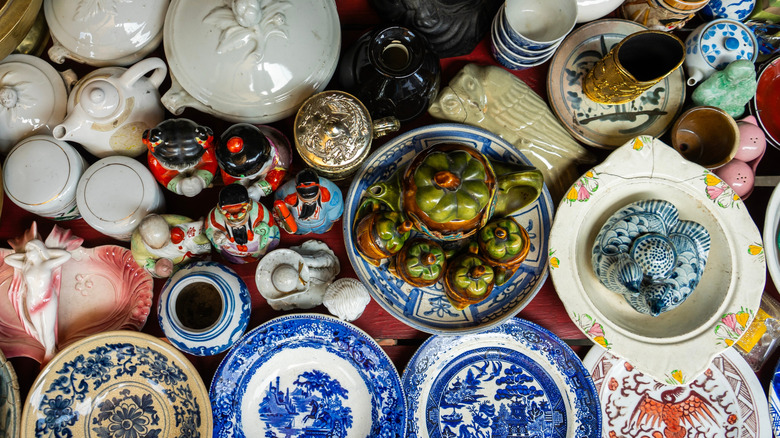
Knowing what to keep an eye out for when thrifting is almost considered an art form. When it comes to vintage pottery, details like air bubbles, clay weight, or a maker's mark can mean the difference between a $5 and a $500 find. With a few strategies and knowing what to look for, you might end up turning what looks like a simple clay pot thrift find into a valuable treasure. Finding a black wavy line on a piece of hand-glazed pottery might mean you've found a valuable midcentury McCarty item. Discovering a drip-glaze raku-style vase from the 1980s could mean you've found a Tony Evans piece worth hundreds. There are many types of vintage pottery you should be on the lookout for at the thrift store, and spotting them doesn't require a fine art background.
There is a fast and easy way to tell if your thrift store find is authentic. Google image search can help, but it is not always reliable on its own. That's why it's good to have a few skills to supplement Google to be sure the pottery you're looking at is a rare and valuable brand that collectors would love to have. Identifying vintage markings, knowing different clay types visually, understanding trends in design and color, and knowing the signs of handcrafted versus manufactured methods, is worth its weight in gold when making a quick decision in the thrift store. You can even create some bookmarks for web pages to double-check on your phone as a personal reference guide. Having these skills on hand can turn a day of thrifting into a true treasure hunt.
Markings
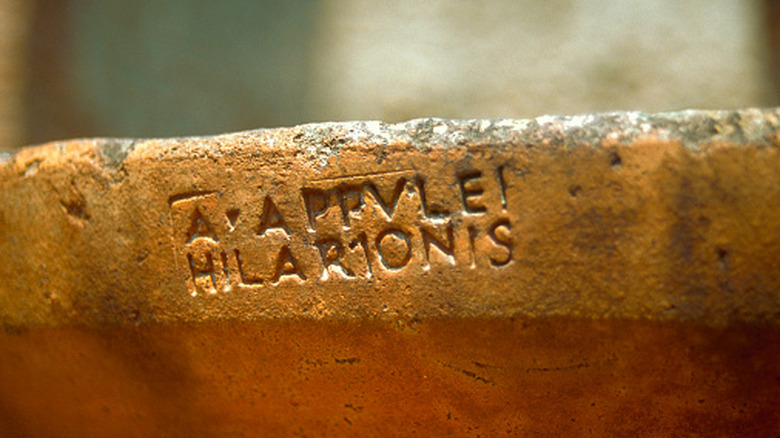
The maker's mark is a very straightforward way to identify pottery. The problem with using maker's marks is that there are so many of them that exist. You have to figure that humans have been making pottery for thousands of years, and vintage pieces were produced by countless artists and companies. Markings can be made up of signatures, logos, dates, countries of origin, or even design marks. Well-known artists and brands are often easy to identify, while lesser-known marks can be researched using databases like The Marks Project.
Clay type
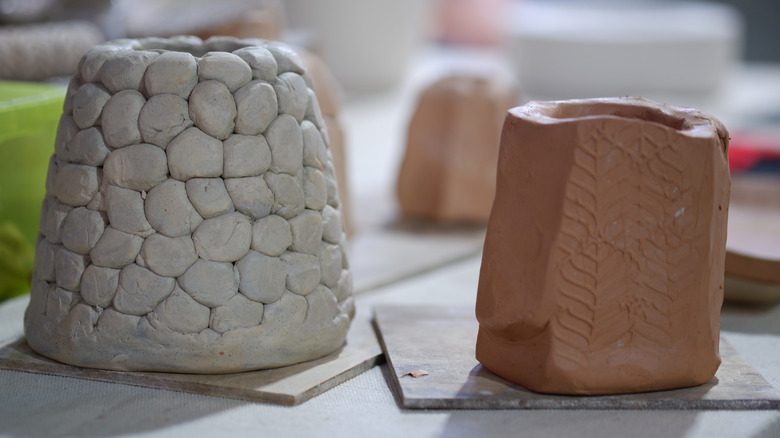
Vintage pottery is typically made from three main clay types: earthenware, stoneware, and porcelain. Earthenware is a low-fire clay that was the original type of clay used by early cultures for pottery. It is commonly associated with terracotta, but it can come in a variety of colors. Stoneware is fired at much higher temperatures than earthenware and is also more durable, which is why it is often used for dinnerware. Finally, porcelain is composed of kaolin and is fired at higher temperatures as well. It is mostly used for dinnerware and decorative items. Porcelain is also known to be lighter-colored, often bright white.
Design
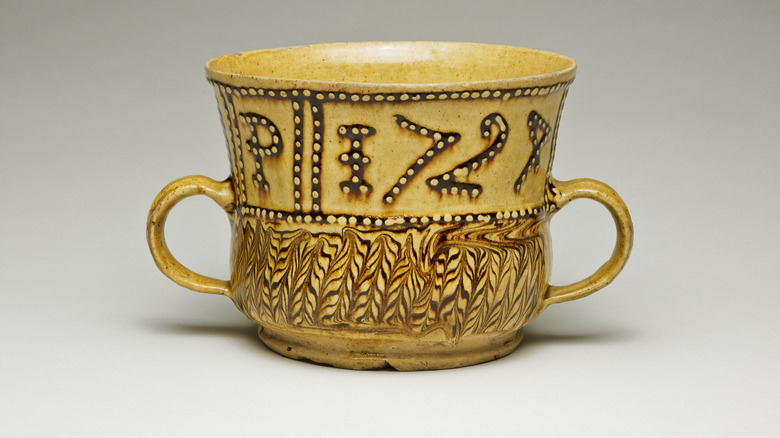
When looking at the design on a piece, you need to know how it was applied to the pottery. Is it transferware, hand-painted, or does it use a slip-trial method? Modern transferware often appears nearly perfect. A vintage piece might have imperfections in the design. With a hand-painted piece, you're going to see variations in color and the pressure of the strokes. Slip-trail is where an artist drips or splatters liquid clay onto the pottery. If a slip-trial is done by hand, you will feel it as a raised area of the glaze. An unglazed base is another common indicator of older pottery.
Color and style
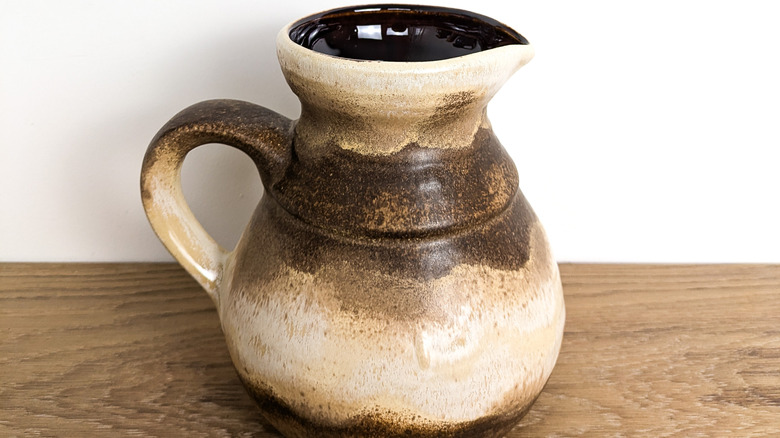
Color and style are great indicators of when a piece of pottery was made. During the Art Deco period, much of the art utilized geometric shapes and bold colors. Midcentury modern pieces were known for their earth tones, as well as organic shapes and textures. Majolica is a great representation of Victorian era pottery with its bright colors and revival of Roman and Greek styles. Learning which colors were popular during different eras helps narrow down a piece's age.
Shape and size
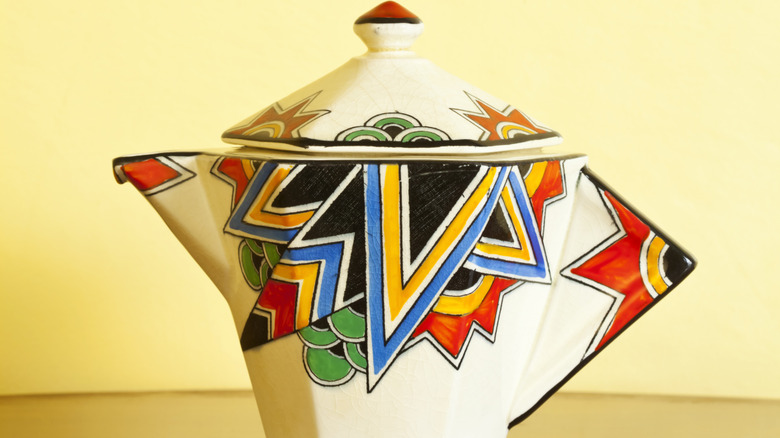
As mentioned above, the Art Deco period is easy to spot in pottery with its sharp geometric shapes. Pottery from the Arts and Crafts movement often has more traditional pottery shapes like ovoid, tapered, and cylindrical forms (what you think of when you imagine a vase). Art Nouveau typically features more flowing, symmetrical shapes and might include natural elements like vines or raised floral designs. Like color and style, each era has its own unique shapes that were trendy for that period.
Origin
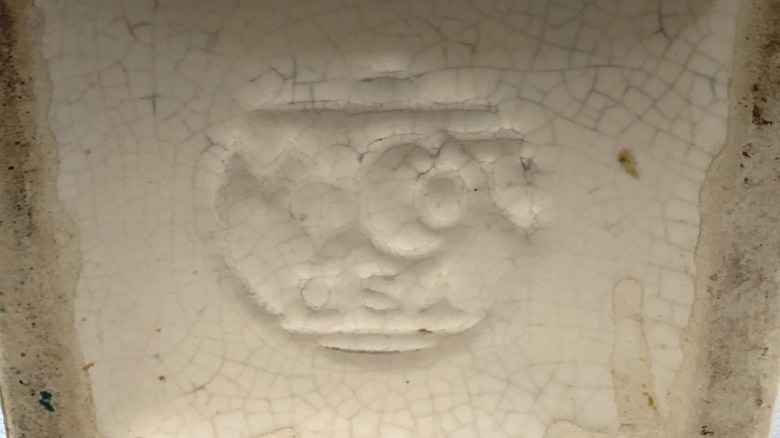
Origin can be important in many ways: it can signify a specific popular potter for a location, popular clay composition, and a maker stamp with origin can determine a piece's age. The biggest giveaway of a piece's age when using markings is whether or not the piece says, "Made in ...", just the country of origin's name, or neither. The McKinley Tariff Act of 1890 required imported goods to list their country of origin. After 1891, only the country's name was required. And after 1914, the mark had to state "Made in ...", with the name of the country.
Signs of age
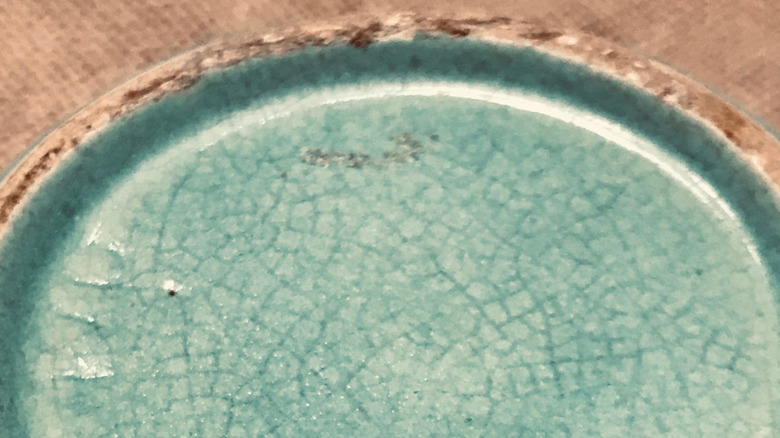
One of the biggest giveaways for identifying vintage or antique pottery pieces is signs of aging. True signs of age are difficult for modern manufacturing to replicate. You should look for crazing (fine cracks in the glaze), shelf wear, and patina. The best place to look for wear is going to be on the base of the piece, after all, this is what is going to be touching and moving on surfaces the most. Patina refers to natural discoloration that develops over time and often signals an older piece.
Weight
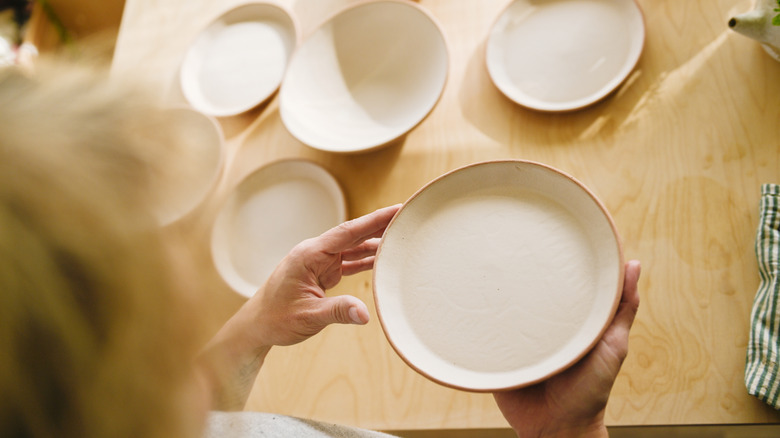
Antique or vintage pottery is going to have a heavier feel than a modern manufactured piece. When pottery is hand-thrown, the thickness of the clay will vary. Most modern pieces are created through what is known as slip casting. This is where a thick liquid clay is poured into a mold and cast. This is why a lot of modern pottery feels light and almost hollow when you pick it up. Vintage pieces generally feel denser and more solid in the hand. This is a general rule of thumb, as older pieces weren't made as precisely as modern pottery, and weights can vary.
Manufacturing versus handcrafted qualities
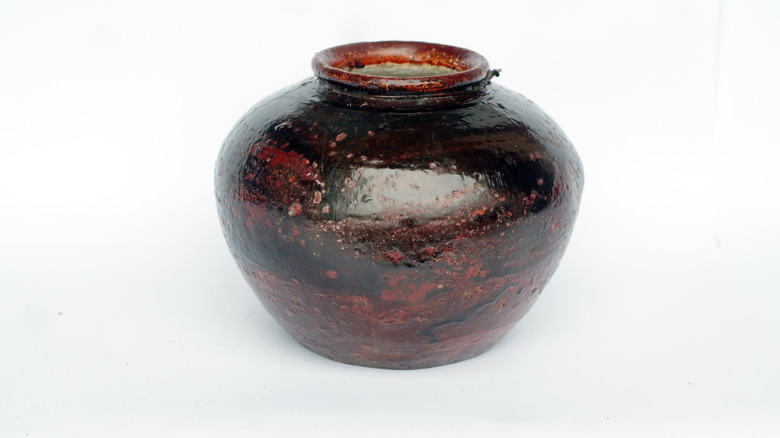
Often, there will be signs on pieces of pottery that indicate how they were made. If you find seam marks along the center of a piece, this indicates that it was most likely mass-produced (slip cast). It also means they didn't properly sand off the seam, and it's probably low-quality. Sometimes, hand-thrown pieces will have signs of "throwing rings". These are indentations from the potter's fingers from throwing the clay on a wheel. If a piece looks too symmetric or perfect, it is very likely mass-produced. Handmade vintage pieces will most likely have small imperfections.
Total aesthetic (the soul)
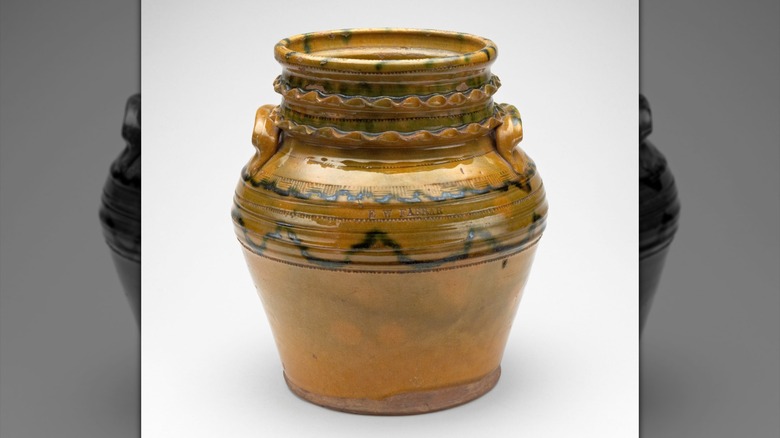
The best approach is to evaluate multiple traits together while trusting your instincts. Usually, if you find that a piece of pottery exhibits more than a few of the features mentioned above, it's a good indicator you may have hit the thrifting jackpot. Most modern pieces of pottery don't exhibit the craftsmanship of vintage pieces. Of course, most people would say that's a matter of opinion. When in doubt, a professional antique dealer can help confirm a piece's authenticity.