

The Invasive Evergreen Shrub To Avoid Planting In Your Yard
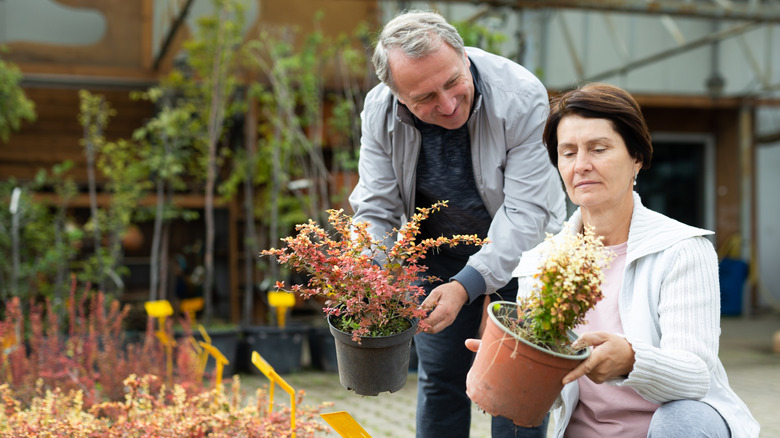
When you're starting from scratch with a new yard or just thinking of sprucing up your existing landscaping, you have a lot of choices for shrubbery. The best foundation plantings are evergreen and have year-round color – and those two features may lead you to consider heavenly bamboo (Nandina domestica). But before you grow one of these shrubs — also known simply as nandinas – you'll want to consider other options, since they are among the worst invasive plants that you should avoid at all costs.
Lots of folks love nandinas in USDA Hardiness Zones 6 to 9. In addition to being broadleaf evergreens, these 3- to 8-foot-tall shrubs have compound foliage that creates a frilly texture around cane-like stems, thus the name heavenly bamboo. This shrub has stunning foliage in shades of pink, burgundy, purple, red, and green, which is complemented by the heavy clusters of bright and dark red berries that stand out during the fall and winter seasons. Yet, despite its virtues, there are some serious cons you should know about before planting nandina in your yard.
Nandina is an invasive species in parts of the U.S.
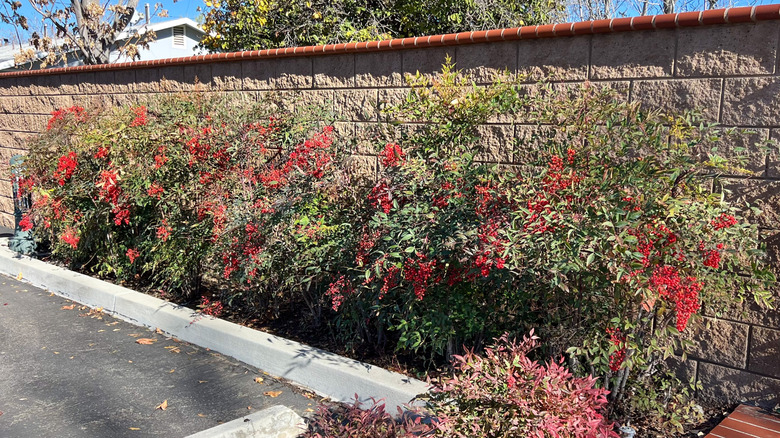
Although nandina is an introduced species originally from Asia, it now grows wild throughout the Southeast United States. Some of those states — Missouri, Kentucky, Virginia, Tennessee, Alabama, Georgia, South Carolina, Florida, and Maryland — consider this evergreen an invasive species and is discouraged to be grown, per Invasive.org. This is because nandina displaces native flora, which in turn, disrupts wildlife. Nandina can escape your yard in two ways: First, the red berries produced by the shrub are eaten by birds, which spread them into surrounding areas, such as forests. Additionally, the plant spreads through its roots underground, so a single shrub can, over time, develop into a large patch.
Nandina's status as an invasive will likely be enough to convince you to avoid it and buy a different type of shrub for your yard instead. If you need one more motivation, however, know that this evergreen plant is quite toxic, especially to the birds that are most likely to ingest it. If you do feel that you have no other choice but to grow nandina, choose a cultivar that doesn't produce berries. Better yet, choose a similar-looking shrub native to your region. Good U.S. native alternatives to heavenly bamboo include strawberry bush (Euonymus americanus), Virginia sweetspire (Itea virginica), and possumhaw (Ilex decidua).