

Everything You Need To Have A Thriving Zucchini Container Garden
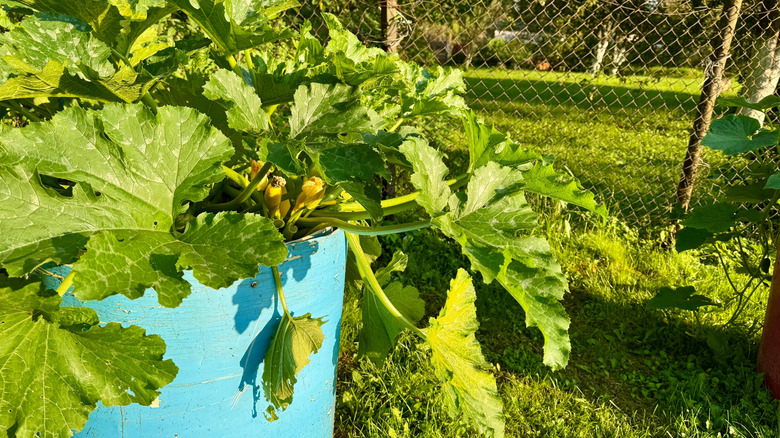
Zucchini (Cucurbita pepo) plants are famous for producing so many veggies that gardeners often find themselves sneaking extra squash onto their neighbors' porches in the middle of the night just to get rid of them. You do not need a large backyard to grow zucchini, as a sunny patio or balcony can work just as well when the plants' needs are met. These summer favorites grow as annuals and do well in USDA Hardiness Zones 3 through 11, provided the soil stays warm and the sun stays out. While many people wonder if it's better to plant zucchini in the ground or in pots, the truth is that containers work well when you use quality soil, a large pot, consistent watering, and six to eight hours of daily sun.
Because zucchini is sensitive to cold, you should wait to plant until the soil temperature consistently reaches 60 to 70 degrees Fahrenheit. Choosing bush varieties rather than vining types is also a smart move for pots, since they stay compact while still producing plenty of food. Giving the plant enough room to stretch out its big, prickly leaves helps it absorb the most sunlight, and staking the plant prevents it from snapping under the weight of the zucchini.
Pick a big enough pot and use soil that breathes
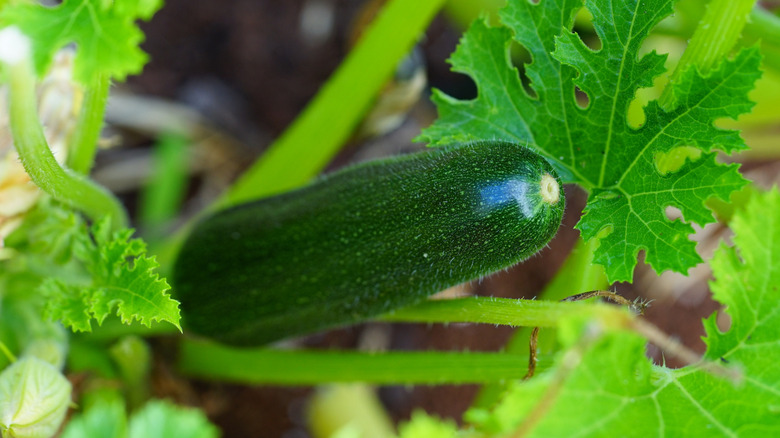
Zucchini plants are thirsty, and they love to eat, so the size of the container is the biggest factor in how well they grow. Some tips for growing zucchini plants include using a pot that holds at least five gallons of soil, but ones that are between 10 and 15 gallons are even better if you want to prevent the roots from getting cramped. A container that's about a foot deep and 18 inches across gives the roots enough room to keep the heavy plant from tipping over. You also need to make sure the pot has plenty of holes in the bottom because zucchini roots will rot if they sit in soggy soil for too long.
The soil you choose is just as important as the container itself. Don't use dirt from the yard, since it's usually too heavy and might have bugs or diseases. A lightweight potting mix blended with compost provides the loose texture zucchini roots prefer. Adding a slow-release fertilizer when you first plant your seedling gives it a steady stream of food. Since pots dry out much faster than the ground, putting a layer of mulch on top helps keep the soil damp when the summer sun is beating down.
How to water (& feed) zucchini plants in containers for the best yield
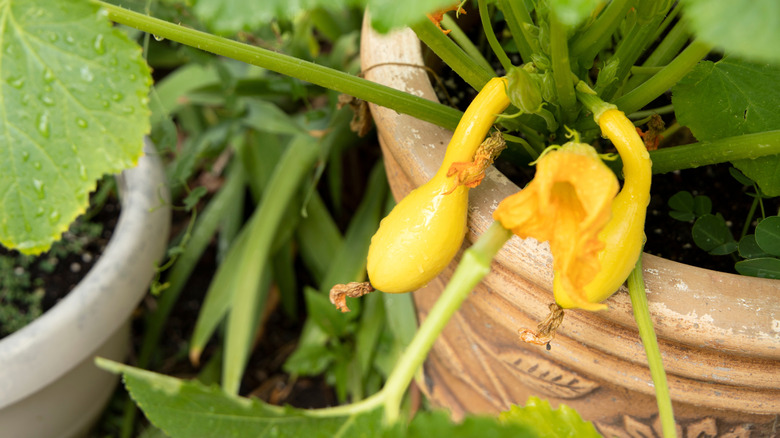
Consistent care is essential for a strong harvest when growing zucchini in containers. You'll probably need to water the pot every day when it gets hot out because even a little bit of wilting can stress the plant and make it drop its flowers. When you water, try to hit the soil at the base of the plant instead of getting the leaves wet. Soggy leaves are an open invitation for powdery mildew and can stop it from growing. One of the downsides to growing zucchini plants is their susceptibility to fungus, so giving your pots some breathing room helps the air move around, which keeps that white fungus away.
Zucchini plants need plenty of food once they start growing their big yellow flowers. You can use a liquid fertilizer every couple of weeks to keep them going, but try to avoid ones with too much nitrogen, or you'll get huge leaves and no squash. If you see flowers but not actual zucchini growing, you might need to channel your inner bee and move some pollen around with a small paintbrush, cotton bud, or even your finger. Harvesting zucchini at six to eight inches long encourages the plant to continue producing throughout the season.