

Signs It's Time To Replace Your Shower Valve Cartridge
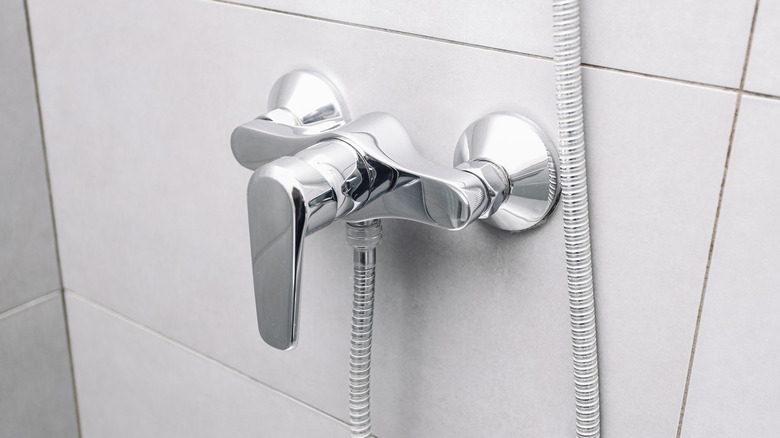
Add this to the list of chores you didn't know you needed to check off. While replacing your shower mechanisms isn't exactly a common task, and typically handled by a professional, it's important to know and look out for signs that your shower's valve or cartridge may need closer inspection.
Replacing your cartridge is a relatively simple DIY task, but replacing your valve is much more involved, usually requiring professional help, and often breaking the shower wall itself. There are a few warning signs to look out for regarding both mechanisms, most commonly leaks, a loose valve, limescale buildup, corrosion, or low water pressure. You may also have trouble turning the water off and on or experience inconsistent temperatures. Problems like this can typically be solved with a new cartridge rather than a new valve, but it's always better to be safe than sorry.
Tucked behind your shower handle, the shower valve manages both water pressure and temperature, and you may need to remove its faceplate to see if it is clogged or damaged. The common types include mixer valves, diverter valves, pressure balancing valves, and thermostatic valves (more on these in a bit). Your valve may be manual, exposed, or concealed behind a wall. It is not the same thing as your shower's cartridge.
What is a shower cartridge?
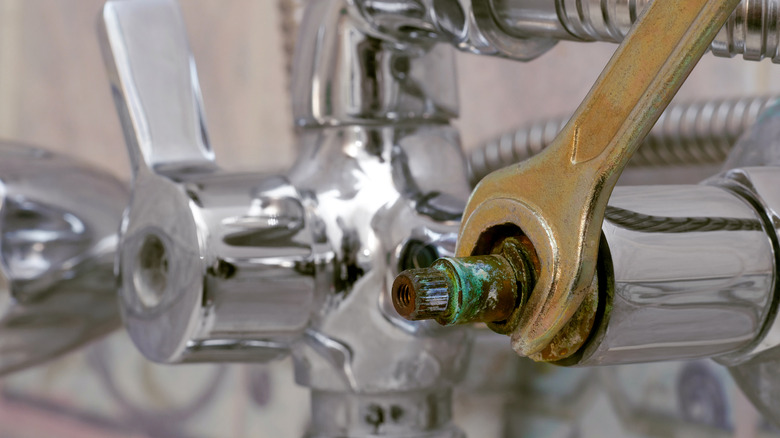
While the shower valve is the entire piece of plumbing located inside the wall of your shower, the cartridge is a smaller, easier-to-replace mechanism inside the valve that works to control temperature and water flow. It basically connects the valve to the handles you use to control your shower.
Depending on your specific type of valve, you will have a different type of cartridge, such as flow, mixing, pressure balanced, or thermostatic. A cartridge can also be made of several materials, like ceramic, stainless steel, or brass. If your it needs replacing, you will most likely notice one or more of these issues: inconsistent temperatures, constant dripping or leaks, a stiff handle or faucet, only hot or cold water, or unfamiliar noises coming from the faucet.
While it is possible to replace a cartridge on your own using a shower cartridge removal tool, often the most difficult part is determining which type you need to replace your old one. In this case, it may just be easier to call up a professional to ensure you get the right one installed.
Different types of shower valves
If your valve needs replacing, it will most likely display symptoms to a faulty cartridge, including leaks, inconsistent pressure, temperature changes, or a stuck handle. The first step to determining whether or not you need a new one is to ensure you can tell which type of shower valve you have in the first place.
While they used to be the more popular choice, basic mixer valves are now commonly seen only in older homes. They work by blending hot and cold water together into the shower head, and unlike the newer designs, aren't able to regulate changes in temperature or pressure, making them inconsistent. Newer designs, like pressure balancing and thermostatic, have generally taken their place.
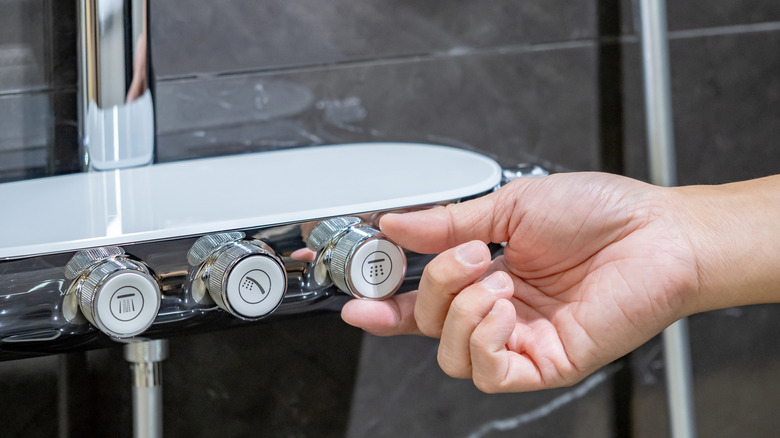
Pressure balancing valves, also called anti-scald or mechanical, help keep pressure and temperature more consistent. Showers with these typically have just a single control handle. Thermostatic valves can also balance pressure and temperature, but they do so with a thermostat, making them capable of maintaining a consistent temperature. Plus, they can regulate water volume. These often have two handles: one for turning the shower on and off and one for changing the temperature. They also tend to be more expensive.
If you have a tub in your shower, you may have a diverter valve which can switch water from your shower head to tub faucet. Since replacing an entire shower valve can require cutting a hole into your shower wall, you will most likely want to contact a professional to take care of it.