

The Countertop Style That Famous Chef Julia Child Had In Her Own Kitchen
We may receive a commission on purchases made from links.
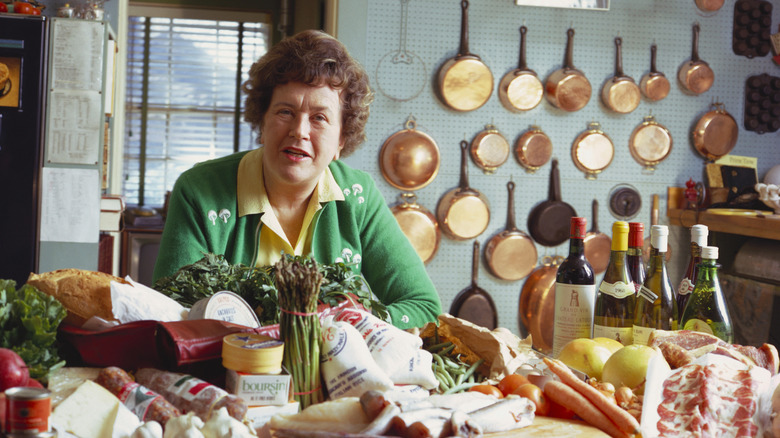
Whether you're a newbie in the kitchen or consider yourself something of a top chef, you can always turn to Julia Child for inspiration. The legendary celebrity chef made French cooking fun and accessible for Americans in the 1960s, and even decades later, home cooks still reach for her recipes. She had such an influence on the culinary world that a recreation of her kitchen sits in the Smithsonian. And while some museum-goers may pass by and imagine all the meals she created inside, aspiring interior designers may notice another element: her butcher-block countertops.
This countertop material is a classic, and not only because Child whipped up so many incredible meals on its surface. Butcher blocks have been around just about as long as humans have had the tools to slice, dice, hammer, and chop. In the past, everyone from blacksmiths to — you guessed it — butchers used this humble yet sturdy wood material.
In recent decades, butcher-block countertops and cutting boards moved into modern kitchens, gaining popularity thanks to their stunning appearance and workhorse durability. They're typically made by gluing together strips of woods like maple, walnut, or oak. The strips often feature differing colors and grain patterns, resulting in a surface full of depth and character. Plus, unlike wood countertops made from a single slab, the smaller, thicker pieces give the countertops more stability and longevity.
Caring for butcher-block countertops
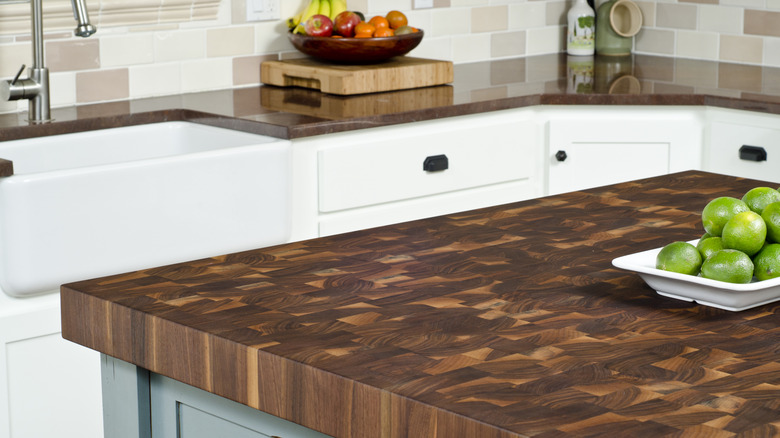
If Julia Child's countertops have inspired you to look for a clever way to give an old butcher block countertop new life (or to rip out your existing countertops and start fresh), you should know that there's a major downside to these kitchen work surfaces: They do require some effort to maintain since the material is quite porous. Still, it is possible to keep butcher block in pristine shape. Condition your counters with a food-safe mineral oil every four to six weeks to keep the surface from cracking or getting too dry. Also, while butcher block can handle some high temperatures, it's not quite as heat-resistant as some natural stone countertops. If hot pots and pans sit too long on the surface, warping or other moisture damage could occur.
Child herself didn't follow the most recent suggestions for care, according to an excerpt from Jim Scherer and Pamela Heyne's 2016 book "In Julia's Kitchen: Practical and Convivial Kitchen Design Inspired by Julia Child." In it, the authors reveal that she used an unspecified "abrasive cleaner" to scrub down her counters before conditioning them with olive oil. Now, experts recommend using a mineral oil over a cooking oil, as the latter can turn rancid. And instead of today's version of an abrasive cleaner (for example, something like Bar Keepers Friend and steel wool, a combo better suited to your stainless steel appliances), experts advise a simple solution of soapy water and a dish cloth, followed by an immediate wipe-down to prevent moisture damage.