

Knowing What To Donate Is Key To Freeing Up Storage Space In Your Kitchen. Here's How
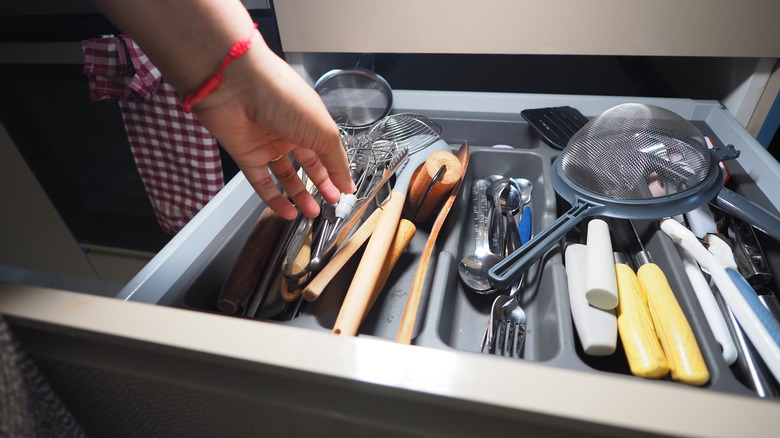
If your kitchen and pantry storage are overflowing, it may be a sign to conduct a full kitchen declutter. It's easy to hold onto various belongings, thinking you'll put them to use one day. However, in most cases, hoarded kitchen supplies and appliances simply add unwanted busyness to the space. Plus, there's likely someone who needs them more than you do. Items like decor, small appliances, food storage containers, dishware, mugs, utensils, baking supplies, dry pantry food, and even old refrigerators or microwaves can always be donated to local secondhand stores or community centers.
Along with feeling cleaner and less chaotic, a minimized kitchen can help ensure the items you do need always live in their correct homes. The more you have, the harder it is to stay organized and the more you end up tossing into junk drawers. Plus, a total declutter session can help you discover every item in your kitchen, and you may even recover a forgotten belonging you wish you had found sooner. Note that before giving anything away, always check what your local donation spots will take or not take.
Decluttering your kitchen and determining what to get rid of

There are countless decluttering and cleaning methods to attempt, some of which you've probably heard of, such as the 20/10 cleaning rule. There's also the "circle method," where you start in one spot and slowly expand your working area as you go. Your chosen tactic will depend on what process works best for you, and you may even choose to combine methods.
It may be useful to start a donation pile or box, and go through each drawer, cabinet, and shelf one at a time. Don't overwhelm yourself trying to tackle the entire room at once; pick a disorganized spot and start there. You can even make a checklist to ensure you go through every section.
It's important to ask yourself intentional questions to ensure you're tossing and keeping the right things. Ask yourself whether you truly use this item. Does it make your life easier? Are you keeping it purely for sentimental reasons? Do you really need more than one? From cleaning your countertops and cabinets to decluttering your junk drawer and pantry shelves, methodically move through each section with this mindset. This process could take several days if you need it to; you can assign a section per day until the project is complete. Rushing through may only make you feel more disorganized and overwhelmed.
Donating unused kitchen supplies

Once you've completed your declutter and, hopefully, have a large box of belongings to donate, you can start determining where you should take your kitchen items. Depending on what your local food banks, secondhand stores, or community centers take, there is a wide variety of items you can donate. Major stores like Goodwill, Salvation Army, and Habitat for Humanity Restore have guidelines on their websites detailing what they'll accept.
Think of what you typically see at thrift stores: mugs, plates, bowls, thermoses, serving plates, and utensils. Small appliances or tools, such as blenders, coffee makers, rice cookers, crockpots, strainers, and baking pans, can be donated; just ensure they work and are clean before doing so. Keep in mind that if you wouldn't buy it, someone else probably won't either.
Besides used kitchen tools and dishware, you can donate unused or unopened dry food to your local homeless shelters or community centers. Many stores accept dried goods, and some even welcome frozen or refrigerated items. Organizations like Kitchens For Good accept all types of kitchen supply donations, which they sell and donate the proceeds to nonprofit programs. So, not only will you be helping your community, but you'll also have a clutter-free, organized home.