

The Sneaky Weed To Look For & Remove In Winter For A Cleaner Backyard
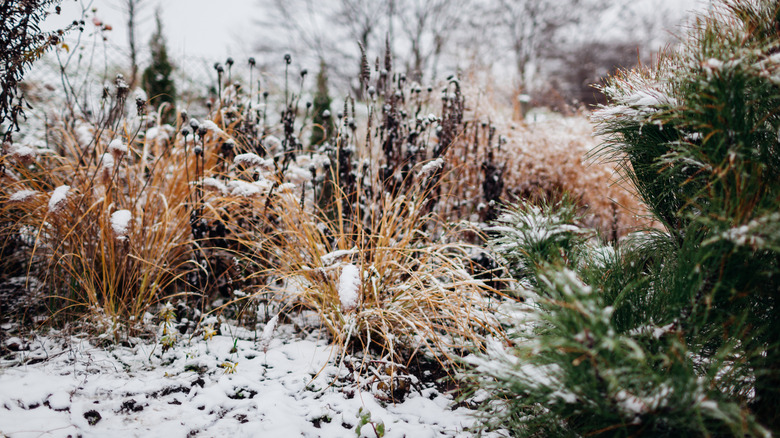
You may think you know what a weed looks like — it's any plant that doesn't belong in its spot. Now, how do you tell if a plant is a weed if it resembles grass? That's the dilemma that annual meadow grass (Poa annua) presents the gardener with, as it's one of the most common weeds in commercial and residential landscapes. It resembles lawn grass, with thin blades and fluffy seed heads, though it behaves like a weed. Seedlings pop up when cool weather arrives in fall, late winter, and spring. A single plant produces hundreds of seeds, and those seeds germinate when temperatures cool again in the future. Remove this sneaky weed this winter, and you'll prevent it from overrunning your yard next year.
Identify this annual by its habitat and growing characteristics. It tends to sprout in bare areas with exposed soil, and it excels in gardens with plenty of moisture. Green grass blades emerge from a central crown, and they reach 6 to 8 inches tall if left to grow. Mowing the site will shorten the grass clumps, but new growth will sprout from the crown. Hardy and tough, this meadow grass will stop at nothing to produce seeds, sneakily causing future infestations.
Get rid of these weeds in the garden by removing the plant, roots and all. It's important to remove the meadow grass clumps growing currently to prevent seeds from forming and landing in the garden. Yes, it's cold outside, but that doesn't mean the plants can't grow, so put on some warm boots, grab your gloves, and get ready to destroy those pesky weeds!
Remove annual meadow grass with simple techniques
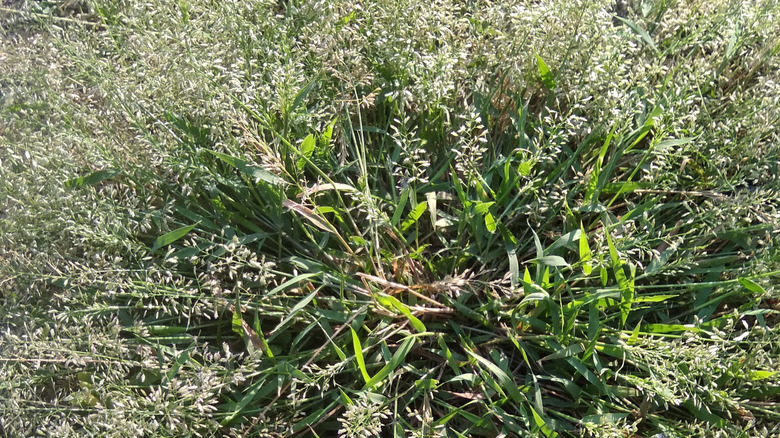
To remove annual meadow grass, start with the easiest methods, like hand pulling and raking. You want to get as many clumps as possible out of the garden. Ensure you remove both the roots and the tops, as the tops can resprout if the roots are left in the ground. After it rains is the best time to pull weeds without the hassle because the ground is loose, soft, and moist. If you can't wait until nature gives you rain, simply water the site yourself to help loosen the dirt before hand-pulling those sneaky grasses.
If your hands get tired, try buying a helpful weeding tool to add to your regimen. Use a hand rake, a weeder, or a trowel to loosen the earth. Then, remove the clumps and their roots to discard them by tossing them in your green waste bin. Throw them away as a last resort if you lack access to green waste recycling.
Proper disposal is important to prevent future infestations, as the seeds last for more than 25 years in the soil. Though you've put work into eradicating the plants this year, you'll likely have to repeat the process for the next few years until all of the seeds sprout and you remove them. With consistency, time, and attention, you can successfully clear these weeds each winter for a cleaner backyard.