

I'm An Airbnb Host — Avoid This Hidden Danger Most Beginners Don't Know
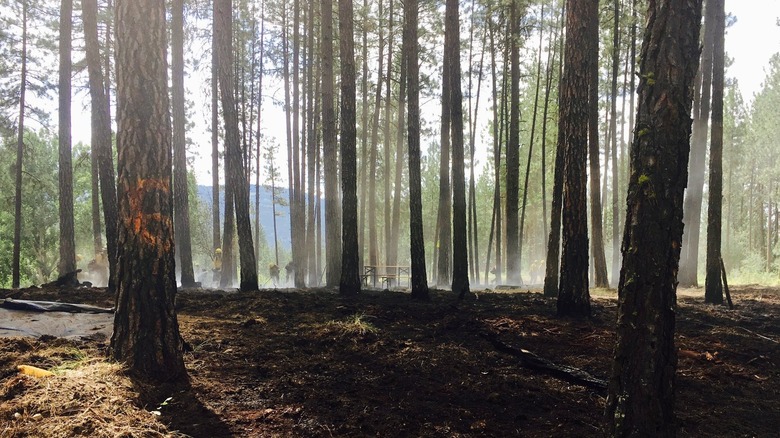
I'll never forget that morning. I woke up, began my usual scrolling through Facebook, and stopped in horror when I saw a photo — my own Airbnb property, in flames — with fire trucks and first responders on the scene. Even worse, the fire overlooked the property of a neighbor, a beloved pastor, and threatened his home. By the time I arrived, the fire was out, no structures had burned, and the pastor's home was safe.
Months later, I received a letter from the Washington State Department of Natural Resources fining me $10,000 to recover costs from fighting the fire. The fire occurred early in my time as an Airbnb superhost, which started in 2016 and has encompassed more than 500 bookings and a ton of five-star reviews. Back then, I was unaware of the avoidable hidden danger lurking on my property. I suspect most other beginners don't know how to prevent the expensive mistake that I trace directly back to the cheap, unsafe fire pit I had left in an inappropriate part of the property for my Airbnb guests. I believed my guests when they said they had been careful and thorough when extinguishing the fire. It was simply a perfect storm, with the wrong fire pit in the wrong place.
When I say "fire pit," I actually mean "fire ring," nothing more than a thin sheet of galvanized metal formed into a circle. This type of fire pit, often used while camping, allows the fire to make direct contact with the ground, which is a particular problem in the ponderosa pine forest where the Airbnb is located.
Choose a safe fire pit
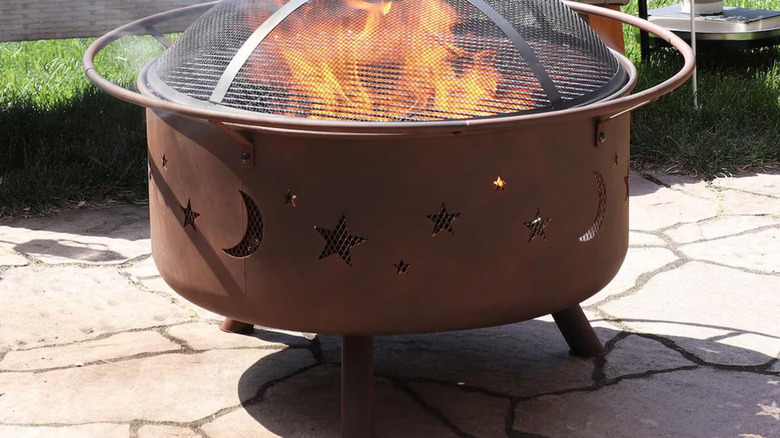
A fire pit is typically worth buying if you own an Airbnb property. They've become almost standard equipment at rental properties in recent years, but a simple fire ring is a poor choice for several reasons. In addition to lacking a bottom piece, it doesn't provide any way to control flying embers, and some fire rings have decorative cutouts on the sides that don't adequately contain the fire.
The lack of any barrier between the fire and the ground was the biggest problem with the fire ring in my case. The fire didn't start until three days after the guests had left, meaning a tiny spark likely smoldered and spread for days through deep layers of pine needles under the soil surface.
I replaced my fire ring with a bowl-style fire pit, designed with a bottom and feet, to keep it off the ground. Even a fire pit with a base should be placed on a nonflammable pad made from stone, brick, or metal. A spark screen — a screened cover that helps prevent sparks from flying out of the fire pit – was another improved feature of my replacement fire pit.
Place your fire pit in a safe location
Placement is critical. You'll want to keep your fire pit at least 20 to 25 feet away from any structures and avoid forest floors laden with pine needles. Choose a spot that doesn't get too windy or has a natural windbreak. Permanent, built-in fire pits can be constructed safely, but be aware that locating the unit near trees, structures, or electrical wires is a fire pit placement mistake.
A glimpse at Airbnb's community forum for hosts reveals I'm not the only host who's had a fire resulting from a fire pit. While noting how much guests love them, forum members express significant trepidation about whether to offer a fire pit and share lots of reasons not to — liability, user error, lack of supervision, the question of who supplies the firewood, the tendency for fire pits to be accompanied by parties, and more. One host made a suggestion I wish I'd seen before the fire: Wait till you've really learned the ropes of hosting before adding a fire pit. Whether you're thinking you'd like to make your home a vacation rental with a fire pit or considering one for your own home, ensure you have a safe fire pit in a safe location. Don't be like me and let your frugality turn into a $10,000 mistake.