

Grow This Heat-Resistant Spinach Substitute For A Delicious & Nutritious Harvest
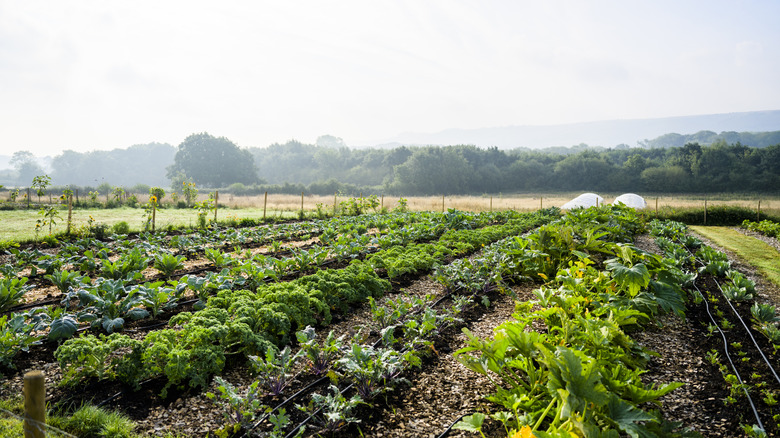
If you live somewhere with frequent warm weather, spinach may never have come across your gardening radar. After all, spinach is a cold-hardy vegetable that does best when daytime temperatures don't rise beyond around 80 degrees Fahrenheit, and exposure to warmer temperatures can lead to bolting. However, that doesn't mean that leafy greens are entirely off-limits in your garden. While spinach may be a no-go in a balmy environment, this spinach substitute looks (and tastes) similar while thriving in the heat. In fact, it can grow in temperatures beyond 90 degrees Fahrenheit.
While the name says otherwise, Malabar spinach (Basella alba) isn't actually in the spinach family. When it comes to cooking, though, the taste is quite similar, providing you with a flavor-packed and nourishing vegetable to add to your meals. Malabar spinach is chock full of nutrients, including vitamins A and C, iron, calcium, potassium, and other antioxidants.
One striking difference you may notice between Malabar spinach and true spinach is this plant's vining growth — rather than compact bushes, Malabar spinach grows in vines that can be trained to climb supports, which is one of the main reasons it's grown in popularity as an edible ornamental plant. Although Malabar spinach has a natural hardiness for warmer weather, it's still important to learn about how to add this plant to your garden for a healthy plant and plentiful harvest.
How to grow Malabar spinach
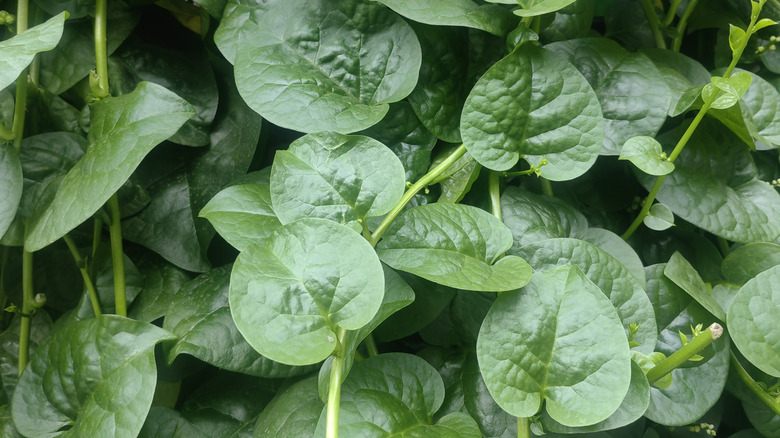
Malabar spinach can be grown as an annual or a perennial. When grown as a perennial vegetable with harvests year after year, keep in mind that this plant is only hardy in USDA growing zones 9 through 11. As a result, it may need to be overwintered indoors for another delicious harvest the following year. Although it can tolerate the heat, cold spells can be dangerous for this plant. This means you'll want to wait until any threat of frost has passed before adding this plant to your garden.
When you are adding Malabar spinach to your garden, location plays a significant role in its success. After all, this plant is native to tropical climates, so it's important to replicate that environment as much as possible. This means placing it in an area with ample light to meet its full sun growing conditions. Malabar spinach does need soil that's kept consistently wet, but avoid overwatering to the point of waterlogged soil. Consider a well-draining soil to prevent water from pooling up around the plant.
Growing Malabar spinach isn't all work, however; you also have harvesting to look forward to. Starting in early summer, keep an eye on how the plant is growing to check if it's ready. A healthy main stem is a good indicator that you can begin plucking any leaves needed for your meal, which you can continue to do throughout the summer and fall, or until it begins to flower.