

12 Beautiful Purple Deer Resistant Flowers To Add To Your Garden

There are some great deer out there. Bambi? Adorable. Rudolph? Saved Christmas! Those little four-legged creatures who want to eat all your tomatoes and destroy your rose bush, though? Those deer aren't quite as fun. Thankfully, there are strategies you can use to let them know your backyard isn't their playground — and they don't have to involve tons of unsightly fencing or harsh chemicals. One of the best ways to keep deer out of your yard is by growing plants that repel the animals. In general, deer tend to avoid plants with strong smells and tastes, like bitter greens or pungent herbs. They also often avoid plants with natural protective barriers, such as prickly leaves.
You could go wild planting chives and hot peppers. But let's say you want to take your deer-repelling a step further and grow plants that both deter deer and make your space more attractive — specifically by adding some gorgeous shades of purple to your garden. You're in luck. From easy-to-grow catmint to fragrant lavender, there are tons of purple plants that deer just don't like. To help you make your garden both beautiful and deer-free, we've gathered our favorites below.
Catmint
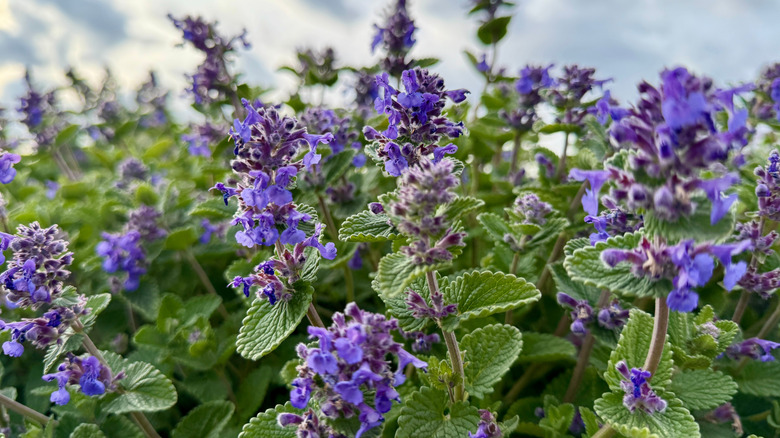
Nepeta, more commonly known as catmint, is a solid go-to for steering deer clear of your garden. Its lovely purple flowers and light green leaves give off a minty scent that deer and rabbits don't like. But butterflies, hummingbirds, and bees do, making it one of the best plants for your pollinator garden. Excellent for beginner gardeners, thanks to its relatively low maintenance, catmint is a hardy perennial that can thrive in USDA Hardiness Zones 3 to 8.
Hellebore
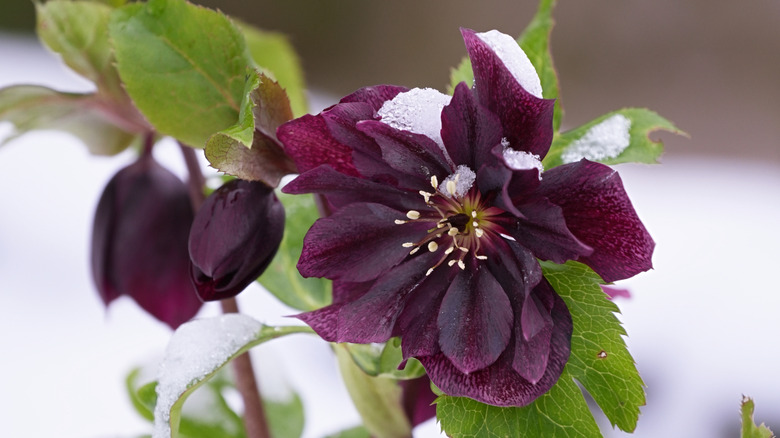
Have a year-round deer problem? Grow Helleborus orientalis, or hellebore, whose toxic leaves are poisonous to deer. Hellebore can bloom as early as late winter or early spring, performing deer-repellent duty before later-emerging flowers. If you're partial to purple, look for varieties like 'Anna's Red', which grows in Zones 4 to 9 and fades to a gorgeous burgundy, or 'Double Ellen's Purple', which can grow in Zones 3 to 9 and has leaves speckled with rich maroon edges. Just be careful if you have dogs or cats that wander into your garden, as the plant can be toxic for them, too.
Mexican bush sage
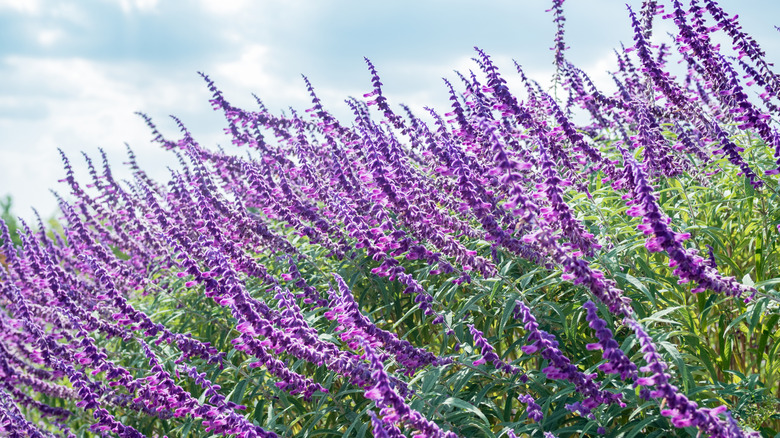
Salvia leucantha, also known as Mexican bush sage, will typically stop deer in its tracks. They're not wild about the plant's fuzzy leaves and pungent aroma. But it will stop people in their tracks, too, thanks to its striking spikes of bright purple and white flowers that make a statement. Mexican bush sage will grow in sunny spots throughout Zones 8 to 10, blooming through most of the summer and into the fall.
Lavender
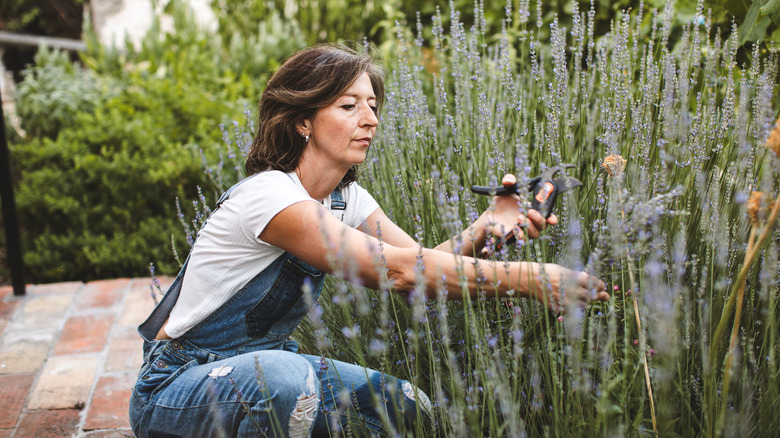
We can't help but love it when a fragrant plant smells incredible to humans and not-so-great to deer. Enter: Lavandula angustifolia, or English lavender. Its strong, distinct fragrance keeps deer away. Plus, insects don't like the smell, either, so it's a nice one to plant near patio furniture or other places you want to keep mosquitoes away. More bonuses? Lavender is a resilient plantthat can grow in dry soil in Zones 5 to 9, and there are tons of brilliant ways to use lavender from your garden around your house.
Monkshood
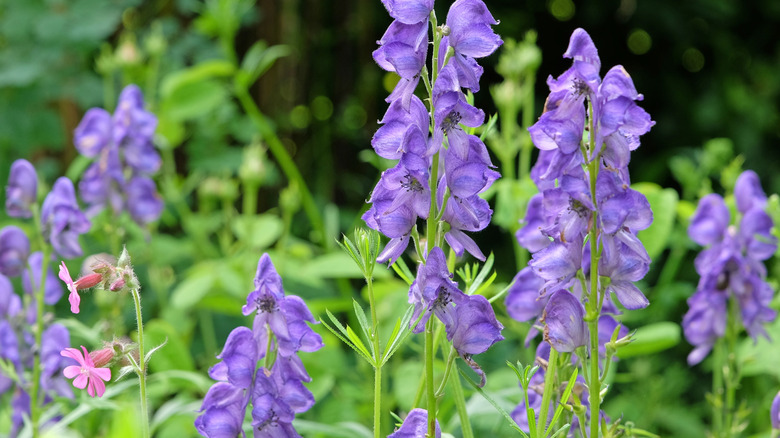
Aconitum napellus, also known as Monkshood or wolfsbane, grows super striking deep purple and white flowers on stalks that can grow as large as 4 feet high. You can plant it in Zones 3 to 8 to keep deer away, but take a note of caution first — deer are repelled by this because it's poisonous to them, and people have to take care with Monkshood, too. Don't tend to it without gloves. If you've got kids, pets, or neighbors who tend to wander into your garden, it's best to skip this one and opt for another on the list.
Lungwort
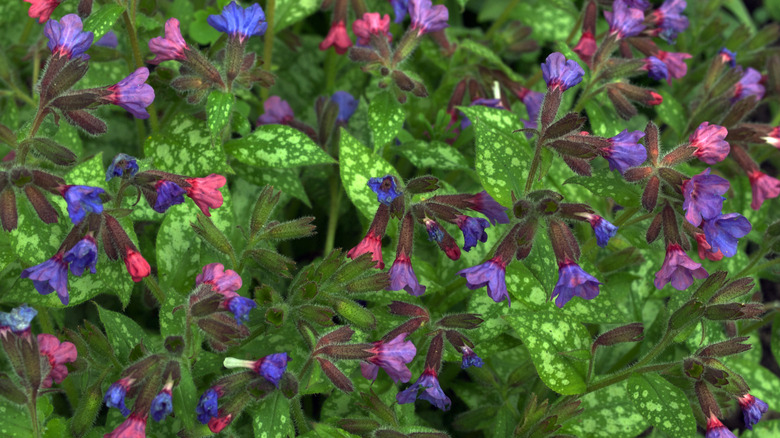
Want some violet, blue, and white sprinkled in with purple flowers on deer-resistant plants? Check out Pulmonaria officinalis or lungwort. Along with dainty, colorful flowers, lungwort has fuzzy, coarse leaves that both deer and rabbits prefer to avoid. It's a good choice if your space doesn't get much sun — lungwort does well in partial sun and can even tolerate full shade, growing in Zones 3 to 9. It's also another early bloomer, looking great in your garden while helping you fend off spring's first deer.
Ornamental onion
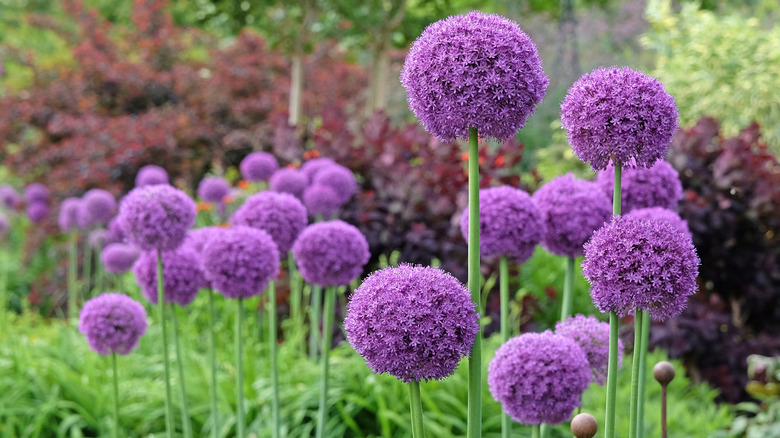
Deer don't like Allium, or ornamental onion. As the name implies, it's got that garlicky, oniony smell that will make the animals stay away. The prairie-esque plant also has bright, bulbous purple flowers that light up any garden (its globe shape has earned it the moniker "Globemaster"). You can plant ornamental onion in Zones 3 to 8. They want full sun, but they can also stand up to drought and cold, and they pair well with other plants, making them a versatile, gorgeous addition to any backyard.
Hardy Geranium
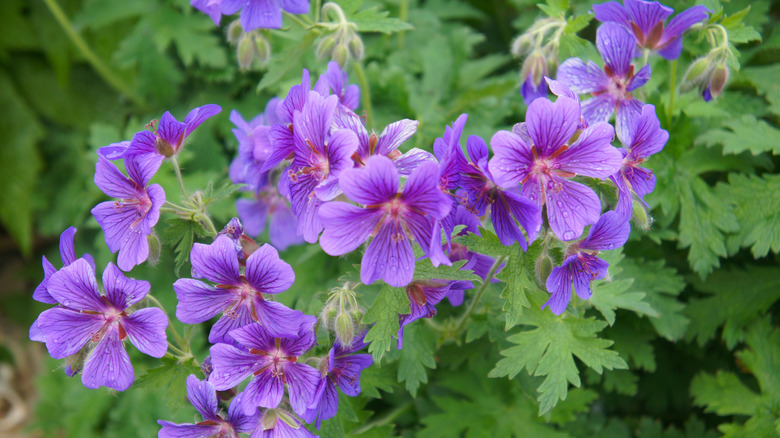
If you prefer a more floral look over some of the lush, bush-like plants on this list, don't sleep on Geranium, also known as Hardy Geranium, Cranesbill, or 'Mavis Simpson'. Its playful purple flowers might be small, but they're bursting with color and personality. The low-maintenance plants grow in Zones 3 to 9, where they like some sun and a little water as they go to work keeping your four-legged frenemies at bay.
Russian sage
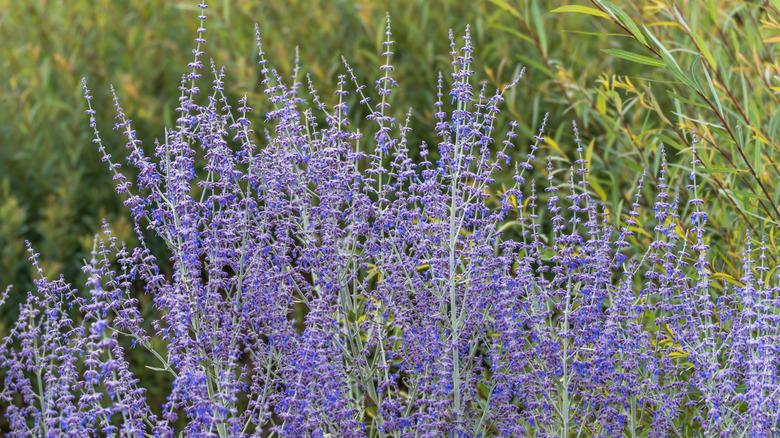
Calling all beginner gardeners, just trying to keep the deer away! Say hello to Perovskia atriplicifolia, or Russian sage. As long as it's got sun and well-drained soil in Zones 4 to 9, the shrub-like perennial is relatively easy to maintain. Its spiky amethyst flowers and silvery leaves have drawn comparisons to lavender in both appearance and deer-repelling abilities — the animals just don't like its fragrance and will stay away.
False indigo
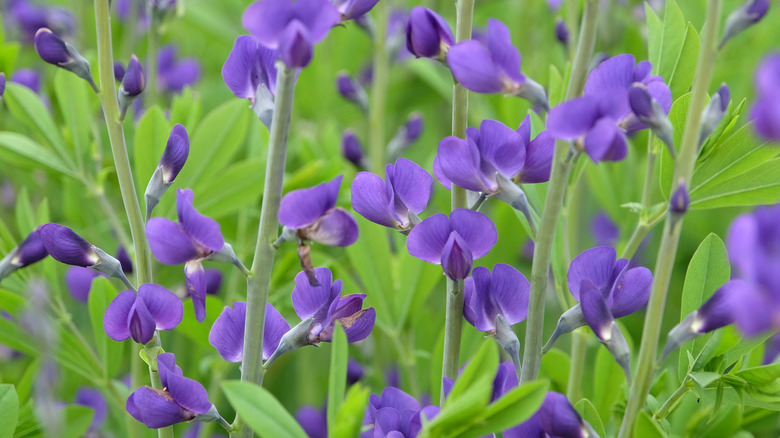
If you want your deer-repellent plant to bring a little drama, grab some Baptisia at the garden store. More commonly known as the 'Purple Smoke' hybrid false indigo, it's tall, lush, and full of smoky-violet flowers shaped like pea blossoms. It's excellent for gardens in Zones 4 to 9 where you want full, wild-looking plants. Deer don't like the taste, but it is an excellent pollinator, so you can keep out the guys who eat your roses and invite the ones that help them grow.
Brazilian verbena
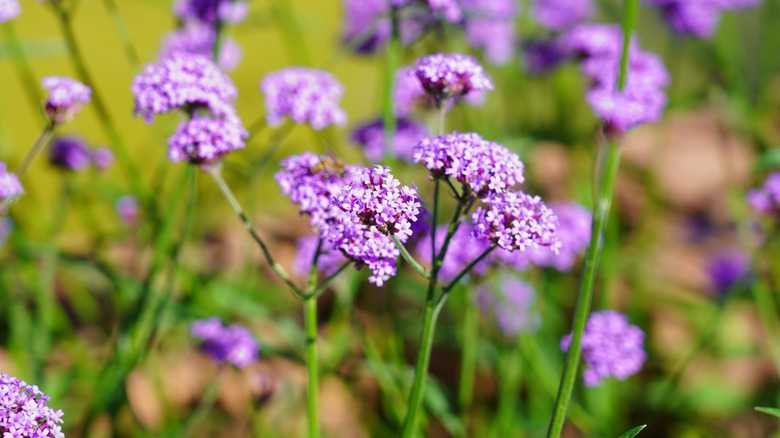
Verbena bonariensis, or Brazilian verbena, grows tall enough that deer would hardly have to bend down to munch on this one. Thankfully, though, the coarse leaves and bitter taste make the plant off-putting to grazing Bambis. If you're in Zones 7 to 11, you can expect wispy foliage and delightful, long-blooming clusters of purple flowers to bring some beauty to your garden.
Blazing star
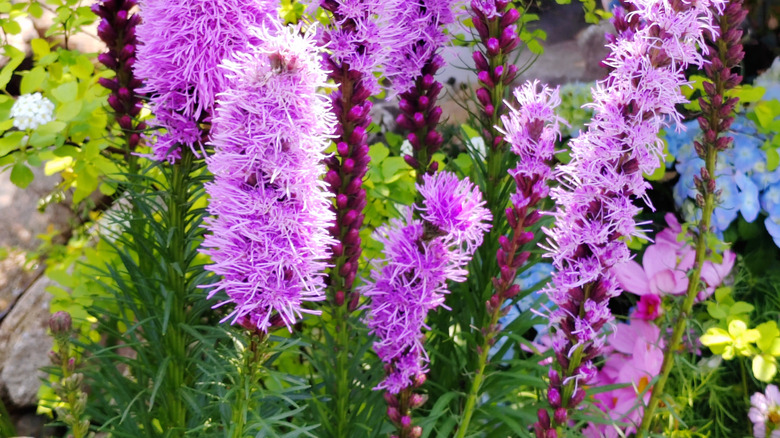
Liatris spicata is the scientific name for this purple deer-repeller, but its common name — Blazing star — really tells it like it is. The prairie flowers would look great in a no-mow backyard, thanks to tall, feathery purple flower spikes that bloom from the top down in a star-like pattern. Those spikes are dry and coarse, helping cement their deer-resistance. But extra hungry deer might be drawn to the more delicate-looking younger shoots, so keep an eye on these if you're cultivating them from a young age.