

Is It Possible To Harness Wind Energy For Your Home? Here's What To Know
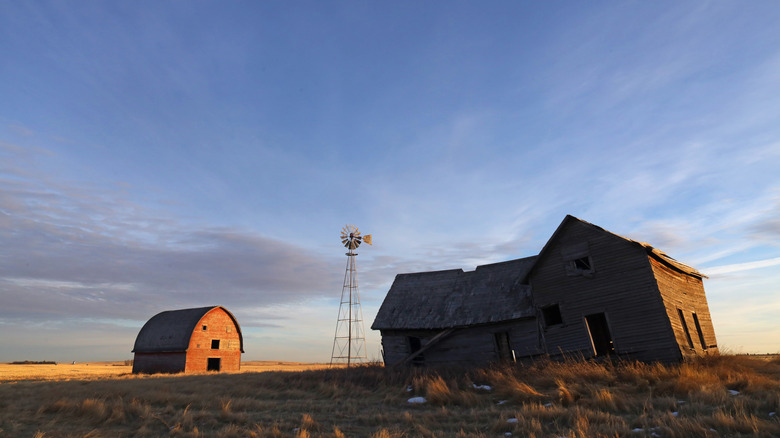
Harnessing the wind is not a new idea. Picture any pioneer-era farm on the Great Plains, and you'll likely find a windmill used to pump groundwater to irrigate crops. Hundreds of American companies manufactured them, and they were among a farmer's most prized possessions. When you picture a wind turbine today, you probably picture a row of massive towers lining a prairie or mountainside. But small wind turbines for home use have become increasingly popular for off-grid homes and RV living, as an emergency power supply, and to reduce electricity bills — over a million of them are in use worldwide. For homeowners, small turbines are an efficient energy source comparable to solar panels. How useful your wind turbine is depends on its size and the size of the battery you use to store the electricity it generates. Tiny wind turbines can be found online costing up to a few hundred dollars, but they aren't likely to do more than charge a phone or tablet.
At the other end of the spectrum, installing a small wind turbine (SWT) capable of supplying all of an off-grid home's energy needs is a large investment. The average American home uses around 863 kilowatt-hours (kWh) per month, according to the U.S. Energy Information Administration. To generate that amount of electricity, a wind turbine would need to be able to generate 5 to 15 kilowatts (kW) of power, which would require adequate land (and wind speed) and a turbine up at 75 feet tall generating up to 15 kW. By contrast, the typical SWT for home use generates around 1.5 kW. Unless you're planning on building an off-grid, eco-friendly Earthship home, more feasible uses for wind turbines are as home energy backups and reducing electricity bills.
Wind turbines for resilience and lower electricity bills
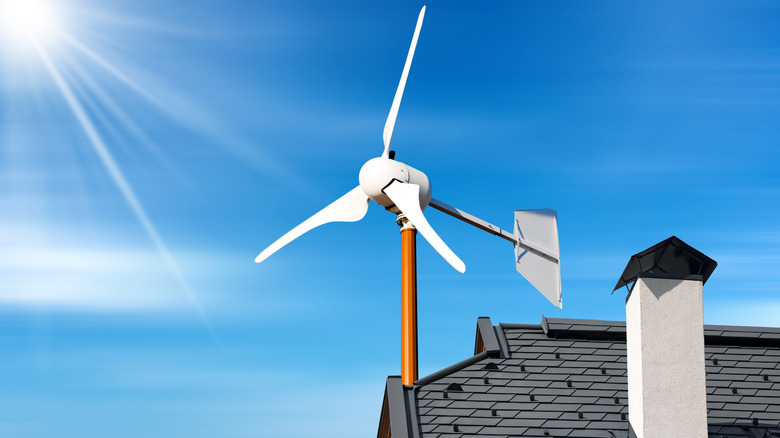
As incidents of extreme weather increase in the U.S., power outages are becoming more common, driving increased interest in home energy generation and storage. Wind is among the most common causes of widespread power outages, but it can also keep the lights on during an outage, as long as you have a way to harvest its energy. A small wind turbine paired with a home battery can allow you to store enough electricity to keep your home running during a power outage, even if the wind doesn't blow all the time. Use your 1.5 kW wind turbine to store enough wind energy in a 10 kW home battery, and you can power a home for 8 to 10 hours. But small wind turbines can be more than an emergency electricity supply.
In an era when home electricity prices are out of control, a wind turbine can also lower your electricity bills. Home wind power can reduce your energy use in two ways, with or without a battery. Paired with a home battery, you can store wind energy and use it in place of grid electricity. Winds tend to be stronger at night, when home energy use is lower. The wind energy stored at night can then be used during hours of peak demand, usually during the day, when electricity costs are often higher. But a wind turbine can cut your costs even without a battery. In states with net metering programs, your electric utility company may credit you for some or all of the electricity your wind turbine sends into the grid, reducing your utility bill, so that the grid itself acts like a battery to store your electricity.