

Fall-Berried Shrubs You Must Prune Before The End Of Winter
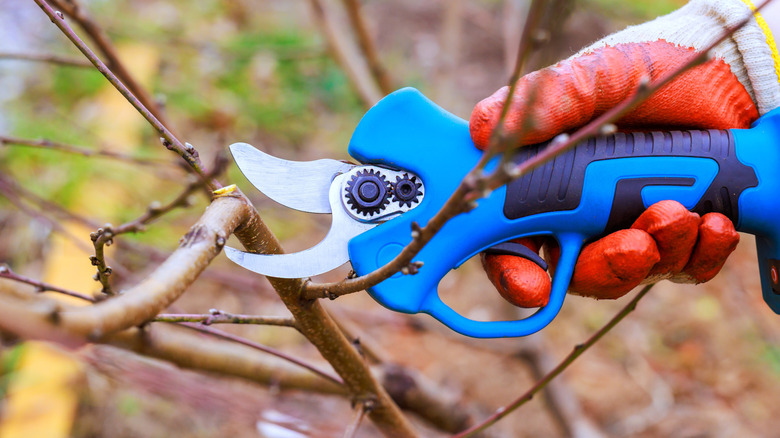
When the thermometer drops and it's brisk outside, it's easy to push yard work to the bottom of the list. Tackling berry brambles, especially, doesn't seem like a fun task while you're shivering outside. But while it's tempting to wait until the spring to grab those sheers and dive into those thickets, for fall-fruiting berry bushes, pruning while the plant is still dormant is the best way to ensure a better bloom later in the season. Specifically, primocane-bearing berry bushes — referring to cultivars that bear fruit during the first year of cane growth — benefit from winter pruning.
Fall-fruiting berries encompass a whole variety of plants. Shrubs, including primocane-bearing raspberries (Rubus idaeus) such as 'Heritage,' 'Double Gold,' and 'Anne,' as well as primocane-bearing blackberries such as 'Prime-Jim' (Rubus x 'APF-12'), 'Prime-Ark Traveler' (Rubus 'APF-190T'), and 'Bushel and Berry Baby Cakes' (Rubus 'APF-236T'), all enjoy a good winter shedding.
Other berries, like black elderberry (Sambucus nigra), which ripens from the end of September to October, should also be pruned during winter dormancy, though in slightly different ways from raspberries or blackberries. All in all, shedding unnecessary growth from these plants will help keep them healthy and thriving throughout the growing year.
Why you should prune during the winter
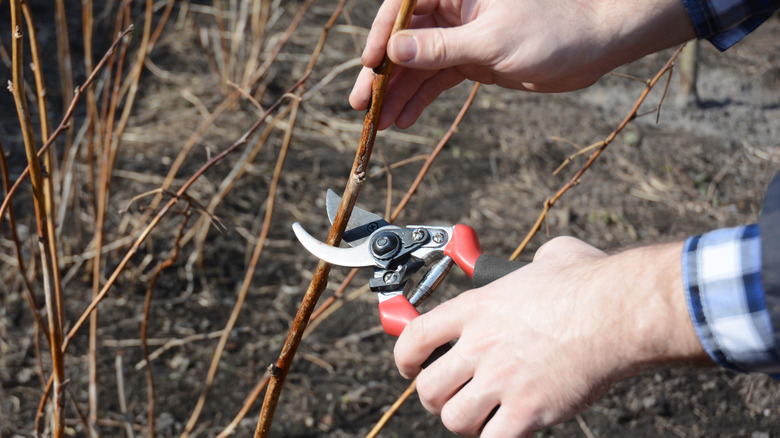
There are several reasons for pruning these bushes during winter dormancy. The first is energy efficiency; during the winter months, these plants store energy while waiting for the cold to pass. Once the weather warms up, they distribute their energy out toward branches and buds. When left unpruned, some of that energy is wasted on weak or dying wood. If you prune while the shrub is dormant, you're ensuring that energy isn't waywardly directed and is instead funneled to new, healthy growth. It's also less stressful for the plant to be pruned during dormancy.
The second reason for pruning during the winter is to mitigate any diseases or pests on the plant itself. Old, spent branches are overwintering havens for pests and fungal spores, and removing them before the weather warms breaks the life cycle of unwanted intruders before they inevitably affect new growth.
Lastly, pruning before winter ends supports these plants' primocane fruiting cycle. Fall-berried shrubs produce the best crop on their first-year branches. Thus, it's best to cut down any older canes so that fruit doesn't prematurely come in during the summer. Summer fruits delay autumn harvests and make them less abundant too. For an optimal berry harvest, it's best to thin those older canes out and make way for those primocanes.
How to prune your fall-berried bushes
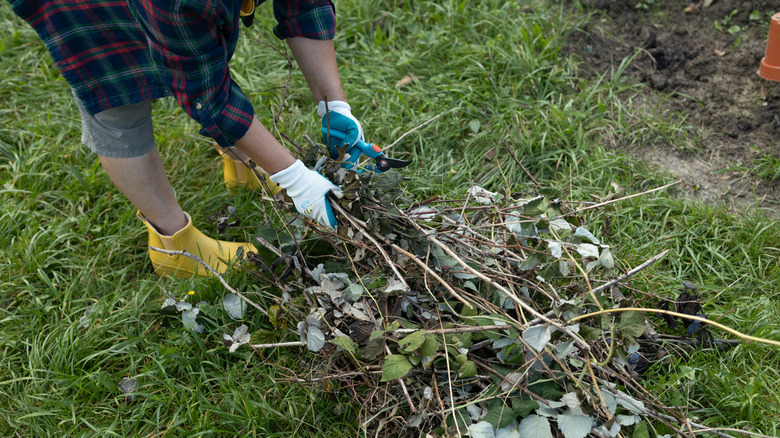
Pruning can feel a bit intimidating, but so long as you avoid major pruning mistakes, it doesn't have to feel like surgery. For raspberries and blackberries, parse out the older or diseased canes by identifying any gray or peeling parts, addressing any old clusters of last year's fruit too. Cut this old growth down to ground level, and remove at least the first 6 inches of primocane growth if they're about 3½ feet tall. Since only thinner primocanes should be left at this point, the plant may benefit from temporary support structures in geographic locations affected by winter winds. Otherwise, the shrub should be cut down to ground level in its entirety.
For elderberries, you can prune plants that are older than 2 years old, but it's best not to hard prune these bushes until their fourth or fifth year. Instead, prune them into a shape that works best for your garden. Once they're mature enough, however, cut out 3-year-old or older canes to promote the healthy growth of new, more prolific canes.
Furthermore, since a clean cut heals faster than a crushed or ragged one, be sure to choose the best pruning tool for your needs. For instance, it's best to use sharp pruners to prevent any die-back or winter kill during the final weeks of winter frost. Effectively, you're initiating a botanical reset and clearing the way for your berry plants to thrive come autumn. While it may feel like a chilly drag, and a bit of overkill pruning these bushes to the ground, it's well worth it once you have beautiful blooms and tasty fruit!