

Here's How Deep Your Shower Drain Should Be
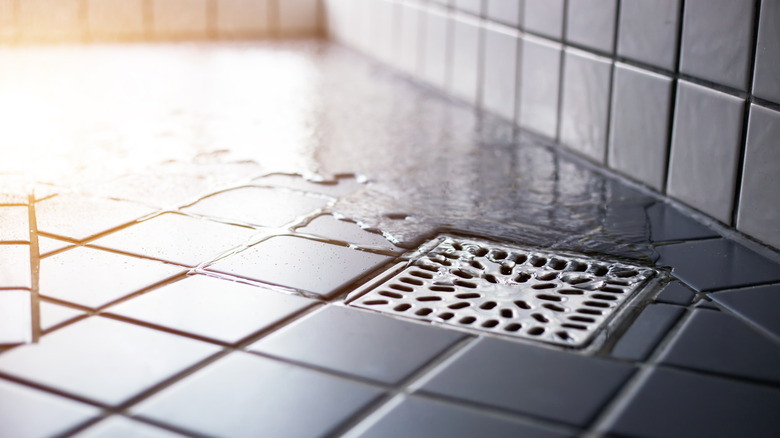
Nothing ruins a morning shower like standing in ankle-deep water because of poor drainage. If it's not caused by a clog, this issue is typically due to a height mismatch where the drain assembly sits just a bit too high, fighting against the natural pull of gravity. When you set up a new shower pan or install fresh shower tile, the placement of the drain determines if the space resists flooding. To get things moving correctly, the top of the drain needs to sit perfectly level with the finished flooring or tucked just a tiny bit lower — roughly the thickness of a penny. This measurement, which is about 1/16-inch, allows gravity to take over so the water drains smoothly.
Understanding how to choose the best shower drain for your bathroom involves more than just picking a style. If the metal rim sticks up even a tiny bit, it acts as a miniature dam, holding back water that could eventually turn into a slimy mess of mold and mildew. On the other hand, setting it too far down creates a ledge that collects debris and makes it nearly impossible to get a waterproof seal. This adjustment makes sure that every drop of water slides right off the tile and into the pipes without any issues.
Correct drain height prevents pooling water in your shower
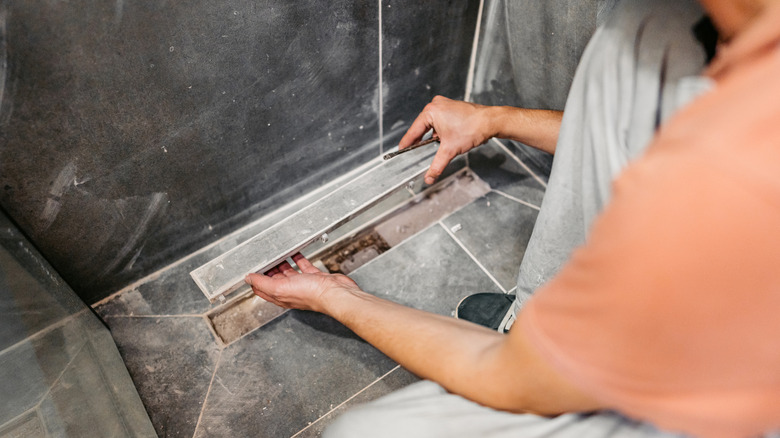
Getting the right height for your drain involves some math before you ever mix a batch of mortar. You need to account for every layer of the floor, including the subfloor, the waterproof membrane, the mortar, and the actual tile. Professional installers generally go for a finish where the grate sits at the lowest point of the slope. If the drain is flush, the water moves effortlessly toward the plumbing. If the assembly isn't seated deep enough into the floor, water will gather on the shower floor and not drain.
Aside from the surface level calculations, you also need to factor in the weep holes on the drain flange. These small openings allow water that seeps past the tile and into the mortar bed to drain into the pipes. If the drain body is too high, these holes get blocked by the waterproofing layer or the mud bed, resulting in a shower floor that never dries. You also need to consider the clamping ring, which needs to compress the liner against the drain body without creating a bump. If the ring sits too high, it creates a lip that keeps the surrounding mortar permanently wet.
Over time, that sealant can break down and can lead to rotting wood in the subfloor under the shower. It helps to do an installation dry run by stacking your tile and drain components to see how they line up. If things look off, you can adjust the height of the drain body before installing it. For those with a sloped foam shower tray, the drain depth is often pre-set, but you still need to make sure that the integrated flange sits perfectly below the tray surface to prevent a lip from forming.
Proper plumbing slope keeps your shower draining smoothly
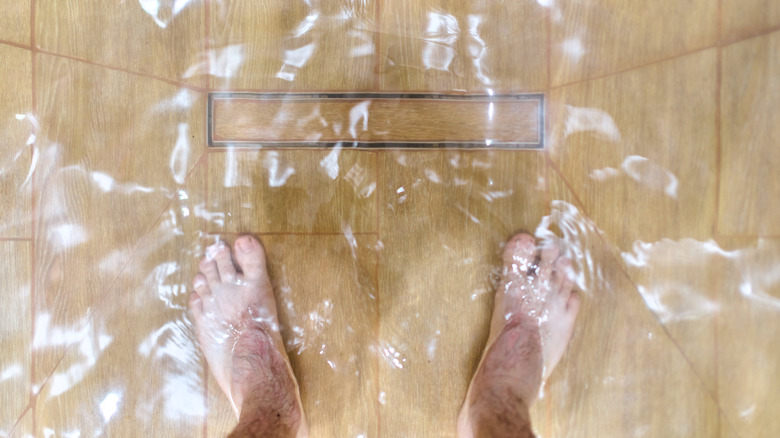
While the visible part of the drain needs to be flush with the floor, the hardware hidden underneath has its own set of rules for depth. Plumbers usually tuck the P-trap around 2 to 4 inches below the shower drain. This specific measurement is important because it keeps the water seal intact, which is the only thing standing between your bathroom and the smell of sewer gases. If the trap sits too close to the surface, it might not have enough room to function, but burying it too deep makes it very difficult to reach it if there's ever a clog.
Improper depth and trap placement are some common reasons why your shower drain might end up clogged, since they prevent the system from clearing any type of debris effectively. Your shower's horizontal drain pipes also need to maintain a steady slant—usually a ¼-inch of drop for every foot the pipe travels. If the drain is set at the wrong depth initially, maintaining this pitch becomes an uphill battle. The limited floor depth needed is sometimes a reason to think twice about putting a walk-in shower in your bathroom, but getting these measurements right from the start means your shower will drain water away quickly and quietly. It also protects your home from the structural issues that happen when pipes are forced into awkward angles just to fit into a tight space.