

How To Get Tulips To Bloom Indoors In Only Water
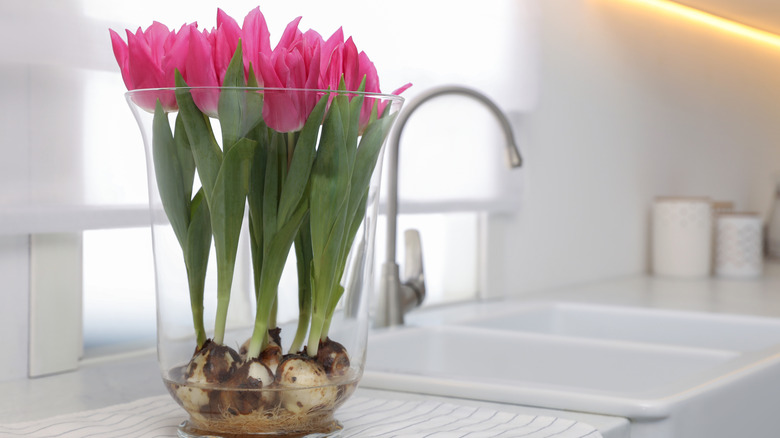
In the middle of winter, you may be longing for blooms like tulips, one of the prime garden delights of spring. You don't need to wait until your ground thaws or the robins come around to get tulips to bloom. You can even grow them indoors so that they bloom earlier than they would outside. While these sorts of "forced" bulbs are commonly grown in potting soil, tulips only need water, a vase or other container, and patience. Like forced hyacinth plants, tulip bulbs have one basic need before they can bloom in spring: a period of cold before they will grow.
To get started, be sure to purchase large tulip bulbs, preferably over an inch and a half in diameter. Look for hybrid bulbs like Darwin or Triumph tulips and avoid species tulips, as they'reusually too small to use for forcing indoors. To speed up the process, look for pre-chilled bulbs at your local garden center. If you're unable to find pre-chilled bulbs, simply put your bulbs in a paper bag and place them in a refrigerator drawer (not the freezer) for 12-15 weeks at around 40-45 degrees Fahrenheit. Keep the bulbs away from any fruit that produces ethylene, such as apples, as this can hinder the bulb's production of flowers. (If you're unable to wait that lon, try forcing paperwhites indoors instead, as they don't need chilling.)
Forcing your tulips in water
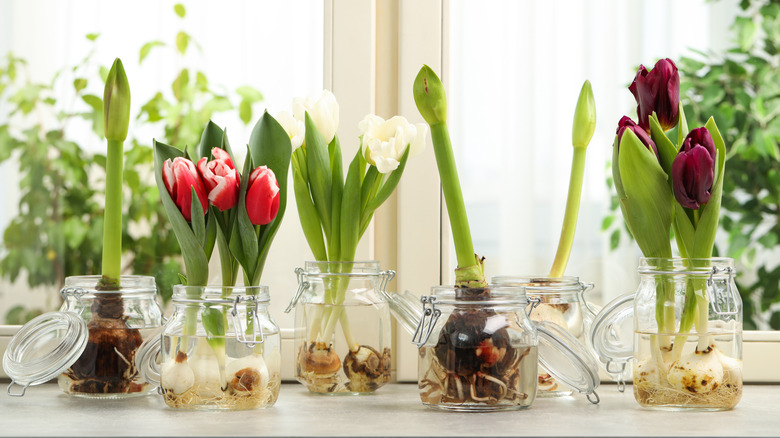
One of the joys of forcing tulips in water in that you can set them in glass and see their roots grow, which can be especially enjoyable if you want to teach children about the life cycle of plants. A tall glass vase is better than a short one since it can support the plant's stem as it grows. Specialized forcing vases are shaped to allow only the root end of the bulb to remain below the water line, which reduces the risk of the bulb rotting. To keep the bulb above water in an ordinary vase, fill the bottom with two inches of pebbles or glass beads, then press the bulb halfway into them. Add water up to the bottom one-third of the bulb. Keep the vase in a cool, dark place for four to six weeks, and replace the water weekly.
Once you see the bulb sprouting roots and shoots, gradually expose them to warmth and light. Start with low to medium light at 50-60 degrees Fahrenheit for four or five days before moving them to a warm, bright spot, but not in direct sunlight. Continue replacing the water on a weekly basis, and rotate the vase regularly so that the flowers grow straight up. They'll open in three to four weeks, and they'll remain in bloom for a week or more.
Alas, there's a downside to forcing bulbs. While spring tulips are perennials that can be replanted, forced tulips have spent most of their energy producing lovely flowers the first year, and they aren't likely to rebloom in subsequent years. Planting the bulbs outside will be a waste of time. Simply compost the spent bulbs and start over the next year.