

The Stunning Red Flower That Attracts Hummingbirds All Summer & Fall Long
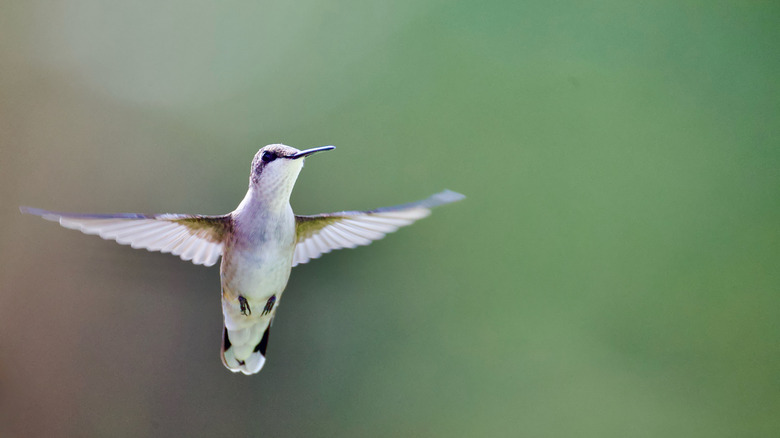
Hummingbirds are the icing on the cake that is your backyard. All your eye-catching greenery and flowers build up a beautiful garden, but it's those jewel-colored feathers and show-stopping antics that truly bring your backyard to life. Fortunately, attracting more hummingbirds to your garden isn't a difficult task, and you can start by adding this stunning red flower for months of pollinator-friendly blooms.
The Empress of India nasturtium (Trapaeolum majus) provides a long-blooming season filled with flowers that hummingbirds and other pollinators love. This plant begins to showcase its blooms in the summer and will continue to do so until fall, when the first frost comes. Not only do these nasturtiums help attract the pollinators that your garden relies on but they also serve as a beneficial companion plant for cucumber and cabbage thanks to their ability to repel certain unwanted insects.
To start your own pollinator-friendly garden and add the Empress of India nasturtium to your yard, you'll first need to learn about its optimal growing conditions. After all, while these flowers are overall easy to grow, there's some environments they truly thrive in. This means more flowers to liven up your yard — and thus more hummingbirds to watch.
How to grow Empress of India nasturtiums
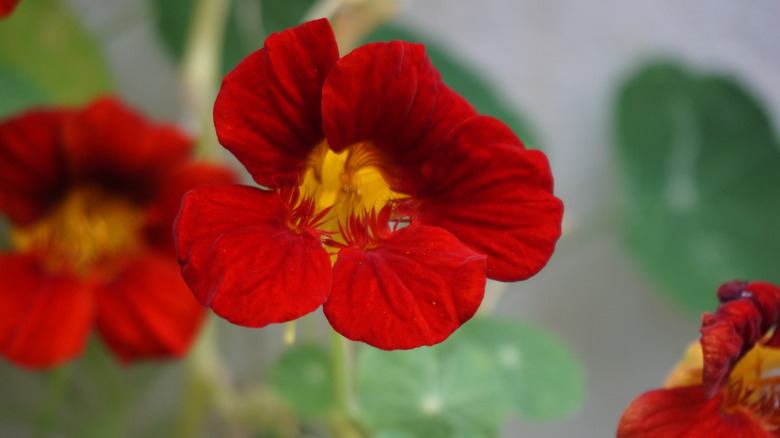
Choosing the right spot in your yard is essential if you want to produce as many nasturtium blooms as possible. For example, the Empress of India nasturtium can grow in either full sun or partial shade, but they won't bloom as much in the latter. They also won't grow as well in soil that's rich in organic materials, as more of their energy will be focused on pumping out additional foliage rather than those blooms you love. Empress of India nasturtiums can be grown as a perennial but only in USDA growing zones 10 and 11. As a result, you're more likely to see them in gardens as an annual.
These flowers prefer soil that is well-draining, and once they've established themselves in your yard, they sport a solid resistance to droughts. However, providing adequate hydration is still important. Just ensure that your nasturtiums aren't left in standing water or waterlogged soil to keep their roots healthy.
As far as maintenance goes, Empress of India nasturtiums do benefit from deadheading. While this doesn't need to be vigorous, plucking or pinching off any spent flowers can encourage additional ones to bloom. This helps you maximize your growing season and flower output for a garden that's bursting with vibrant color. It can be possible to over-deadhead your flowers, however, so make sure to start small and observe how your plant responds. After all, when your goal is to show off as many flowers as possible to attract more hummingbirds, you don't want to risk compromising your blooms altogether.