

The Valuable Vintage Wood Furniture To Hunt For At The Thrift Store
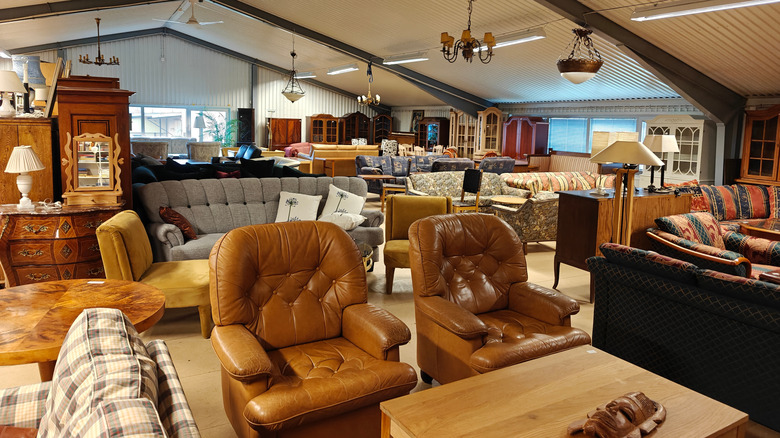
The first rule of thrifting is to never pass up on once-popular vintage decor at the thrift store because they're likely to gain popularity very soon. And, while many thrifters gravitate towards mid-century credenzas or modular tables, there's a more sophisticated wooden antique likely hiding among those pieces that's prime for a comeback: A wood tilt-top table. It's a high-quality piece of furniture found at the thrift store that can be so valuable and yet also incredibly useful. Given its utilitarian nature and an attention to craftsmanship, tilt-tables are the 'it' thrift piece to find nowadays as they're currently undergoing a massive resurgence.
These pieces were once the height of practical engineering in the 18th and 19th centuries, designed so the table top — you guessed it — tilts down for the entire unit to be tucked away when not in use. Particularly popular during the height of the tea-drinking era, in England and colonial America, the tilt-top was a genius invention that was highly utilitarian but also a piece of decor, showing off intricate designs on the top itself when it was folded away.
Elegant when unfurled in its full glory, it can also be hidden away to avoid clutter, a great advantage in this modern world of small apartment or living space design. Aside from its practical benefits, authentic, vintage tilt-top tables are also gaining value. Jennifer Price, owner of 'It's Found Vintage' tells Martha Stewart.com, "For a long time, it was simply a convenient side table that I could put together in a pinch, but it really got my attention when I started seeing them at antique shops for over $1,000." Price herself owns a tilt-top table, an heirloom piece from her grandmother, and it has become one of her favorite furnishings.
How to spot a tilt-top table
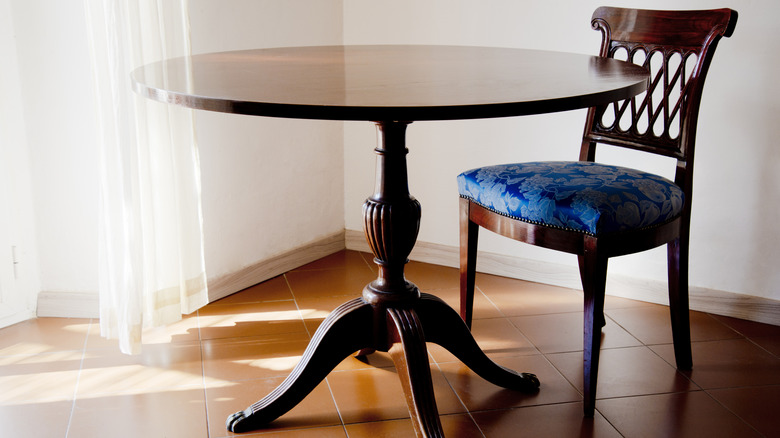
Identifying a genuine antique tilt-top table from Europe or America may require a keen eye since there are many reproductions from southeast Asia to parse through to find the real deal. The defining feature you need to look out for is a wooden block attached to the underside of the tabletop, which connects to the pedestal via a hinge or a birdcage pivoting mechanism. These joints will feel relatively strong as they were meant to hold things on top of them. Modern reproductions will have a much weaker joint since they were built as decorative pieces.
Authentic tilt-tops also often only have a single pillar as the pedestal with three legs connected to the pillar. Since the table is meant to be mobile and could be heavy, you may also see casters on the bottom of the feet to make it easier to move around. Furthermore, tilt-tops will vary in size since they were created for different purposes throughout history. Another telltale sign of a genuine piece is a metal, usually brass, plate to help support the legs. By the Victorian era, these tables became increasingly ornate, featuring elaborate carvings and complex inlays — characteristics to be on the lookout for — but the core design remained a staple for utility. Often made from mahogany of different varieties and from various geographic locations, these tables helped spur a wood patterning and veneer craze.
Lastly, look out for signs of genuine wear on the piece. If it truly is an antique that's seen centuries of use, you'll see matching wear points in the wood between the block and the table top. If it looks like only parts of the table have worn, then likely you're looking at a reproduction or a refurbished table.