

The Simple Tip That Boosts The Fertilizing Power Of Rice Water
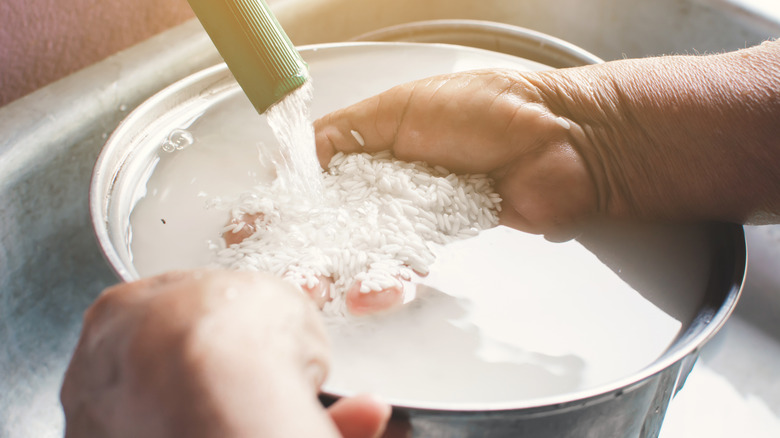
Rice water has been used in gardens for centuries (or longer) as a sustainable water source that also provides nutrients to certain plants. The practice dates back to ancient agricultural practices in Asia, particularly Japan and China, though the exact period is not widely agreed upon. Farmers recognized the benefits of using rice water on their crops and reaped the rewards from careful application. But just because ancient cultures utilized a farming practice, that doesn't mean it is the best option, which has led gardeners to wonder if they should be using rice water on their garden and lawn. In fact, modern research has supported this practice and confirmed what farmers have known for generations. Rice water really is good for your plants, but one simple tip can boost the fertilizing power even more: fermenting your rice water.
There are actually three different types of rice water you can use on plants: washed rice water, boiled rice water, and fermented rice water. Both washed rice water and boiled rice water are simply the excess water from the cleaning and cooking process. However, fermented rice water is processed for the purpose of drawing out beneficial nutrients in a way that is more easily absorbed. It can then be used in a variety of applications, including beauty products and fertilizer.
The benefits of using fermented rice water as garden fertilizer
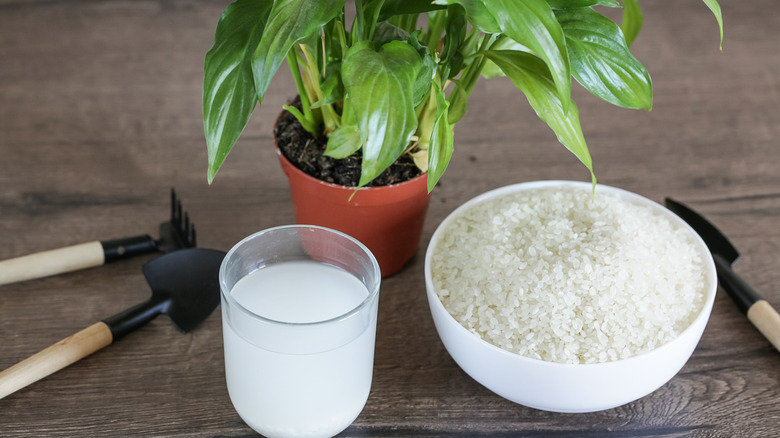
While monstera plants are an indoor plant that thrives when you water it with leftover rice water, you will want to take the time to ferment the rice water for garden plants. Rice water isn't ideal for all garden plants, so you will want to start by getting a soil test and identifying which plants could benefit from the nitrogen, phosphorus, and potassium (NPK) in fermented rice water. Most garden vegetables that thrive from a little rice water prefer fermented rice water over washed rice water or boiled rice water.
According to a 2023 study that analyzed the effectiveness of washed rice water compared to washed rice water that had been fermented over a 3-day period, fermented rice water has up to 56% higher nutrients than unfermented rice water. This increased nutrient level makes fermented rice water much more effective as a garden fertilizer for plants that need NPK fertilizers. However, fermented rice water is slightly more acidic than washed rice water, so gardeners should be mindful of pH levels before applying it to their soil. Fermented rice water showed increased levels of nitrogen, phosphorus, potassium, calcium, magnesium, copper, zinc, and boron. As a result, plants grown with fermented rice water fertilizer had improved vegetable growth and larger, heavier leaves, which is particularly beneficial for leafy green crops and indoor plants.
How to make and use fermented rice water fertilizer for your garden
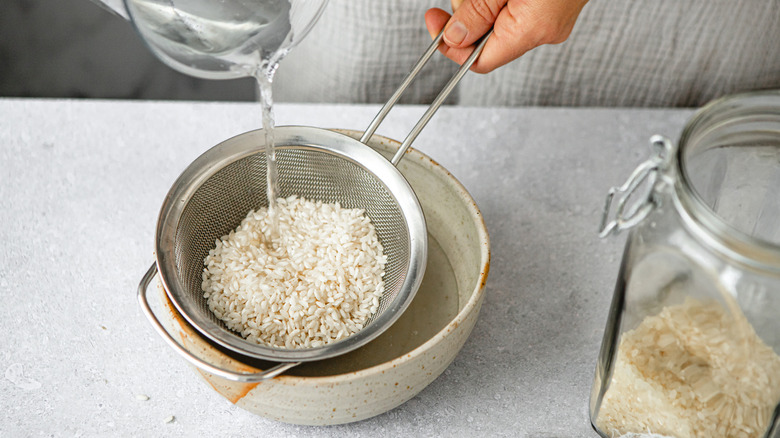
Fermenting rice water is actually fairly simple. Plus, it only takes three days! There are a few different methods for fermenting rice water. Most people will already have the tools on hand to ferment rice water, but depending on the method you choose, you may want to invest in a clay pot for better results. If you don't have a clay pot or don't want to buy one, that's okay. A steel pot or bowl, or a glass jar will still get the job done.
The first method is the simplest. After rinsing your rice, strain the water into a separate container. Leave it at room temperature for 3 to 5 days. When it is ready, it should have a slightly sour or tangy smell. Dilute it with 1 part fermented rice water and 10 parts tap water before applying it to plants. Another method is to take a half cup of boiled rice and place it in a clay or steel pot. Add 5 cups of tap water. Cover the pot and let it sit at room temperature for at least 12 hours. Bubbles should start forming. The liquid will be slightly cloudy and appear thicker than water.
For either method, you can apply the fertilizer to plants every 2 weeks or as needed. It should be applied to plants as soon as it is ready because it can not be stored and should not be refrigerated. You can apply the water directly to the soil or spray it on the leaves.