

Bring More Pollinators To Your Garden By Growing These Herbs With Lavender
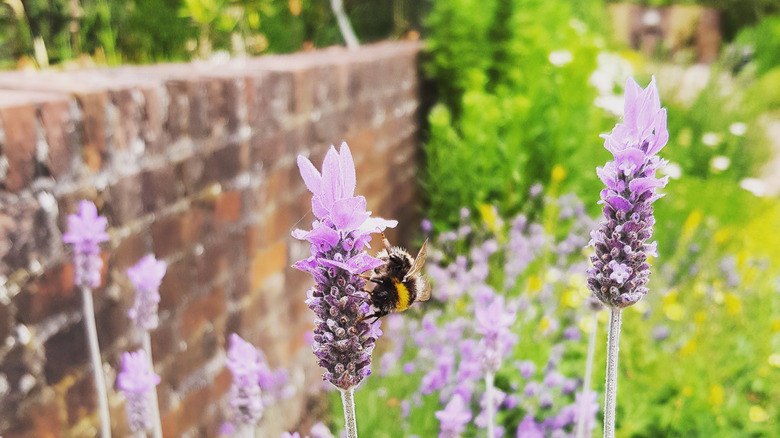
Arguably, no garden is complete without lavender. This Mediterranean herb outshines many others with its aromatic green leaves and pretty purple flowers. Lavender is a pollinator magnet, attracting native bees, honeybees, and butterflies with its nectar-rich blooms. Don't just plant lavender on its own, though. Diversity is key if you want to attract pollinators to your garden. To boost lavender's effects, try planting it with other herbs that grow in the same conditions, like rosemary, yarrow, and purple coneflower — among a few others.
Lavender is a surprisingly drought- and cold-tolerant flowering shrub. A well-draining site free of soggy soil is the best spot in your garden to plant lavender. There are a few different species available, with English and Spanish lavender being the most common. English lavender (Lavandula angustifolia) is the hardier of the pair. It thrives in Zones 5 to 9. Spanish lavender (Lavandula stoechas), on the other hand, does best in Zones 8 to 9.
Choose other herbs that match your lavender's preferences — that is, drought-tolerant, sun-loving plants that complement the fragrant shrub's mounding growth habit — and your herb garden will flourish. Like lavender, these partner plants lure pollinators with the promise of pollen and nectar. A specific critter may not like one plant, but you provide options when you plant multiple flowering herbs in the garden. By choosing native herbs, you'll feed the endemic species that often need help the most, instead of boosting non-native honeybees or invasive insects.
Invite more pollinators by planting lavender with rosemary and oregano
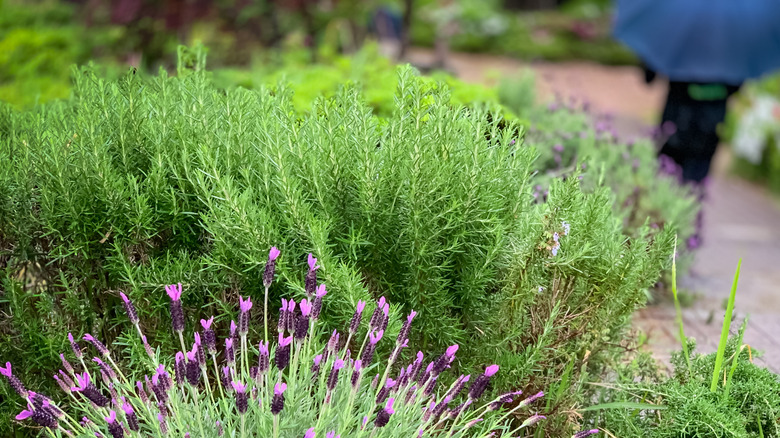
Mediterranean herbs like rosemary (Salvia rosmarinus) and oregano (Origanum spp.) are perfect for planting with lavender. As a duo or trio with lavender, they provide ornamental blooms that attract pollinators throughout the entire growing season. Rosemary, for example, often starts blooming at the end of summer, providing a source of pollen and nectar when most other plants are winding down for winter. Oregano is drought-tolerant, and bees flock to its white, pink, or purple blossoms.
Start by planting rosemary, a companion plant that benefits your garden. It grows similarly to lavender — both boast signature fragrant evergreen leaves, woody branches, and purple blossoms. Give rosemary plenty of space to spread out, then plant a patch of oregano in between the two. Oregano is low-growing in spring, and it flowers on tall stems in the summer. If the oregano spreads out of control, simply divide or prune the perennial to limit its growth. Altogether, this trio will give you foliage and flowers for use in your home, and the flowers will provide food for garden visitors.
Don't forget native herbs like yarrow, purple coneflower, and anise hyssop
When incorporating native herbs into your garden alongside lavender, it's important to choose species that grow in similar habitats. Yarrow (Achillea millefolium) fits the bill well, as it spreads throughout meadows, rocky areas, and disturbed sites in the wild. It's tough enough to survive a harsh winter, and it'll pop up year after year alongside your lavender. It sprouts landing-pad-like flowers that act as resting spots for hungry bees and butterflies.
Anise hyssop (Agastache foeniculum) is a hardy mint relative that is native to parts of the Midwest and Great Plains. Its flowers are a boon for pollen-hungry insects, and its foliage and flowers are perfect for flavoring beverages and meals. Anise hyssop grows in an erect fashion with upright stems that boast dense clusters of lilac-blue blooms at their tips, visually complementing lavender. The flowers attract bees, hummingbirds, and butterflies.
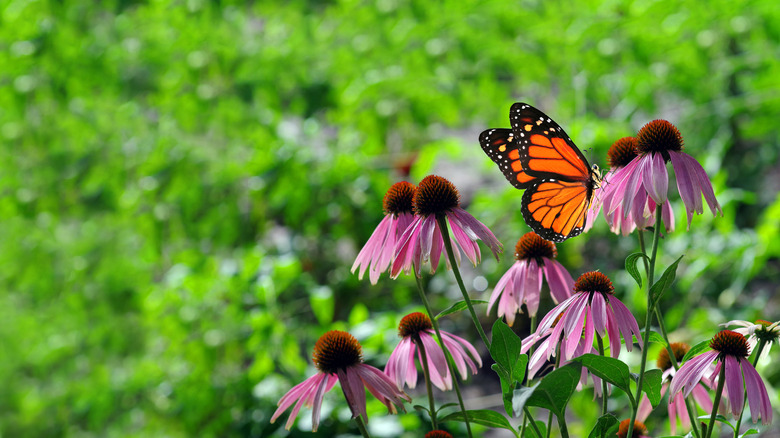
Another native perennial, purple coneflower (Echinacea purpurea) sports large flowers that attract pollinators. The blooms have spiky orange-brown centers and purple petals and match with lavender flowers for a stunning garden display. Like yarrow or anise hyssop, this perennial native herb can be aggressive, so learning to care for a purple coneflower involves boxing it in with other plants — like lavender! Coneflowers, like lavender, dislike soggy soils. Add amendments like compost, manure, or shredded leaves if the site drains poorly.