

Countertop Etching: What's The Cause And How To Repair It
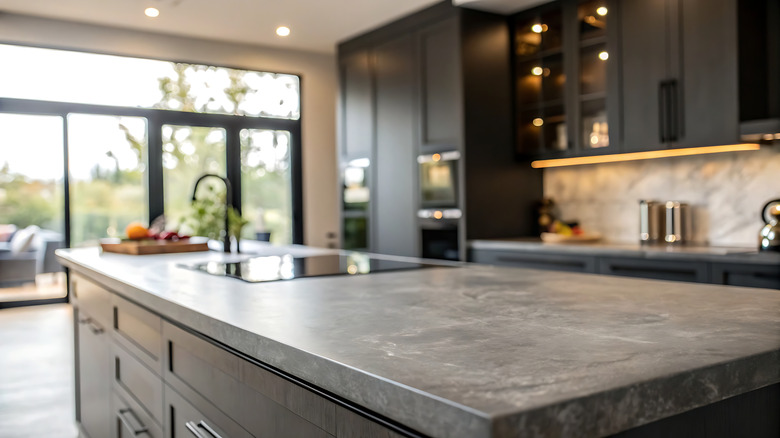
Natural stone countertops are timeless, adding effortless visual appeal to your kitchen while blending seamlessly with nearly every aesthetic. However, for all their benefits, there is one downside to keep in mind with marble countertops or other stone options: etching. Etching can arise from a variety of causes, each one leaving behind discoloration, marring the well-loved appearance of your countertop. Fortunately, however, there are ways to repair etching, both on your own and with the help of a professional.
Familiarizing yourself with what etching is and its causes can help you protect and care for your countertops. Etching occurs as a result of chemical damage to the surface of your countertop. Most commonly, you'll see an etch mark occur when acidic substances like vinegar or chemicals like alcohol or ammonia are applied to your countertop. These chemicals react with the natural elements in the stone, wearing away the surface to reveal dull or discolored spots that may differ in texture from the rest of your countertop. Most commonly, you'll see etching occur when the wrong types of cleaners are used on your countertop, which is why options like marble are considered the hardest countertop materials to keep clean.
Although seeing etch marks can be disheartening, don't give up on your dream of a beautiful countertop just yet. There are ways to repair the damage. While there are DIY approaches, however, you may also wish to consult with a professional for information specific to your countertop material and situation.
DIY ways to remove countertop etching (& when to consult a professional)
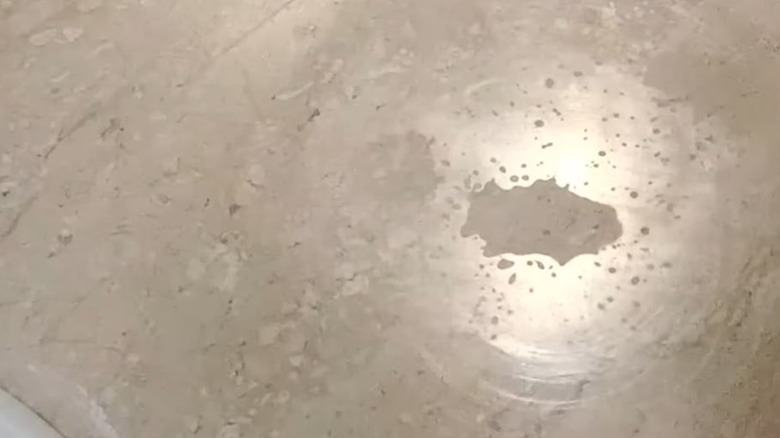
There is no one-size-fits-all solution for etching. First, it's important to know that you can leave the damage as is. Many see etching as a part of owning natural stone countertops, and the damage itself is mainly cosmetic. However, if you do wish to repair your countertop's etching, it will depend on the material and the severity of the damage.
For mild cases of etching on soft materials like marble, you can start by using stone-safe detergent diluted in water to thoroughly clean the surface before using a polishing powder to buff the marks away. Use a soft cloth designed for this purpose to buff the area, as abrasive materials can lead to further damage. You may need to complete this process several times to achieve results you're satisfied with. If you have a stone like granite, however, you may need to remove the finish and fill any etching with epoxy before refinishing your countertop once more. This can be a bit more time-consuming than marble, especially since you'll need to wait for the epoxy to dry before you can add the new finish.
These methods are often DIY-friendly, but they may not work in the case of severe etching. Instead, severe discoloration may require the countertop to be sanded down. Because you don't want to risk grinding too much of the surface away, leading to additional cosmetic damage or even lopsided countertops, many homeowners may be more comfortable consulting professionals for severe chemical damage.