

Empty Nester? How To Declutter Your Kitchen To Fit Your New Lifestyle

Life is full of chapters and transitions. While becoming a parent is one of the most extreme changes in life, becoming an empty nester can be equally jarring. If you're getting accustomed to life without children at home, your house can feel empty. It may also be full of potential. You can now stop arguing with your teenagers about keeping their room clean and instead begin to think up ideas with your partner about what to use that extra bedroom for: art studio or exercise room? As you adjust to a quieter, calmer pace of life, you'll notice that some additional changes are merited in your day-to-day life, as you reimagine how to design your home to better serve you. A great place to start is by taking simple steps to declutter your kitchen, which will help the space fit your new lifestyle as an empty nester.
Becoming an empty nester will translate to a number of practical changes in your kitchen. Whether you're thrilled about having the house to yourself or find yourself getting teary-eyed about the kids being grown and gone, knowing what to eliminate from the kitchen will keep things moving smoothly. Family dinners, for example, will likely look a bit different now, so there's no need to keep as many place settings on hand. The same goes for items like water glasses and coffee mugs. Unless you regularly host large gatherings, you can pare down your cabinet inventory to streamline your daily life.
How to declutter your kitchen — practically speaking
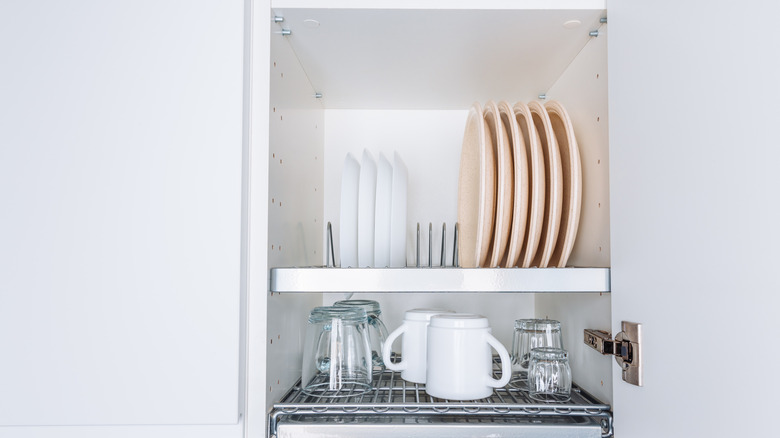
Transitioning your home to an empty nest can feel disorienting, so if the idea of decluttering your kitchen is causing consternation, take a deep breath: You don't go from having toddlers running around the kitchen to being an empty nester overnight. Your kitchen will gradually grow up as your children do, which gives you a chance to part with items like sippy cups and plastic plates long before they fly the roost. With all that in mind, however, decluttering your kitchen post-children still requires some real thought and effort. A good approach to take is to draw thoughtful observations about your daily and weekly life, making note of what items you are regularly using — as well as those which you aren't touching much, if ever.
When your teenagers were at home, they likely were using a dinner plate, cereal bowl, water glass, and coffee mug during the course of a day (as well as utensils). Now, without them, you can eliminate excess inventory from your cabinets, paring down from eight or six place settings to four, for example. This will keep your kitchen flowing more smoothly and reduce visual, as well as practical, clutter. If there were any dishes that your children used commonly but you didn't love seeing, here is your invitation to put it out of sight. You can either place them in storage in deep cabinets for when they visit again, or even consider offering them to your grown child to have at their home or dorm room.
Other kitchen considerations
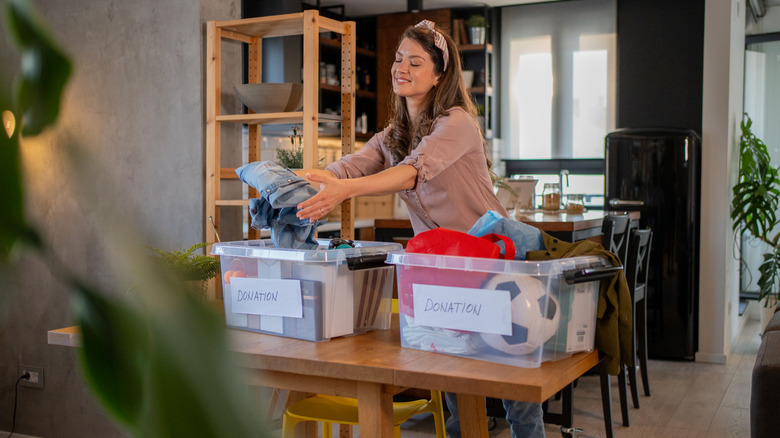
Beyond the day-to-day dishes your family ate off of, reducing the number of people in the home also means that you'll be cooking smaller portions regularly. That large stock pot that you would cook a huge batch of chili in may not be serving you and your partner anymore, allowing you to box it away until a big Thanksgiving gathering. Instead, you can keep a medium saucepan easily accessible, which will help you create appropriately sized meals. You may also find that certain appliances can be decluttered and donated, or just put into a deep cabinet for long term storage. Think large coffee makers, waffle irons, or that blender your teen used to make their protein smoothies.
Your kitchen pantry, fridge, and freezer might also be in need of some decluttering if you're a new empty nester. Now is a good time to empty everything and sort through your perishables; here are your instructions on how to declutter your pantry, and this is your invitation to be brutal, getting rid of anything that you don't consume (whether that's a half-used bottle of sriracha sauce or remnants of cereals that your teen used to snack on). While you're decluttering these spaces, be sure to take advantage of the opportunity to deep clean the back corners of the pantry and wipe out the shelves and seals of the fridge or freezer. While the transition to being an empty nester can be bittersweet, ensuring your space matches your life stage can be both grounding and practical.