

Turn This Common Kitchen Utensil Into A Helpful Nesting Resource For Birds
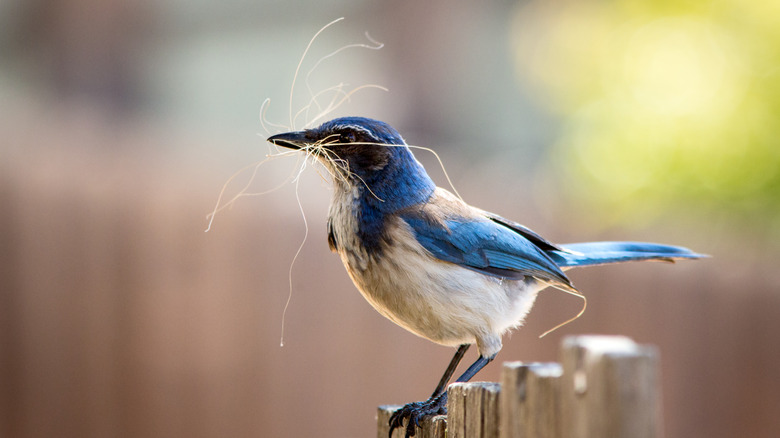
When spring appears after a long winter, you may find yourself looking forward to the increased activity of wildlife in your yard or garden. Many birds, in particular, can be seen as early as February swooping in and out of different areas in search of food and, crucially, nesting materials. Our winged friends typically begin nesting in spring and early summer because they like to prepare a place in which to lay their eggs at a time when food is abundant. Want to help them out? Surprisingly, you can actually help make nesting materials readily accessible for the birds in your area using one simple utensil that you likely already own.
A whisk is a handy kitchen implement for cooking and baking, but if you've got more than you need or one you just don't like using, there are plenty of ways you can repurpose a whisk in your home and garden. The evenly spaced bars of the whisk make it great for holding nesting materials that your local birds can come and collect. For this DIY, you will need a whisk, some string or twine to hang it with, and some bird-safe materials to decorate the handle, such as non-toxic paint, if you don't like the look of a bare whisk hanging in your garden. It is also important to make sure you fill the whisk with nesting materials that are both safe and useful building materials for the birds. Let's have a look at what items you should put in your whisk and how to hang it up in order to have birds flocking to your yard this spring.
How to create a bird nesting station out of a whisk
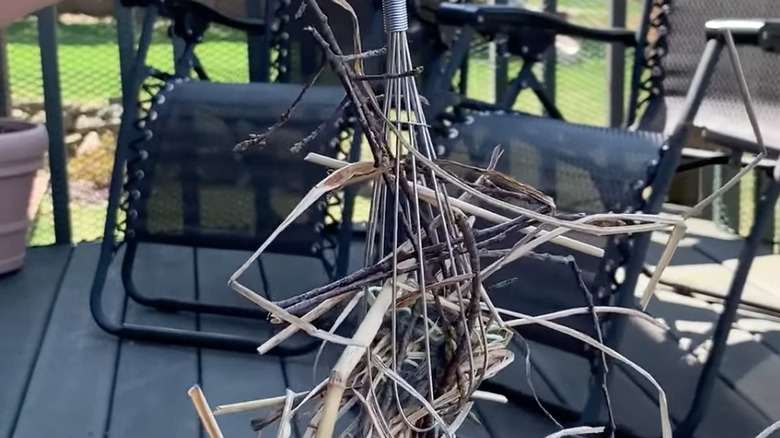
To craft your own nesting station, you will first need to gather the materials you intend to offer the birds. As a general rule, any natural substances that birds would be likely to forage themselves anyway, such as twigs, sticks, moss, pine needles, or leaves, are good options. You can even repurpose your lawn clippings, as long as the grass hasn't been treated with any chemicals or pesticides that could be harmful for the birds. While pet hair is often touted as a helpful nesting material, you may want to steer clear of putting this in your whisk because it could contain substances such as flea medicine or pet shampoo that can be toxic to wildlife. Overall, look for naturally occurring materials that are short enough to ensure the birds are able to easily carry them away without getting their feet or wings tangled up.
Once you've collected your chosen nesting materials, constructing your whisk-based holder is relatively straightforward. First, you can decorate the handle using non-toxic paint — such as this Ecos Paints Semi-Gloss Pet Dwelling Paint — or by simply wrapping it with twine to give it a rustic, natural look. Then, fill the whisk head with your gathered materials, making sure to pack them loosely enough that your winged visitors can easily extract pieces each time they visit. Finally, hang it up! Using string or twine, hang the whisk in an area where it will be visible to birds but near enough to shrubs or bushes so that they can flee in case of approaching predators.