

Annual Vegetables That Require Pruning (And How To Tell If Yours Need It)
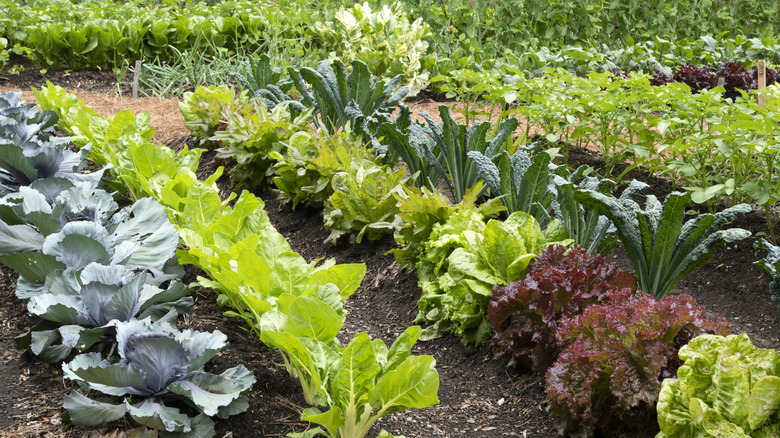
Not many people associate pruning with annual vegetables. After all, they don't require any shaping and being annuals, they only live one season. Yet, pruning can make a significant difference to many vegetable plants by balancing out leafy growth with fruit production, preventing stems from collapsing under their own weight, enhancing fruit ripening rates, and improving harvests.
Vining vegetables, such as cucumbers and bottle gourds, can grow quite long and can be cut back to size through pruning to make harvesting them easier. Plants like zucchini and tomatillos — prized for their vigorous growth — may grow so thick that they become afflicted with powdery mildew. Opening them up through strategic pruning can release disease pressure. Tomatoes and peppers benefit when their suckers, tiny stems that grow from the plant's leaf axils – the joints linking branches to the main stem. Given that, here are 11 annual vegetables you can prune for numerous benefits, along with the signs to look for before bringing out your pruning shears.
Indeterminate tomatoes
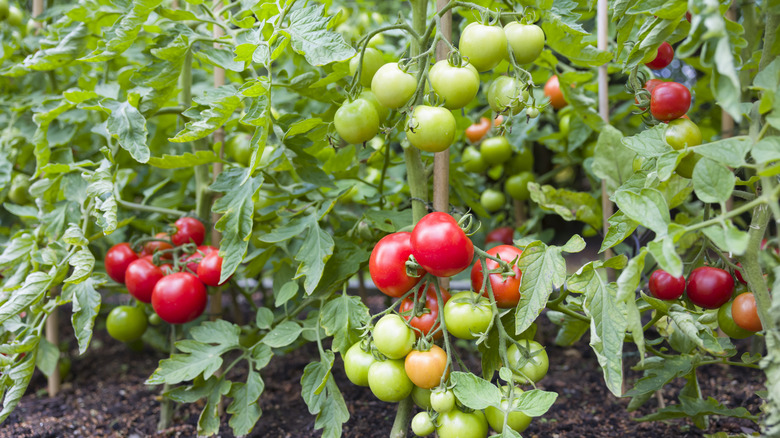
Pruning indeterminate tomatoes can help improve fruit quality because the resources are redirected from leaf production into fruit. You can also reduce their susceptibility to diseases. When the lowest leaves are removed, even the bottommost growth can access sunlight, ensuring it dries quickly enough to deny disease-causing microbes any hospitable area to set up shop. However, wait until the first flower clusters bloom to prune your tomato plant. Remove the suckers from the plant's base and in the leaf axils throughout the season (though you may want to retain a few in the axils for more fruit).
Zucchini
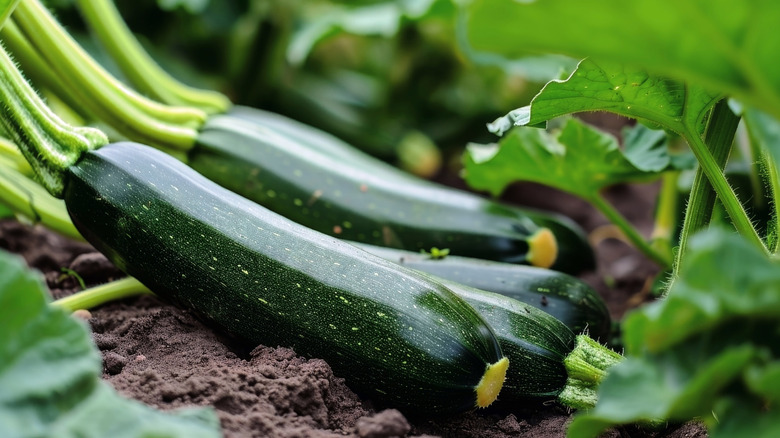
The one time you should definitely prune zucchini plants is when they've contracted powdery mildew. Caused by fungi, powdery mildew initially appears in overcrowded zucchini beds as yellow spotting. These spots take over the plant, lacing the leaves in big, white blotches, until they crumble and fall off. Worse, it may spread to other cucurbits planted in the vicinity. To avoid a crop loss, prune any leaves showing signs of disease and spray neem oil to control further spread. Apart from that, you may use pruning to maximize production.
Cucumbers
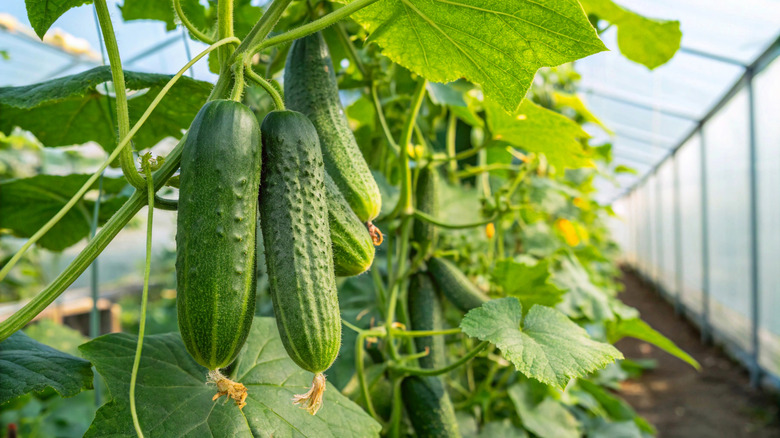
Cucumbers trained over a trellis or growing in raised beds, containers, or hoops can be pruned. Since they grow different types of horizontal vines, they can become overcrowded. Without adequate air flow, they become susceptible to pests and diseases, which could cause you to lose the crop. Moreover, such foliage growth exhausts essential nutrients, which could be directed toward fruit production. You'll know your cucumber plant is ready to prune when the main vine is at least 2 feet long and sprouts secondary vines on the sides.
Winter squash
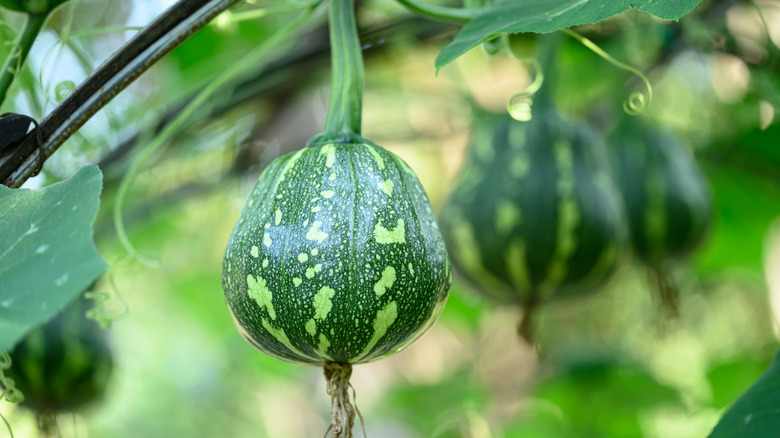
Winter squash, including butternut and acorn, can also develop powdery mildew. To limit further spread, remove all damaged parts at the first signs of disease, which include talcum-like, white blotches on yellowing leaves. You may also prune vines when they outgrow their space. Also, consider stripping off the lower leaves and a couple of stems from the plant's base when it gets overcrowded. This lets in the sunlight to the lower branches, ensuring baby squashes can develop successfully. This can also deprive pests like squash vine borers direct access to the plant.
Eggplant
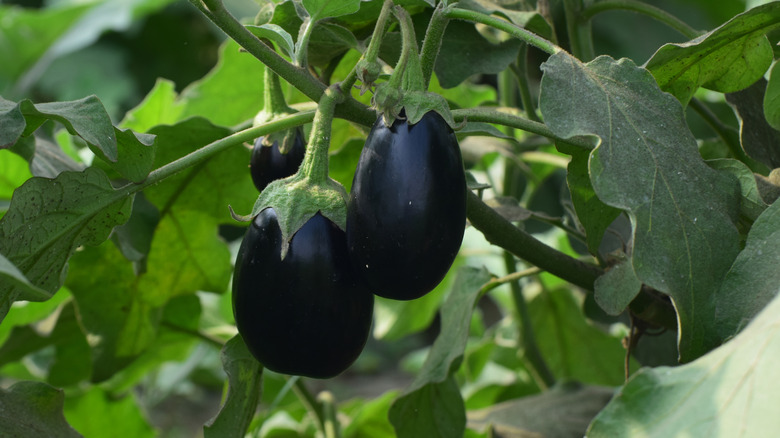
While you don't have to run pruning shears through your eggplant's foliage — it can benefit from a run on its suckers. These usually sprout at the base and at branch divisions, and removing them can redirect the plant resources into fruit production on a single stem. As a result, you may enjoy an early abundant harvest. The best time to do it is after your plant has successfully established and your plant has healthy four or five fruit-bearing branches. However, avoid removing any suckers from compact varieties, as they're highly productive, though you may still remove the ones at the base.
Peppers
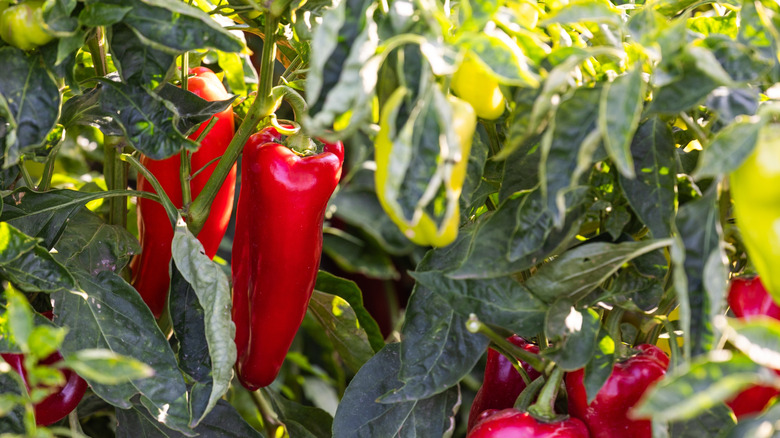
Pruning or "topping" peppers early in the season can promote strong growth and an abundant crop. After they're about 1 foot tall, consider removing the buds, flowers, fruits, and foliage to the second pair of true leaves. This may encourage the plant to bush out and develop more fruit-bearing stems, while remaining robust enough to withstand wind. Once the plant is about 2 feet tall, remove the lower leaves from the bottom half (the lower ¼ in the case of super-hot peppers). This deprives soil pests, such as snails and slugs, of access to the plant, along with ensuring better airflow.
Tomatillos
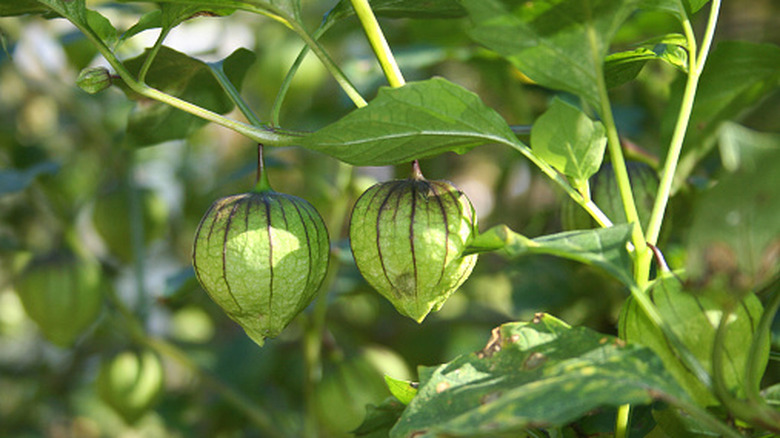
Consider pruning tomatillos or husk tomatoes during the growing season for robust health and better fruiting. Tomatillos create lots of branches — far more than tomatoes. When they fill out, the canopy becomes dense enough to block light. This is risky, as diseases like anthracnose and powdery mildew can set in, which are rarely reversed. By pruning out suckers or secondary stems developing at the branch axil, you can improve air circulation, ensuring an overall healthy plant. Granted, it reduces your flowers, but if you have a short growing season, it's unlikely they would have had time to mature.
Bottle gourd
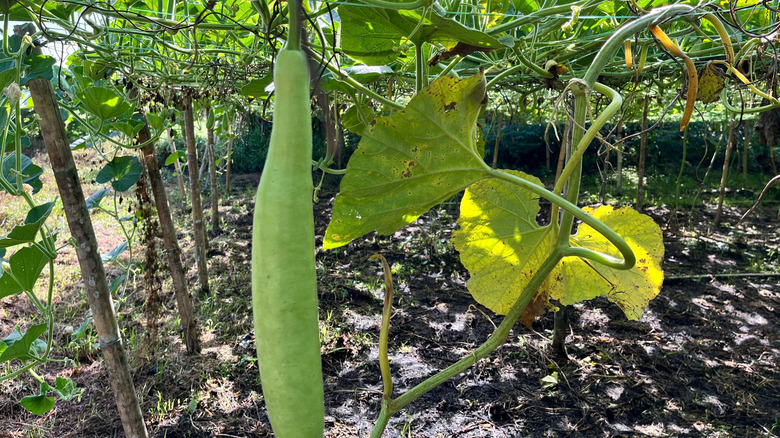
Bottle gourds are unique in that they develop female flowers and, by extension, fruit on side branches, rather than the main stem. Moreover, they tend to grow quite long, often surpassing their trellis support. Through pruning, you can contain their size and improve fruit production. For these potential benefits, trim the main stem when it's around 8 to 10 feet long. This should help refocus the plant's energy into producing side shoots. However, if you want bigger fruit, chop back a few secondary shoots, too, so the resources are released to the existing crop.
Brussels sprouts
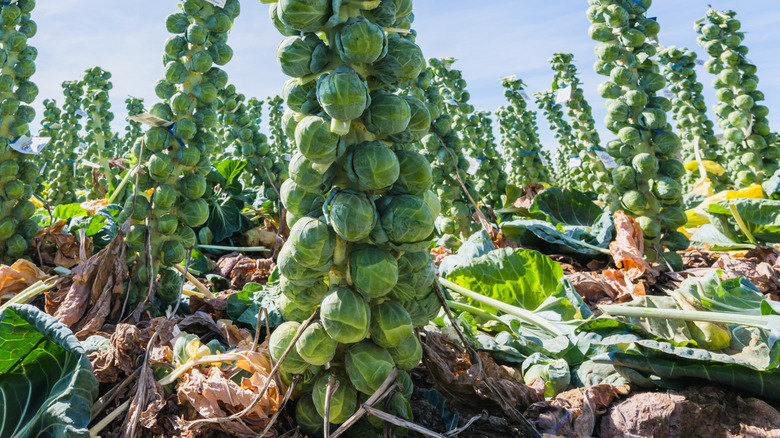
If you'd like to encourage brussels sprout plants to develop more fully and stave off disease pressure, consider pruning their foliage. Once sprouts bud out, eliminate six to eight small leaves from the lower stem (leaving the big, healthy leaves on the upper section for food production). Remove a couple more every week until you're ready to harvest. About three weeks ahead of the estimated harvest dates, when sprouts are about ¾ inch wide, cut off the top. Such pruning hastens sprout growth, as the resources are redirected into their production.
Pole beans
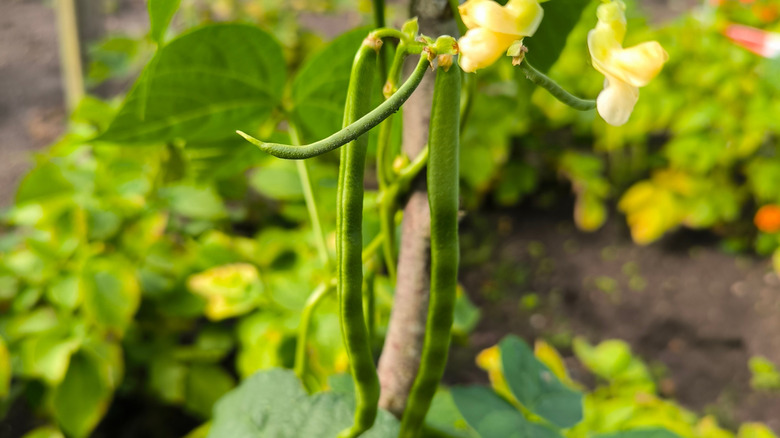
Pole beans often outgrow their trellis or stake support, leading to a tangled top. To prevent this and make harvesting easier, you can prune or pinch the stem tips. This stops vertical growth and directs the plant's energy into bean production. It may also encourage the development of side shoots. These, in turn, may produce new beans, offering you a bountiful harvest throughout the growth season. Additionally, remove the lower leaves at the vine's base. Doing so allows you to water and fertilize more effectively, opens up the canopy to limit microbial growth, and helps prevent pests from harboring and infesting the plant.
Peas
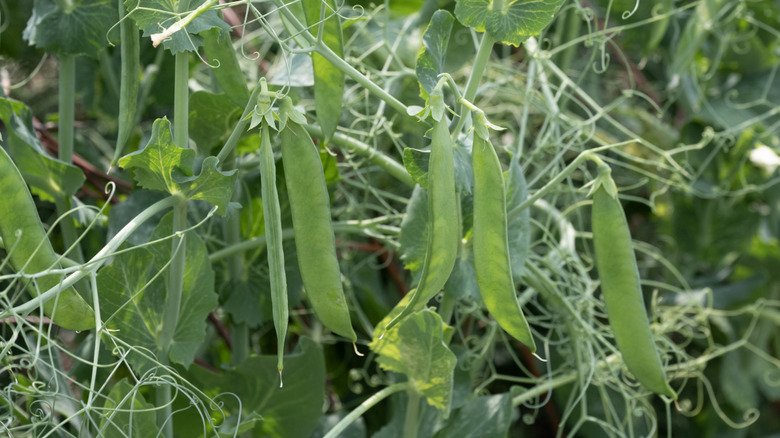
Certain pea varieties, including sugar snap peas, can grow upwards of 7 feet and surpass their support system. Left alone, they may fold over and snap if they continue putting out new growth. Cutting off their tops can be beneficial in this case, as it encourages the plant to produce side shoots. This means more flowers and fruits along the lower area, which is within easy grasp.