

Why Your Silicone Kitchen Tools Taste Soapy (& The Ingredient That Removes It)
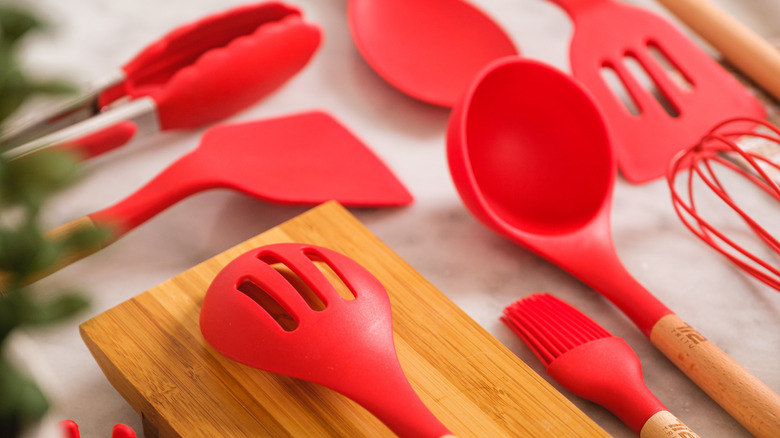
We all love how versatile silicone kitchen tools are. You can get one for almost every cooking task, from whipping up egg whites for your meringue and folding cake ingredients, to flipping pancakes and stirring soups. Unfortunately, one common put off with these silicone tools is that they can leave a nasty soapy taste in your food. And you'll likely notice this after multiple washes with your regular scented detergents. The main culprit? The structure of the silicone material. While silicone is largely non-porous in that it doesn't absorb moisture like, say, wooden items, it can still absorb substances like oil and soap flavors at microscopic levels.
The thing is, food-grade silicone is not created to inherently resist odors and flavors. Higher quality silicone, like what's used for medical devices, may have these resistant capabilities, but it's still not a complete guarantee. But besides the issue with the silicone material itself, the detergents many of us use to wash dishes in general contribute to that soapy taste. This is because harsh, heavily scented soaps leave residues on your silicone spatulas, whisks, and tongs, hence the off-putting flavor and smells. Fortunately, you can fix this problem using a common ingredient: Lemon. In fact, this is one of the unexpected ways you can use lemons to clean your kitchen and utensils. Here's how to go about this easy solution.
How to use lemon to rid your silicone kitchen tools of the nasty soapy taste
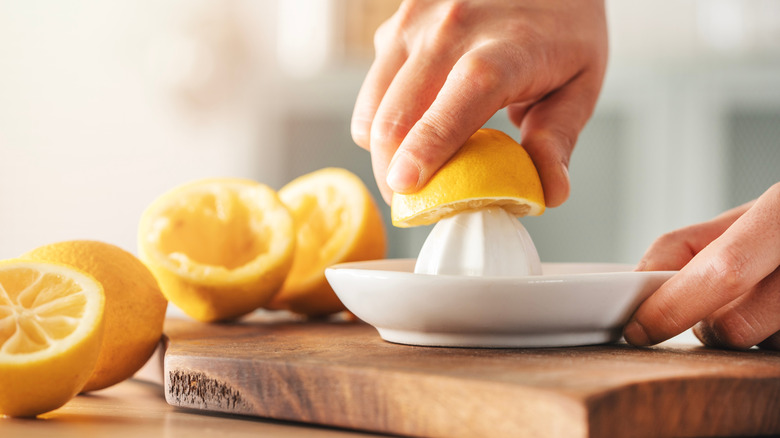
Lemon works as a natural cleaning agent and deodorizer because its juice is loaded with citric acid, a mild acid that lifts grease off surfaces. And of course, this citrus fruit is known for its vibrant, clean scent. So, exactly what is the best way to clean silicone using this fruit and rid the utensils of that funny dishwasher taste? Well, there are two ways you could go about it. The first method is perfect for silicone kitchen tools that have flat surfaces and minimal grooves, such as your trusty spatula and your kids' plates. Cut your lemon into halves and rub it along the utensil's surface. Leave the item to sit for about 10 to 15 minutes, then rinse it out under hot, scent-free soapy water. Give it a final rinse with clean water, and you're good to go.
Alternatively, you can fix your soapy-tasting silicone kitchenware by soaking it in a mixture of water, lemon juice, and a mild, fragrance-free dish detergent. First, close the drain on your sink and turn on the hot water. Pour in just enough to submerge all your tools. After that, cut your lemon into halves and squeeze them into your water alongside a few drops of detergent. Add in your tools and leave them to soak for an hour. After that, drain the sink and rinse the tools in hot water. Finally, to avoid this funny soap smell on your silicone tools going forward, simply avoid using harsh, heavily scented detergents and go for the mild alternatives.