

How Biophilic Lighting Can Change Your Garden Into A Wonderland

Garden lighting is convenient and attractive — but often doesn't appear especially natural. It can look downright harsh, artificial, and lifeless. Thankfully, biophilic design, the nature-inspired decor trend, has made its way into garden lighting and is available to transform your garden into a wonderland of patterns, shadows, and soft light. The most basic principle of biophilic lighting is that it recreates the lighting experience that nature provides. Think of the "golden hour" when the atmosphere is suffused with soft red, pink, and gold tones just before sunset.
As part of the only home design style that is actually proven to make you happier, biophilic garden lighting is intended to touch your emotions. A garden with biophilic lighting may evoke sensations of calm, comfort, and relaxation. This soft lighting design may also result in energy savings, as it uses low-voltage bulbs and illuminates areas thoughtfully instead of flooding them with light. You can achieve this natural look with its accompanying positive sensations with a few adjustments in garden lighting.
Deploy biophilic lighting to mimic natural illumination
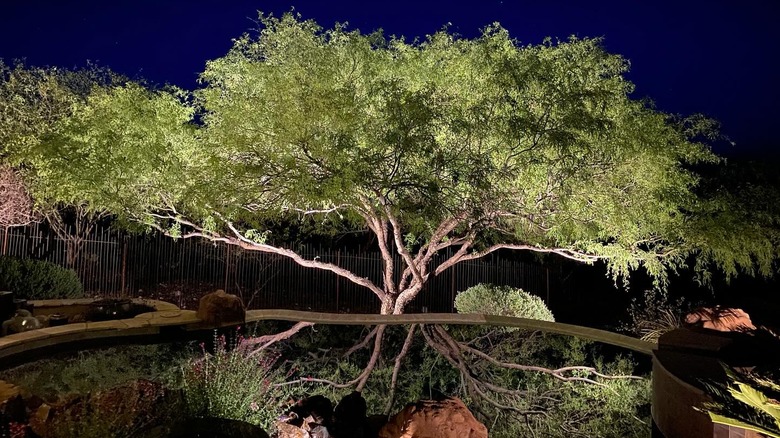
Techniques for mimicking natural light imitation include using warm lighting and highlighting natural elements. Color temperature, which is measured in Kelvin (k), is key, with lights between 2700k and 3000k representing the softer, warmer tones. You can easily envision this range because it's typically used in residential lighting. Don't use blue or white lights as they can look garish.
Instead of flooding the whole garden space with light, use warm lighting to call attention to natural elements, such as trees, flower beds, and water features. Position these focal lights so they illuminate elements from the side and below. This focused lighting enables you to replicate dappled moonlight, as well as create dynamic patterns and shadows.
An important aspect of biophilic garden lighting is its ability to mimic natural rhythms of light. For example, you can use program your lights using smart controls so they grow progressively dim in the evening, even signaling your Circadian rhythms that bedtime is near. Biophilic design recognizes that not everything is naturally illuminated at night, and it's fine to provide dark areas in the landscape. In fact, excessive lighting may be a lighting mistake that's ruining your garden with light pollution that's harmful to wildlife. Instead, consider striving for outdoor lighting that creates a natural wonderland.