

What It Means If You See Purple Street Lights
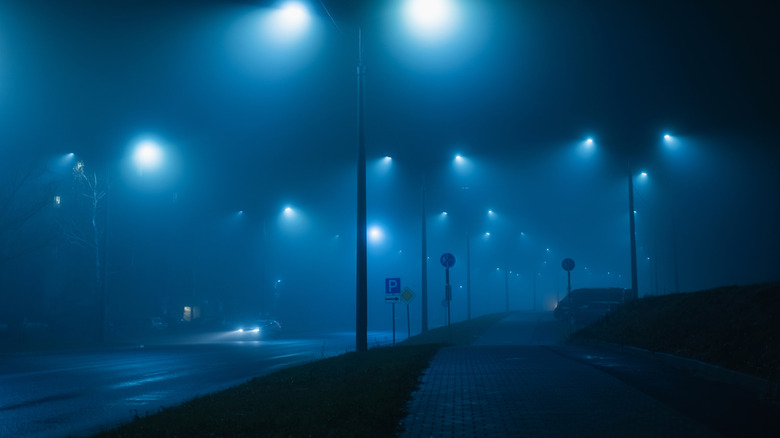
Have you noticed while you're driving at night that some of the street lights are actually emitting a bluish-purple glow? If so, you're not alone. While conspiracy theories of surveillance, the supernatural, and purple porch light awareness run rampant, in reality, the explanation is much simpler and far less scary than these doomsday or criminal predictions make us believe. These street lights are actually the product of a manufacturing defect. While purple is a daring color trend that's rising in popularity for homeowners, purple streetlights are, effectively, one giant accident.
In simplest terms, most modern streetlights have blue LEDs that are coated in a silicon phosphor layer that converts the stark bluish bulbs in the lamp into a bright, white glow. This is mainly because LEDs aren't able to create white light on their own. However, sometimes that phosphor layer begins to peel off, allowing the natural deep blues and violets of the LEDs to shine through.
Likely, this breakdown of the phosphor layer is due to constant wear, including heat buildup inside the streetlamp due to the long hours it runs. The rumbling of cars on the street below could also be responsible for the layer coming loose. Whatever the reason, LED systems installed around 2018 seem to be the culprit. Though the color purple usually signifies certain things — like purple painted trees indicating private property — these purple lights are the result of a maintenance oversight and are slowly getting replaced.
Are these purple lights doing harm?
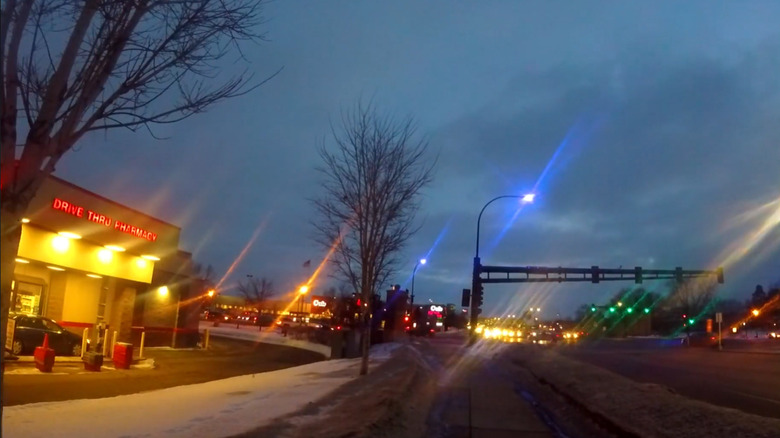
In a press release cited on News 6 in Orlando, Florida, Acuity Brands, one of the light technology companies responsible for the unworldly glow, assured folks that "The light output is in no way harmful or unsafe." But researchers still warn drivers and pedestrians at night to stay alert and exercise caution if they encounter purple street lamps. Blue and violet lights make it more difficult to make out details due to a lack of blue-sensitive receptors in our vision. These colored lights also make it harder to differentiate other colors since all objects turn shades of blue and black under that light. Thus, if you're planning to head out at night, you should be extra careful on the road since navigating it may be different from what you're used to.
If you come across blue or purple lights, it's a good idea to remove any blue-light filtering eyeglasses or sunglasses before proceeding, to help you discern the people and objects around you. "If you've driven through these areas where there are a lot of these purple street lights, you know that it's kind of glare-y and uncomfortable, which could distract the drivers and create some issues," J. Lynn Davis, a member of the Illuminating Engineering Society, cautioned (per USA Today). While these lamps are getting replaced slowly but surely, it's best to stay aware of your surroundings to help mitigate any issues caused by diminished vision clarity.