

The Best Way To Prune A Citrus Tree, Depending On Its Age
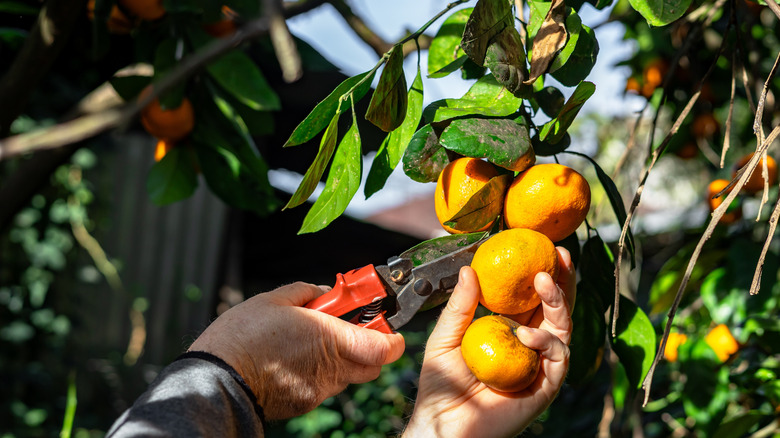
There's something so charming about a citrus tree. With their bold, glossy green leaves and their bright and fragrant fruit, they can bring life and sunshine to any garden. But while they're undeniably delightful, citrus trees have needs. Pruning isn't just about making them look nice and balanced, it's actually essential for their health. It keeps them happy, healthy, and encourages more fruit to grow each season. But as any avid gardener knows, pruning is a beautiful and difficult mix of art and science. To complicate the matter, pruning citrus trees isn't a one-size-fits-all practice. The way you approach it actually depends on your tree's age.
But don't get discouraged — you can totally prune your trees without calling a pro. In short, young trees need shaping to encourage growth, while mature trees require more of a maintenance cut. With younger citrus trees, the shape that you give the tree is important in order to help it grow faster year-over-year and produce strong branches. Older ones have been there, done that, so they'll mostly benefit from some thinning and cleanup. In any case, pruning is a great way to help your fruit trees grow and produce faster.
Whichever approach you're taking, a few things remain true. First, prune citrus trees every year when they're dormant. That's late winter or early spring, before the tree comes back to life and starts growing again. Secondly, you'll need a pair of sharp secateurs for small branches. For older trees, which might have stronger and woodier branches, a good pruning saw will come in handy. And finally, do not prune your tree when it's damp outside. Dry weather helps cute heal faster, reducing the chance of illness.
How to prune a young citrus tree
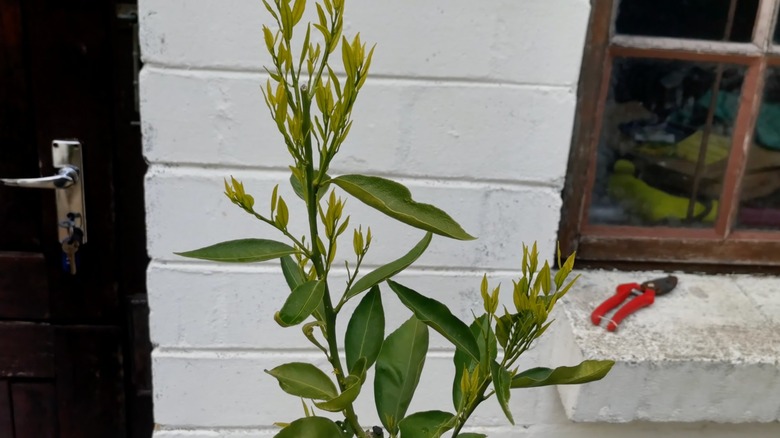
A citrus tree is considered young when it's less than three years old, while it's still setting up roots and growing small and weak branches that will eventually solidify into its mature structure. During that time, citrus trees really need to focus their growth on things you can't see: their roots. They're not producing a whole lot of fruit, and in fact, it's best to pinch flowers off to make sure they don't attempt to. That way, all of your tree's energy is directed at its branches and roots instead of being wasted on fruit.
To further encourage the tree to spend its precious energy where it's most needed, a selective trim of new growths is helpful. You can differentiate new growths from older ones because the branches are small and flexible, with small green-yellow leaves. Older branches are typically harder and have larger green leaves. Don't remove all new growths, however — instead, select a few to keep, and snip the rest. If several branches grow out of a node at the top of the tree, keep just two. If any of them are growing close to an established branch where they might cause shade, you can take them off. Finally, remove any new growths that are sprouting from the trunk below the tree's main canopy.
While the pruning of young citrus trees should be light, it's a great way to help shape it for the future. The branches you leave behind can develop into the canopy's main structure down the line, so try to create a vase shape. In addition, you'll want a tree that's not lopsided or uneven, so try to keep branches centered and balanced on all sides.
How to prune a mature citrus tree
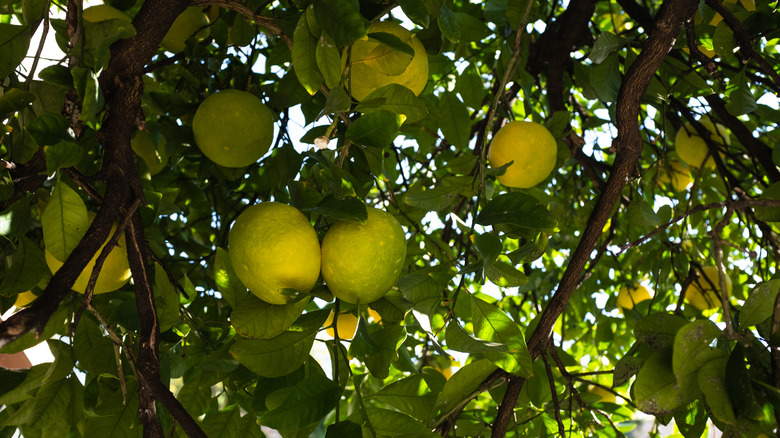
The pruning strategy changes slightly when your citrus tree turns three or so years old. At that point, the tree is considered established and mature, and it will remain so until it dies. Considering citrus trees can live up to 100 years, this type of pruning is more common. The goal here is to help the tree breathe better, ensuring that each branch gets access to sunlight and air.
The main branches to cut include dead branches, downwards-facing branches, and branches that cross. Remove any branches that are dead, diseased, or weak; they can be identified because they're leafless and brittle. Then, cut branches that are growing down towards the ground, especially since fruit will likely weigh it down further. Finally, look for branches that grow inwards and cross each other. By removing these, you'll let a lot more light and air reach the center of the tree, helping it stay healthy and productive longer. Trim the edges of the tree to keep the canopy balanced and even, trying to maintain a vase shape.
When it comes to both mature and younger trees, you'll want to cut off any suckers or growths that are coming out of the trunk below the main canopy. These divert energy away from branches and fruit, and should be removed. With this approach, you should be able to prune mature citrus trees and avoid accidentally killing them in the process.