

The Colorful Perennial That Will Have Butterflies & Bees Flocking To Your Yard
Throughout history, physicians and healers have used sneeze-inducing plants for therapeutic purposes, including powders made from black pepper, coriander, tobacco snuff, and even toxic white hellebore. In North America, sneezeweed (Helenium autumnale) earned its name from this historically interesting use. But today, this name has become a misnomer since the tradition has faded away and the heavy, sticky pollen of Heleniums doesn't even cause allergies. For modern gardeners, sneezeweed is much better known as a late fall flower that will have butterflies and bees flocking to your yard.
While there are many Helenium species and cultivars, when most gardeners mention "sneezeweed," they are almost always referring to Helenium autumnale. This plant goes by many names, including Helen's flower, which is related to a myth about Helen of Troy. If you're looking to add sunset-colored flowers to your yard, sneezeweed is an excellent choice. It can get up to 5 feet tall, adding height and movement to any landscape and creating refugia for pollinators.
And with its bright yellow, orange, and gold flowers that bloom in the fall, sneezeweed is an important source of late-season nectar that can keep bees, butterflies, and other beneficial pollinators going from August to October. If you're growing gardens to attract wildlife, another benefit of growing sneezeweed is that the seeds are a good source of food for songbirds in late fall and winter.
Use sneezeweed to attract bees and butterflies to your garden
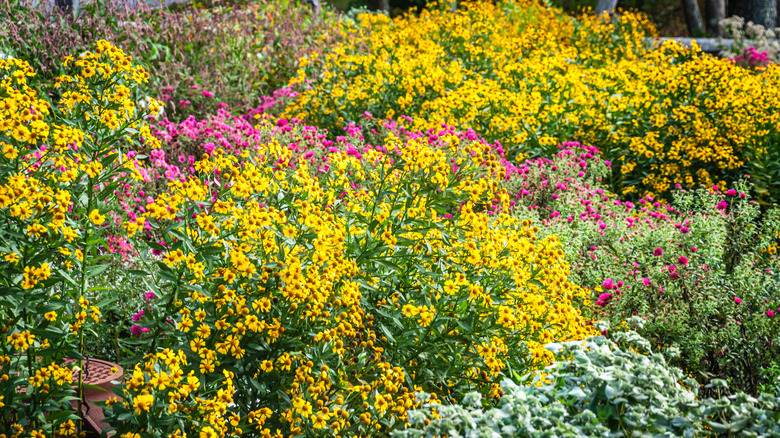
Whether in naturalized plantings, pollinator gardens, or woodland borders, sneezeweed makes a cheerful addition to any garden. It grows all over the United States in places with moist, rich soil conditions. If you pinch sneezeweed in July and prune it in the fall, you will have a stronger plant with beautiful, branching blooms. As its name implies, this is a weed, but if you leave it, it can end up being one of the prettiest plants in your garden and a great source of food and shelter for insects. When many plants are finished blooming, cultivars like sneezeweed that bloom during this critical period provide vital resources as organisms prepare for winter. These late-season nectar sources also assist hummingbirds, bees, and butterflies during migrations.
Sneezeweed is resistant to deer and rabbits, making it a good solution for sunny spots if these garden pests are a challenge for you. Another reason to grow this beautiful plant in pollinator gardens in USDA Zones 3 to 8 is that it can easily be divided every few years to keep plantings fresh and blooming profusely.
However, while this colorful plant is gorgeous, growing it comes with some downsides. If you decide to grow sneezeweed, be aware that all parts of the plant are poisonous to humans — although since it has a medium toxicity, you would have to ingest a large amount. You should also be aware that sneezeweed is susceptible to powdery mildew, and since it likes moisture, it's not a good choice for drought-tolerant gardens.