

Genius Ways To Save More Money On Potting Soil
We may receive a commission on purchases made from links.
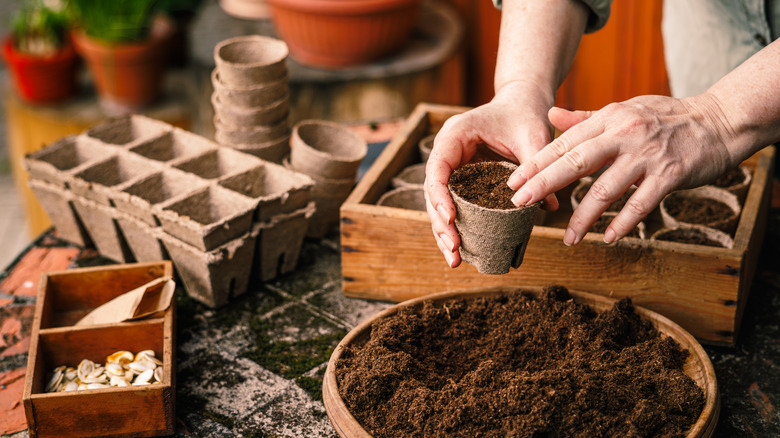
When you look at how much it costs to build a garden from scratch, the cost can be shocking. This is especially true when you consider the price of maintaining your garden year after year. While tools may last for years, you may find yourself needing to buy potting soil annually, an investment that can add up over time. Fortunately, there are ways to save money on potting soil, including buying in bulk for a lower per-unit cost or reducing the amount of new soil needed overall.
When you think of saving money on soil, you may first think you have to switch to a cheaper brand (at the expense of the quality you've come to love). Thankfully, you don't. Instead, cutting costs on potting soil is more about making small adjustments to your shopping or gardening habits — to your tried-and-true products.
Take shopping in bulk, for example: You can still buy your favorite brand of potting soil, but look for better per-unit pricing on larger orders. As for your garden habits, by sterilizing and repurposing older soil, or even by adding filler to the bottom of your planters to reduce excess volume, you can cut down on the amount of new soil needed, leading to lower gardening expenses overall.
Save money on soil by buying more and using less
While purchasing a larger quantity upfront is often more expensive than buying a single bag of potting soil, you're typically looking at a lower per-unit cost. For example, one bag of the Miracle-Gro organic indoor potting mix at Walmart is currently approximately $0.87 per quart. In comparison, if you purchase the 2-pack, you'll pay about $0.78 per quart.
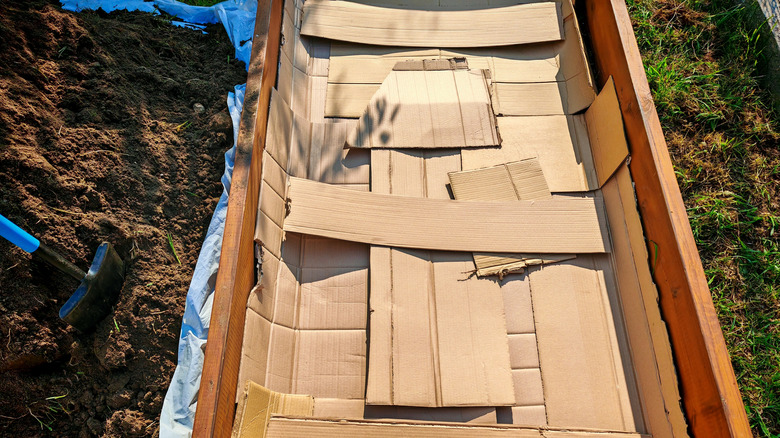
There's also a second way to minimize potting soil costs: use less. You can reduce the amount of new potting soil needed by either pre-filling your container with bulk materials. Opting for a pot filler rather than a full planter filled with new soil can help reduce costs while keeping larger planters lightweight. To do so, simply line the bottom of your planter as you would for a DIY raised bed garden: add layers of cardboard, newspaper, organic debris like pinecones, or even garden-safe household waste to reduce the amount of soil needed to fill your planter.
Using less can also mean repurposing old potting soil by blending it with new soil you've recently purchased with the remains from last season. However, not all old soil is safe to use, so make sure to pick clean soil from healthy plants to avoid spreading disease or pests. You can also use solarization to help reduce bacteria by leaving your old soil to heat up in the sun. Adding new nutrients to old soil through compost or additives also helps.