

Shower Handle Loose? Here's How To Quickly Fix It
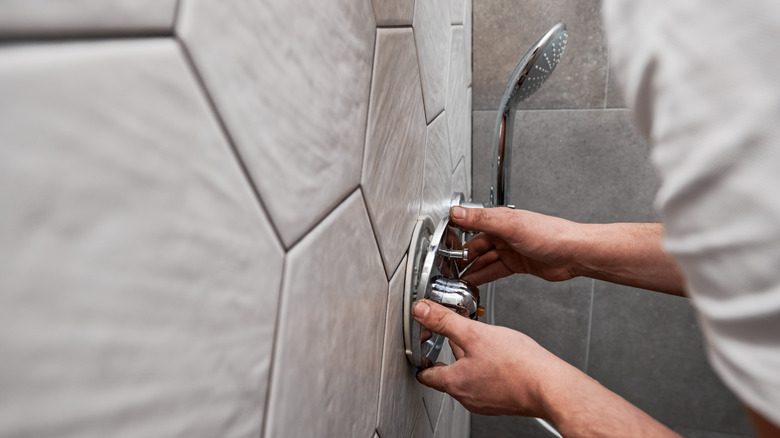
A loose shower handle is one of those little household annoyances that can quickly escalate into a bigger frustration. You go to start the shower, and instead of a stable turn, the handle wiggles or slips. Fortunately, this is usually just a minor fix and not a sign of a major plumbing catastrophe. In most cases, the cause is a set screw that has vibrated loose over the years of use. Before you call a plumber and hand over all of your hard-earned money, know that you can probably fix this problem yourself in a matter of minutes with a few basic tools and some patience.
Understanding how a shower handle is put together is the first step toward fixing it. There are two common handle designs for modern showers: lever-style handles and round knobs. Lever-style handles typically rely on a tiny, hidden set screw located on the underside or side of the metal casing. For these, you will typically need a set of hex keys, also called Allen wrenches, to reach the small opening and tighten the screw. If you have a round knob handle, the screw is likely hidden behind a decorative plastic cap on the front. You can gently pry this cap off with a flathead screwdriver to access the screw underneath. Take a moment to identify which design your shower has before starting, so you can grab the right tools for the job. Once you have found the access point, you are ready to tighten the handle (although this might be the perfect time to quickly upgrade your bathroom hardware).
How to tighten a loose shower handle, step by step
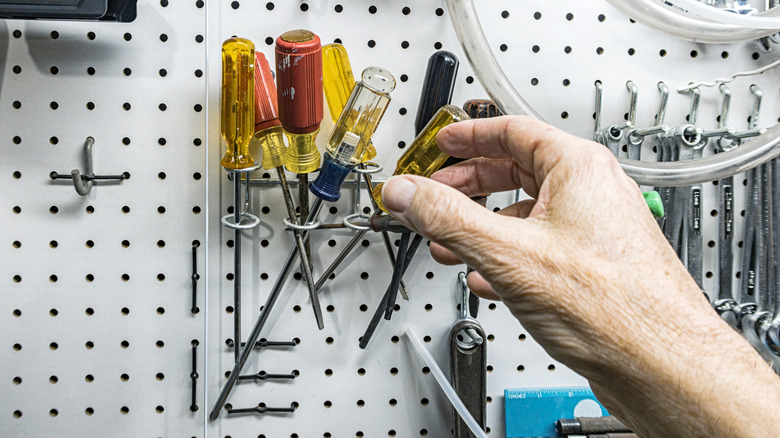
To get started, we recommend first covering your shower drain with something like tape or a washcloth. These internal screws are tiny, and losing one down the drain can quickly turn a simple fix into a bigger problem. If you're working with a knob handle, remove the decorative index button and use a Phillips head screwdriver to tighten the screw until the handle no longer jiggles. For lever handles, insert the hex key into the small hole on the base. Turn the screw clockwise until you feel firm resistance. If it feels loose again soon after, consider removing it, spreading a drop of blue thread-locking compound on its threads, then reinserting it. This creates a strong, vibration-resistant bond. Just make sure that you don't overtighten the screw or make a plumbing mistake that'll cause more damage.
If tightening the screw does not stop the wobbling, the screw itself may be worn. Replace it with a screw of the same size, ideally stainless steel to resist rust. Another possibility is that the internal plastic adapter has stripped teeth. These small plastic inserts bridge the metal handle and the shower valve stem. Over time, their teeth can wear down, preventing the handle from gripping the valve correctly. In this case, just purchase a universal replacement kit at a local hardware store (they're inexpensive). All you need to do is slide off the old adapter and press the new one into place before securing the handle back over it. This super-easy bathroom maintenance task helps your shower stay functional. Taking care of these small issues as you catch them prevents unnecessary wear on your plumbing hardware and keeps your daily routine running smoothly.